
RICHMOND — A new Virginia law is putting businesses on notice when it comes to invasive plants, establishing financial penalties for those who plant them without properly warning property owners.
Gov. Abigail Spanberger signed the measure into law, which creates a sliding scale of civil penalties for retailers, landscapers, and contractors who install plants classified as invasive by the Virginia Department of Conservation and Recreation. Anyone who fails to provide written notification to a property owner before doing so could face a Class 1 misdemeanor charge. Civil fines start at $250 for a first offense, climb to $500 for a second, and reach up to $1,000 for each additional violation.
The push to address invasive plants comes with serious financial stakes. According to the Virginia Invasive Species Working Group, these plants drain more than $1 billion from Virginians every year through crop losses, forest destruction, control costs, and damage to recreation and infrastructure.
Invasive species don’t stay put — they escape private yards and spread into natural areas and farmland, upsetting ecosystems and threatening agriculture along the way.
Kevin Heffernan, the invasive species coordinator for the Virginia Department of Conservation and Recreation’s Natural Heritage program, says residents should watch for plants that crowd out everything around them. “When you see one species taking over an area and pushing everything else out, that’s a strong sign it’s invasive,” he said.
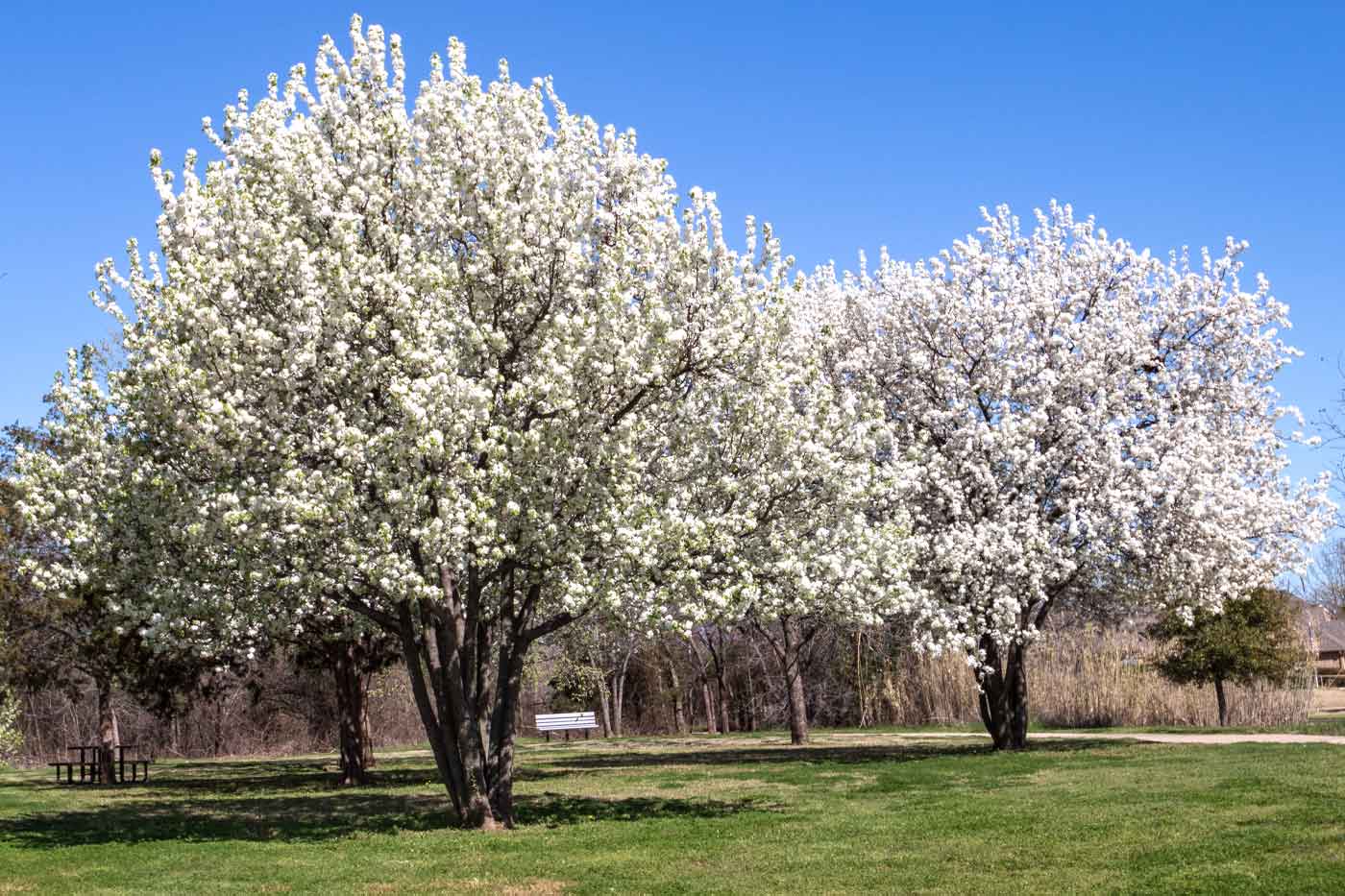
Among the worst offenders right now are wavyleaf grass, Japanese stiltgrass, fountain grass, and Callery pear — better known as the Bradford pear. Heffernan noted these species are spreading aggressively across the landscape. “Invasive plants are creating monocultures with little value and nutrition for pollinators and birds,” he explained.
Japanese stiltgrass tends to take over disturbed soils and forest floors, forming thick mats that choke out native plants and wildlife habitat. Wavyleaf grass creeps along roadsides and forest edges, squeezing out native grasses and seedlings. Bradford pear and fountain grass were originally planted as ornamental additions to yards and gardens before escaping into the wild.
The problem isn’t limited to dry land. Heffernan warned that aquatic invasive plants are also on the rise. Two-horned trapa, which has been steadily taking over ponds, lakes, and streams, disrupts water ecosystems and gets in the way of boating and fishing.
“The first ingredient to managing invasive species is commitment,” Heffernan said. “We like to say, ‘Pull invasive weeds, plant native seeds.’”
The Virginia Department of Conservation and Recreation recommends several steps residents can take to help curb the problem:
- Mow or pull invasive plants on a regular basis before they go to seed.
- For large infestations, use herbicides carefully and follow all label directions.
- Report any sightings of two-horned trapa.
- Wear gloves when handling two-horned trapa because of its sharp barbs.
- Choose native plants and grasses for landscaping and gardening projects.
- Look into tree exchange programs — the Virginia Department of Forestry offers a program to replace Bradford pears with native tree varieties.