
WASHINGTON — For the second time, the U.S. House of Representatives has passed a resolution demanding congressional approval before further military action is taken against Iran, delivering another cautionary message to President Donald Trump as the conflict continues to escalate with no clear end in sight.
The measure passed Thursday by a slim 214-208 margin. The Senate was expected to take up a similar resolution later that same morning. While the votes — driven by Democrats — carry mostly symbolic weight, they are intended as a firm message to the Republican president that his backing on Capitol Hill is eroding as the war stretches on and members of both parties have raised doubts about what the administration hopes to accomplish.
Washington Rep. Pramila Jayapal, a Democrat who led the resolution on the House floor, said the conflict has had “no clear mission, no strategy, no end goal.”
A small number of Republicans crossed party lines to vote alongside Democrats in favor of ending the war, though the majority of GOP members backed the president and voted to allow him to retain war-making authority.
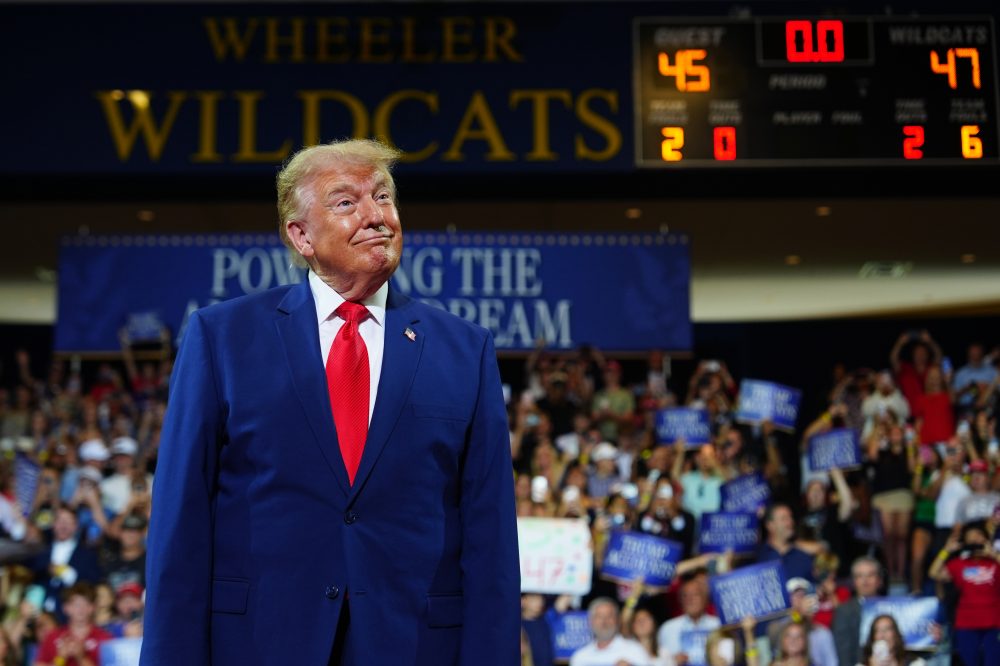
Trump has maintained that ongoing U.S. airstrikes against Iran do not represent a return to prolonged warfare. After the House’s first vote to halt the conflict in early June, he took to social media to call it “unpatriotic” and “meaningless.”
American airstrikes have continued even as diplomatic efforts show little visible progress. Both sides remain entrenched in a standoff over the Strait of Hormuz, a vital waterway for global energy supplies that has remained largely shut down. The unpopular conflict is threatening to further destabilize the world economy and is pushing fuel prices higher heading into this fall’s midterm elections.
During Wednesday evening’s House debate, Foreign Affairs Committee Chairman Brian Mast, R-Fla., read aloud the names of 18 service members who have died since the war began.
“To belittle this mission is to belittle and demean the very service these members gave their life for,” Mast said. “Their sacrifice was not meaningless. This operation is bringing reckoning for the hundreds of times Iran has attacked and killed people of the United States of America.”
The top Democrat on the panel, New York Rep. Gregory Meeks, countered that presidents are expected to make their case to Congress. He said the fallen service members gave their lives for “an illegal unauthorized war that the American people don’t want.”
As both chambers weigh in, the U.S. has launched multiple waves of airstrikes in recent days amid the ongoing dispute over the Strait of Hormuz. Gas prices have risen sharply again, and Defense Secretary Pete Hegseth told senators at a Tuesday hearing that the war has cost the U.S. $37.5 billion so far. On Wednesday, Trump traveled to Dover Air Force Base for the dignified transfer of the remains of four U.S. service members.
Maryland Sen. Chris Van Hollen, a Democrat spearheading the Senate resolution effort, said accountability is essential given the current escalation. “I do think the combination of the hearings, plus the fact that we are in this new escalatory phase where Americans have been killed, and Americans are experiencing the rising costs — I think it’s important that people be held accountable,” he said. “And this is a very unpopular war.”
Republicans in both chambers are aware that voting against the war carries political risk, even as many have privately expressed doubts about how the Trump administration is managing the conflict.
Following the June House vote, Trump used social media to call the four Republicans who sided with Democrats “GRANDSTANDERS!” and said they should be “ashamed of themselves.” He added: “They would rather have our Country fail than give me another, of many, victories.”
When the Senate passed its own war powers resolution on Iran in June, Trump attended a GOP Senate luncheon the following day and referred to the Republicans who supported it as “losers.”
Louisiana Sen. Bill Cassidy, a Republican who lost his Senate seat in a primary after Trump endorsed a challenger, told the president directly that he owed the public more information about the conflict. “This was supposed to last four weeks. It’s lasted four months,” Cassidy said. “Our original objectives have not been achieved.”
Cassidy told reporters that Trump pushed back during their conversation, and he informed the president he would not change his vote without receiving a briefing. The White House eventually agreed to a one-on-one meeting, after which Cassidy reversed his vote in a late-night do-over before the Senate departed for a two-week recess. When asked Wednesday whether the latest developments would affect his position, Cassidy declined to say.
Recent polling shows most Americans disapprove of Trump’s handling of the Iran situation. A Washington Post/Ipsos survey conducted in July found that few Americans believe the war has been worth fighting, and most lack confidence that U.S. military action and ongoing negotiations will stop Iran from developing nuclear weapons.
Even among Republicans, only about two-thirds approve of Trump’s approach to Iran. Roughly six in ten GOP respondents think the war has been worth fighting and trust that the military campaign and talks will prevent Iran from acquiring nuclear weapons — but about one-third remain unconvinced.