
WASHINGTON — A crucial federal agency plans to vote Thursday on President Donald Trump’s proposed White House ballroom addition, just days following a federal judge’s decision to stop construction work on what would represent the most significant structural modification to the historic building in over seven decades.
The National Capital Planning Commission, which oversees construction approvals for federal properties in the Washington area, will proceed with Thursday’s vote since U.S. District Judge Richard Leon’s Tuesday decision impacts actual construction work rather than the planning approval process, according to commission spokesperson Stephen Staudigl.
However, even with anticipated agency approval, the judge’s decision and ongoing legal battle surrounding the ballroom may delay progress on a signature project Trump hopes to finish before his term concludes in early 2029. The ballroom represents one of several modifications the Republican president has planned for the nation’s capital to establish his permanent mark during his presidency.
Thursday’s vote was originally scheduled for March but got delayed due to the overwhelming number of people who registered to speak at the commission’s monthly session. Public comments were largely critical of the ballroom proposal.
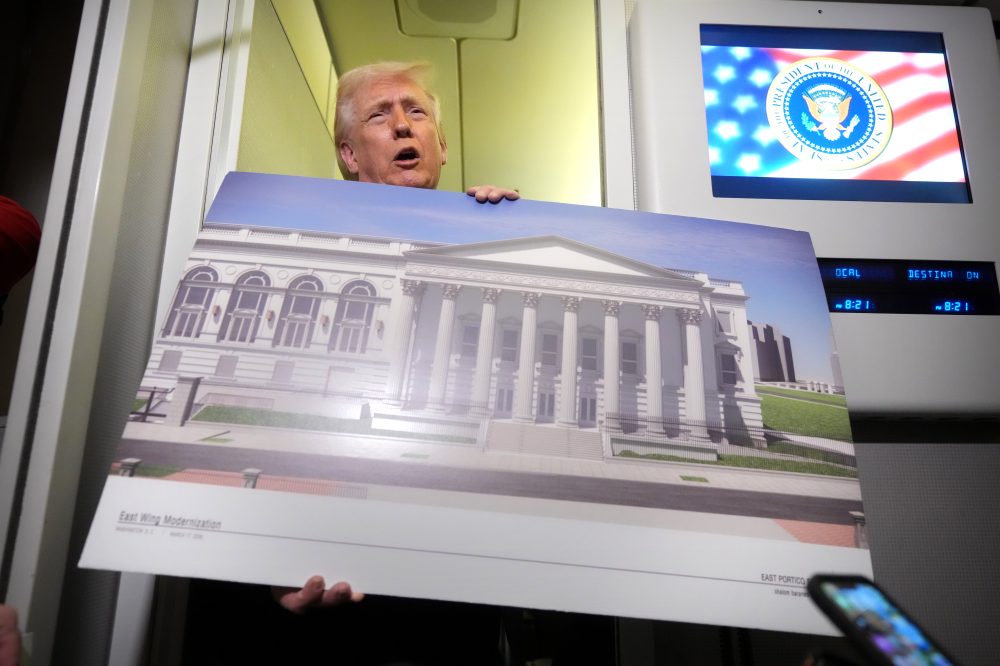
Prior to Thursday’s vote, commissioners will also review design modifications to the 90,000-square-foot ballroom addition that Trump revealed during his Air Force One flight back to Washington from his Florida residence on Sunday.
The revised plans eliminate a massive staircase from the building’s south side and include an open porch on the west side. Design professionals and project opponents had criticized the original staircase as oversized and impractical since it provided no actual ballroom entrance at its peak.
While Trump offered no explanation for these modifications, a White House official indicated the president had reviewed feedback from the National Capital Planning Commission and the U.S. Commission of Fine Arts, which gave project approval earlier this year, along with public input.
The official, speaking anonymously due to lack of authorization to discuss ballroom design publicly, mentioned that additional exterior “refinements” had been implemented and that lead architect Shalom Baranes would present these changes Thursday.
The ballroom’s current estimated cost of $400 million reflects significant expansion in both scale and budget since Trump initially unveiled the project last summer, explaining the need for proper guest hosting space beyond lawn tents. Trump demolished the East Wing in October with minimal advance notice, and site preparation plus underground construction have continued since. Officials indicated above-ground building work wouldn’t begin until April at the earliest.
The 12-member National Capital Planning Commission operates under chairman Will Scharf, a senior White House aide who has publicly supported the ballroom addition. The president selects three commission members, with Trump appointing two additional White House officials alongside Scharf.
Trump moved forward with the project before obtaining input from either the National Capital Planning Commission or the Commission of Fine Arts, which he restructured with allies and supporters.
The National Trust for Historic Preservation, a private nonprofit, filed suit after Trump demolished the East Wing last fall for the ballroom addition — a facility nearly double the mansion’s size. Trump claims private donations from wealthy individuals and corporations, including himself, will fund the project, though taxpayer money covers underground bunkers and White House security enhancements.
The trust requested temporary construction suspension until Trump presented the project to both commissions and Congress for approval. Judge Leon granted this request but specified his order would take effect in two weeks and permit security-related construction to continue.
That security work proceeded Wednesday as new Associated Press photographs showed the former East Wing site active with construction equipment and cranes reaching skyward.
Judge Leon, nominated by Republican President George W. Bush, stated in his ruling: “The President of the United States is the steward of the White House for future generations of First Families. He is not, however, the owner!” He determined the National Trust for Historic Preservation would likely prevail because “no statute comes close to giving the President the authority he claims to have.”
Trump challenged the requirement for Congressional approval of his project.
“We built many things at the White House over the years. They don’t get congressional approval,” he told reporters in the Oval Office following the ruling.
Congressional representatives from House and Senate committees overseeing the project did not respond to requests for comment. Congress is currently in spring recess.