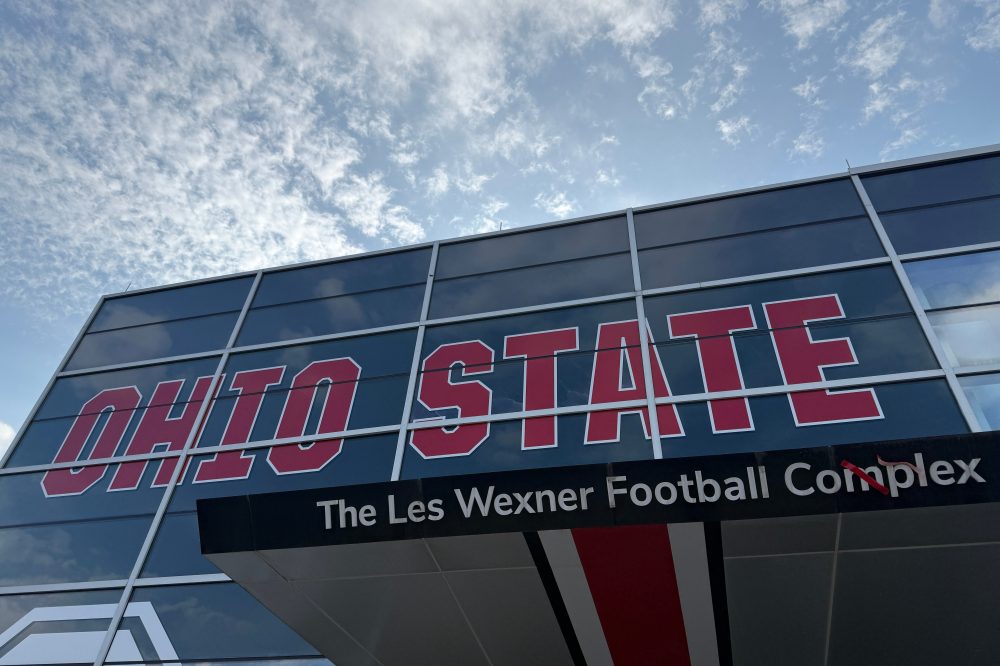

COLUMBUS, Ohio — Through harsh weather conditions, small but persistent demonstrations have taken place at Ohio State University’s main campus in recent months, all focused on one objective: eliminating billionaire retail executive Les Wexner’s name from campus structures.
The concern — shared by union nurses at OSU’s Wexner Medical Center, former student-athletes at the Les Wexner Football Complex, and student leaders who regularly pass the Wexner Center for the Arts — stems from Wexner’s documented connection to deceased sex trafficker Jeffrey Epstein.
Comparable demands are emerging regarding a Wexner-named facility at Harvard University and other buildings nationwide honoring various Epstein associates, such as Steve Tisch, Casey Wasserman, Glenn Dubin and Howard Lutnick.
This represents part of a broader movement throughout higher education targeting individuals linked to Epstein, who built an extensive network encompassing influential figures in arts, business and academia. Universities are examining both major donors and several professors whose correspondence with Epstein emerged in recent document releases, with some faculty members stepping down.
Wexner faces no criminal charges related to Epstein, the former financial advisor who he claims “duped” him.
However, a coalition of former Ohio State student-athletes who survived an extensive sexual abuse scandal at the institution contends that the retired L Brands founder’s philanthropy to his former university is now compromised by evidence that Epstein influenced numerous family financial decisions, including those involving the football complex’s naming.
“Ohio State University cannot credibly separate itself from these facts, nor can it justify continuing to honor Les Wexner with an athletic facility,” their naming removal request read. It went on, “To do so is to ignore the voices of survivors, former athletes, and the broader community who expect accountability, transparency, and moral leadership.”
At Harvard, students and faculty at the renowned Kennedy School have focused on the Leslie H. Wexner Building and the Wexner-Sunshine Lobby. The renaming petition filed in March references Wexner’s “strong ties to Epstein” and contends Epstein benefited from Wexner, “which enabled Epstein to use his wealth and power to traffic and abuse children and women.”
Certain Harvard students and graduates also seek removal of the Farkas name from Farkas Hall, which houses the Hasty Pudding Theatricals Man and Woman of the Year. The facility was renamed in 2011 following a substantial donation from Andrew Farkas, graduate chairman of the Hasty Pudding Institute, honoring his father.
Farkas maintained an extended personal and business connection with Epstein, including joint ownership of a Caribbean marina. He also repeatedly solicited Epstein for Hasty Pudding donations. From approximately 2013 to 2019, Epstein consistently contributed $50,000 yearly to achieve premium donor status, totaling over $300,000.
“As I’ve said repeatedly, I deeply regret ever having met this individual, but at no time have I conducted myself inappropriately,” Farkas said in a statement.
Opposition to buildings honoring Epstein associates is expanding across American campuses.
This past weekend, Haverford College students in Pennsylvania voted to encourage President Wendy Raymond to proceed with renaming the Allison & Howard Lutnick Library. The facility honors the U.S. commerce secretary facing resignation demands over his Epstein relationship.
Raymond indicated in a February public letter she wasn’t prepared for that step. Following Sunday’s vote, Raymond told The Associated Press she respected the process and would address the resolution within the standard 30-day timeframe.
At Ohio State, appeals against the Wexner name are proceeding through a five-stage review process, largely conducted privately without fixed deadlines. University President Ravi Bellamkonda stated, “I think the process is thorough, fair, and open, and I will promise you that we will give each request a full consideration.”
A Harvard spokesperson acknowledged receiving the Wexner-related removal request but declined further comment. This would mark the university’s second name change, following the John Winthrop House, which carried the name of a Harvard professor and similarly-named ancestor, changed to Winthrop House in July due to slavery connections.
Tufts University, featuring the Tisch Library and Steve Tisch Sports and Fitness Center, reports ongoing review of the issue. The library has clarified it wasn’t named for Steve, but rather his father Preston Tisch, a distinguished alumnus, in 1992. The sports center removed Steve Tisch’s handprints during spring break, which the university described as part of scheduled renovations.
UCLA’s Wasserman Football Center and Stony Brook University’s Dubin Family Athletic Performance Center also bear names of Epstein associates.
The present outcry resembles controversy surrounding the wealthy Sackler family’s role in the fatal opioid crisis, as both situations involve institutions receiving substantial family donations.
Several major institutions — including New York and Paris museums, Tufts and Oxford University in England — removed the Sackler name, though Harvard declined. In a 15-page report explaining its 2024 decision, the university described Arthur M. Sackler’s legacy, whose company Purdue Pharma produced the powerful opioid OxyContin, as “complex, ambiguous and debatable.”
Epstein associates with campus building names typically represent generous donors and alumni.
Wexner, his wife Abigail and their foundations have contributed over $200 million to Ohio State through the years. This included $100 million benefiting the Wexner Medical Center; at least $15 million for the Wexner Center, a contemporary art museum honoring Wexner’s father, Harry; and $5 million shared with an Epstein-managed foundation for football complex construction. The Wexners contributed another $42 million to Harvard Kennedy School.
Anne Bergeron, a museum consultant and author specializing in building naming rights ethics in the cultural sector, noted universities take gift acceptance standards seriously while recognizing donor conduct may be evaluated differently over time.
“It’s no surprise that a lot of these situations arise within the university sphere, because with students — especially the younger generation — there is virtually no tolerance for being associated with anyone who doesn’t represent the best of humanity,” she said
She described this as “a moment of reckoning” for universities and emphasized they must avoid appearing to exchange naming rights for donations.
Michael Oser, a Columbus-area resident, expressed frustration among some defending the Wexner name retention in a recent Columbus Dispatch letter-to-the-editor.
“OSU took the money. Built the buildings. Cut the ribbons. Smiled for the photos There were no formal ‘morality clauses’ attached back then, just gratitude and applause,” he wrote. “Now, years later, some want to play moral referee while the university keeps the cash and the concrete. That’s not accountability. That’s convenience.”
Lauren Barnes, a Kennedy School master’s student leading the Wexner name removal effort, explained she struggles daily as a sexual abuse survivor and mother of a 14-year-old to enter a building bearing a name connected to Epstein.
“Thinking about all the children in this world that deserve safety and also all the survivors on campus that have to walk under the Wexner name, I know what that’s like to have my heart race and my hands get sweaty,” she said. “I hate that anyone else has to have that feeling walking under that name and just dealing with it kind of everywhere on campus.”
Ohio State protester Audrey Brill told a local ABC affiliate it now “feels gross” considering women giving birth at OSU’s Wexner Medical Center “given everything that we’re learning about where this money went” — and believes removing Wexner’s name could provide relief.
Some demonstrators also want Dr. Mark Landon’s name removed from a visitor’s lounge in the hospital’s new $2 billion, 26-story tower. Landon, a prominent Ohio State gynecologist, received five-figure quarterly payments from Epstein between 2001 and 2005. Landon has stated the payments were for biotech investment consulting for Wexner, not medical care for Epstein or his victims.