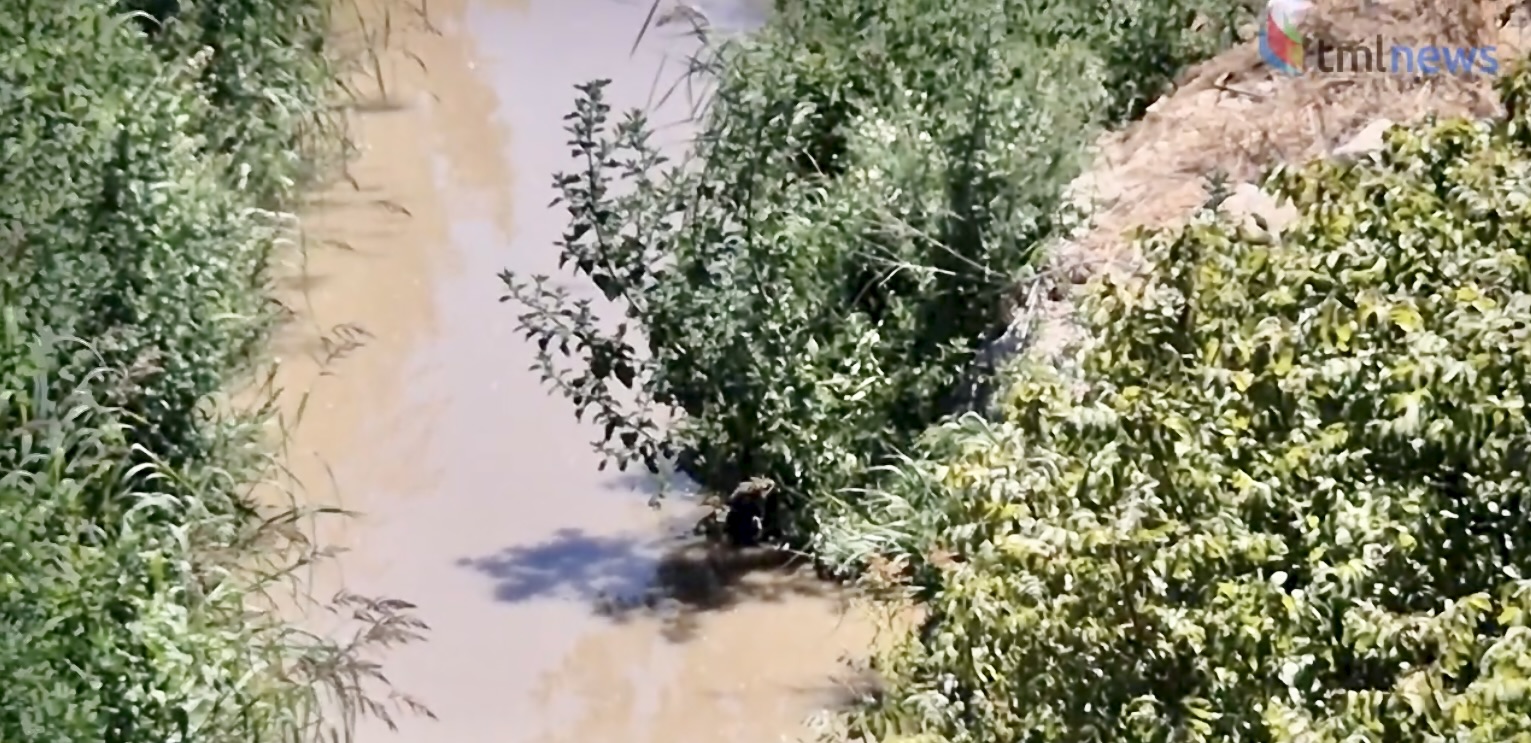

The water moving through the arid hills to the south of Hebron is murky, discolored in spots, and hard to miss. In some stretches along the streambed, the smell hits before the water even comes into view.
The contaminated flow originates in Hebron and travels southward, passing roads, open stretches of land, and Israeli communities along the way. It eventually reaches the areas of Meitar, Shoket Junction, and the Beersheba Stream system — a journey of approximately 43 kilometers, or about 27 miles.
Along that route, the water carries a combination of raw, untreated sewage and industrial runoff from the local stone-cutting industry. The flow does not respect political boundaries, crossing through the different jurisdictions that were laid out under the Oslo Accords. Communities, undeveloped land, and underground water supplies all face potential threats from the ongoing contamination.