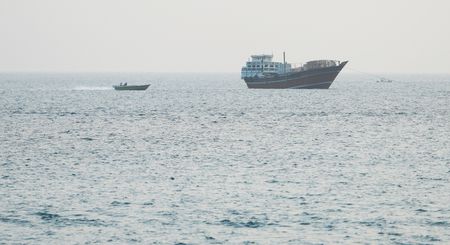

DUBAI, United Arab Emirates — American military forces reinstated a blockade on Iranian ports in the early hours of Wednesday, responding to Tehran’s repeated attacks on vessels attempting to navigate the Strait of Hormuz — a critical waterway that carries roughly one-fifth of the world’s oil and natural gas trade during normal times.
The move has triggered fresh retaliatory strikes across the Middle East and pushed an already fragile interim peace agreement closer to collapse. Both countries have been locked in a struggle for control of the strait, and experts warn the escalating conflict could drag the entire region back into open warfare.
The blockade was first put in place in mid-April, then lifted in mid-June — one day after the two sides signed a temporary agreement establishing a 60-day window for negotiations on issues including Iran’s nuclear program. However, those talks have largely stalled as clashes over the strait have grown more intense.
Iran’s paramilitary Revolutionary Guard issued a stark warning Wednesday in response to the renewed blockade, threatening to shut down all energy exports from the region. “The export of oil and gas from the region will be either for everyone or for no one,” the Guard declared.
President Donald Trump announced the return of the blockade on Monday and initially said he would impose a 20% fee on ships passing through the strait. He walked back that plan just hours before the blockade went back into effect, saying Gulf allies had asked him to reconsider. Trump said Tuesday that leaders from the region — describing them as “kings and emirs” — reached out and proposed a different approach.
“They said we’d love to do it a different way. We’d love to invest in the United States with billions and billions of dollars,” Trump told reporters in the Oval Office on Tuesday. He said he preferred that arrangement over charging tolls, adding, “I don’t think anybody should be able to charge a fee for the strait.” It remains unclear whether these investment commitments would be new or tied to deals previously announced following Trump’s visit to the Middle East last year.
Alongside reimposing the blockade, U.S. forces conducted another round of strikes, hitting dozens of targets over a seven-hour period, according to U.S. Central Command.
Missile alert warnings sounded in Bahrain and Kuwait early Wednesday as both countries faced incoming fire from Iran — a situation that has become a daily occurrence and is further straining any remaining ceasefire. Jordan reported shooting down three Iranian missiles. Iran claimed responsibility for attacks on all three nations.
U.S. Navy Admiral Brad Cooper, who commands Central Command, stated that Iran had launched dozens of missiles and drones at neighboring Gulf Arab nations. “U.S. forces are holding Iran accountable for unwarranted aggression that continues to endanger innocent lives,” Cooper said.
The U.S. currently has at least 19 warships in the Arabian Sea, including two aircraft carriers and an amphibious assault ship carrying more than 1,000 Marines. Central Command also noted on social media that “hundreds of military aircraft” are currently operating throughout the Middle East.
The conflict traces back to February 28, when the U.S. and Israel launched military operations against Iran, prompting Tehran to effectively close the Strait of Hormuz by attacking and threatening ships — sending oil, fertilizer, and other commodity prices sharply higher. More recently, Iran has been targeting vessels on a route near Oman that falls outside Tehran’s control but is overseen by U.S. forces, sparking the latest round of violence. While the U.S. has threatened to reopen the strait by force, analysts say doing so would require a significantly larger military force, potentially including tens of thousands of ground troops.
Iran’s ambassador to the United Nations, Amir Saeid Iravani, pushed back against the U.S. military campaign in a letter to the head of the world body, as reported by Iran’s state-run IRNA news agency. “The U.S. is the aggressor, not the victim,” he wrote.
Trump warned Tuesday night on Fox News Channel that additional U.S. strikes against Iran were planned for the following two days, and suggested bridges and power plants could become targets by next week if negotiations do not resume. At least one bridge has already been struck. “You better make a deal, or you’re not going to have anything left,” Trump warned.
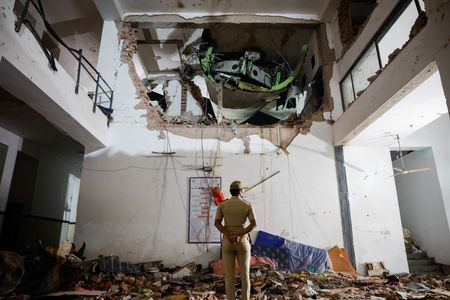
U.S. Central Command confirmed strikes on multiple locations inside Iran on Tuesday. Tehran acknowledged the attacks but did not release figures on casualties or damage. Hours after the U.S. announced it had concluded its strikes, explosions were reported in at least four locations in the Iranian city of Bushehr on the Persian Gulf, according to IRNA. Iranian state media also reported blasts in the southwestern city of Ahvaz and the southern port city of Bandar Abbas, raising questions about whether Gulf Arab nations may be conducting their own retaliatory strikes without making public statements.
Kuwait reported separately that an Iranian attack on Tuesday wounded four of its navy personnel and set a building ablaze.
Under the terms of the interim agreement, Iran had agreed to allow free passage through the strait for 60 days, but the deal left unresolved what would happen afterward. Iran maintains it has the authority to manage traffic through the waterway and potentially charge fees — a position the U.S. has rejected.
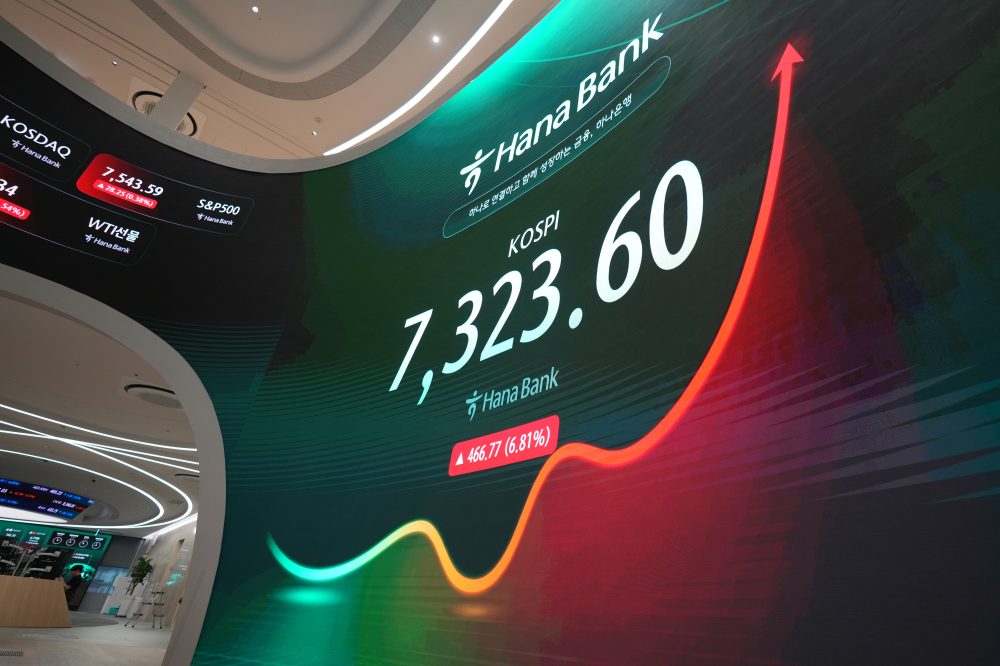
On the energy markets, a barrel of Brent crude oil — the international benchmark — briefly climbed above $87 early Tuesday, though that remains well below the nearly $120 per barrel seen at the peak of the conflict. Prices dipped back to around $78 after Trump announced he was abandoning the toll plan.
Regional mediators continue their efforts to bring the United States and Iran back to the negotiating table.