
A United Nations committee cast votes Friday to grant World Heritage status to a significant archaeological site in the West Bank and a collection of castles in southern Lebanon, pushing through the designations even as Israel actively lobbied against them.
The votes took place during a meeting of the U.N. Educational, Scientific and Cultural Organization held in Busan, South Korea — just days after Israel’s Foreign Ministry called on the committee to turn down both nominations, labeling them a “weaponization of cultural heritage.”
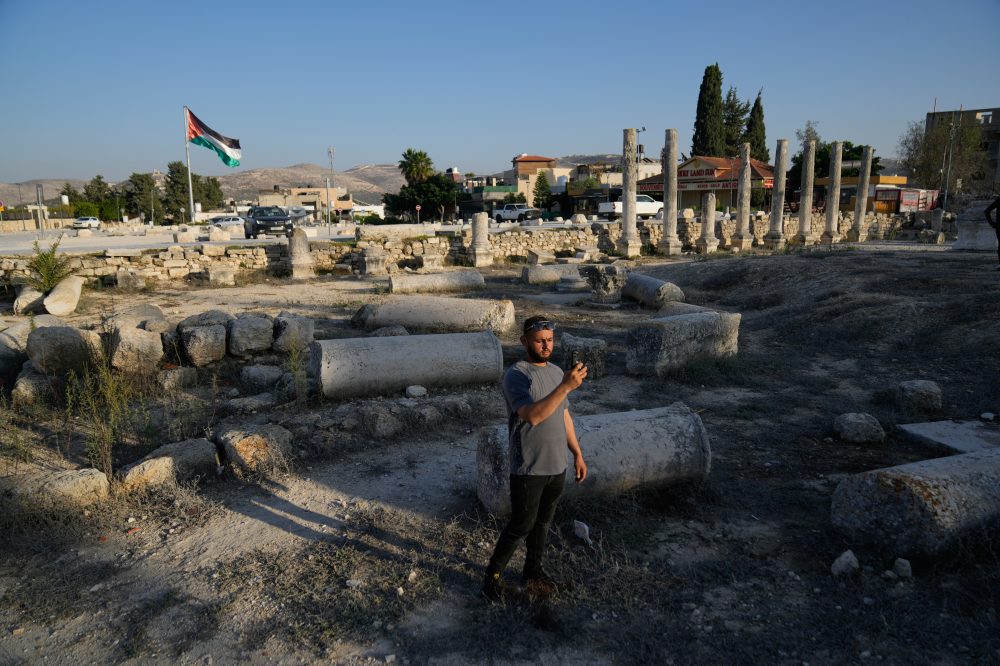
Committee members approved the addition of Sebastia, a West Bank town, and five castles located in Lebanon’s Mount Amel region to both the World Heritage List and the List of World Heritage in Danger. The nominations were reviewed on an emergency basis, with the committee pointing to the continuing conflicts across the Middle East as justification.
Sebastia sits on a hilltop roughly 10 kilometers — about 6 miles — northwest of Nablus in the Israeli-occupied West Bank. Scholars identify it as ancient Samaria, once the capital of the biblical Kingdom of Israel. The site contains archaeological layers stretching from the Iron Age through Roman, Byzantine, and Islamic periods. Both Christian and Islamic traditions hold that John the Baptist was buried there, according to UNESCO.
The Palestinian delegation to UNESCO first submitted Sebastia’s nomination back in 2012, arguing that World Heritage recognition was essential to protecting the site. The nomination noted that the area remains largely undeveloped under Israeli control and is in need of greater conservation efforts, even as it draws visitors.
The designation arrives at a time when Israel — which does not recognize Palestinian statehood — is moving to seize large portions of land surrounding the site, while simultaneously facing international pressure to rein in violence carried out by Israeli settlers in Palestinian territory.
The five castles in the Mount Amel area are noted for their rich architectural history, blending Crusader, Ayyubid, Mamluk, and local building traditions. UNESCO describes the structures as reflecting how fortified architecture evolved across nearly nine centuries.
Adel Naim Daoud Atieh, a member of the Palestinian delegation to UNESCO, said the World Heritage designation honors the determination of Sebastia’s residents, “who have protected this extraordinary site through generations, despite occupation, restrictions, and repeated attempts to separate them from their own heritage.”
Israel stepped away from UNESCO in 2019, charging the organization with bias and with minimizing the country’s historical connections to the Holy Land. A member of the Israeli delegation — attending the Busan sessions in an observer capacity — said it was a “shame politicization has ruined UNESCO and led to mockery of history.”
Earlier in the week, Israel’s Foreign Ministry accused the Palestinian delegation of running a “hostile, one-sided campaign” at UNESCO by falsely framing Sebastia as an emergency situation. The ministry called it a political effort to “erase the site’s profound, well-documented Jewish and Christian history.”
Israel also raised objections to the inclusion of Beaufort Castle in southern Lebanon among the nominated sites. The ministry alleged that Hezbollah, an Iran-backed militant group, had converted Beaufort Castle into a military base by constructing tunnels underneath it and using the surrounding area to launch rockets, and accused UNESCO of turning a blind eye to those activities.
Both UNESCO and the Lebanese embassy in South Korea declined to respond to Israel’s claims about Hezbollah. At Friday’s session, a Lebanese delegate countered that the castles have been used “only for cultural and tourism purposes” since Israel pulled out of southern Lebanon in 2000, and accused Israeli media of misrepresenting images of tourist facilities as military tunnels.
Separately, the UNESCO committee on Wednesday added another Lebanese location to its danger list — Tyre, an ancient Phoenician city in the country’s south.