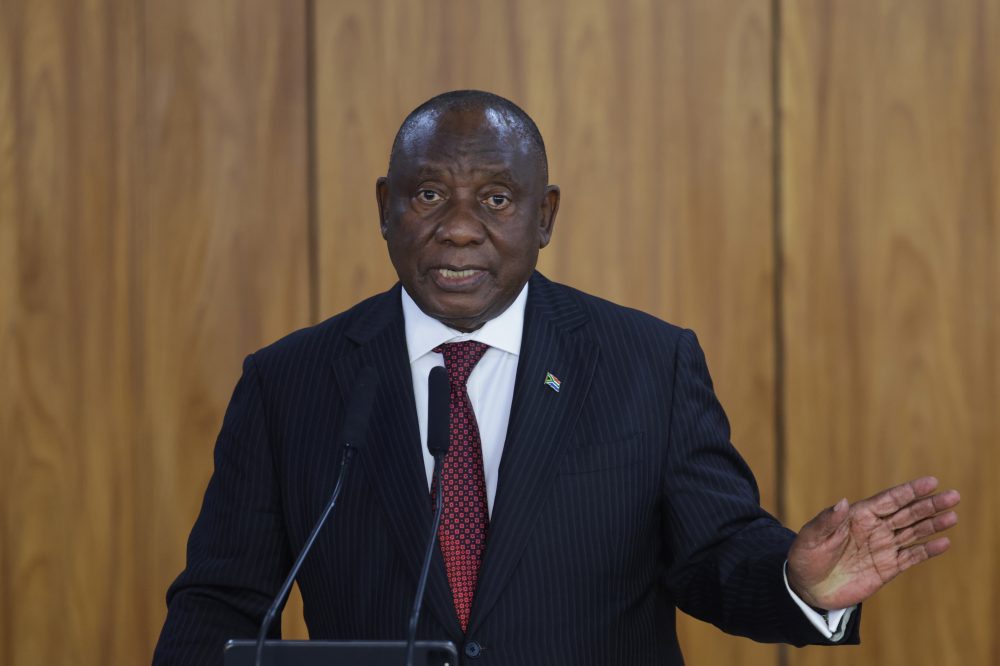

JOHANNESBURG — A court in South Africa has put impeachment proceedings against President Cyril Ramaphosa on hold, stemming from a controversy involving more than $580,000 in cash that was stolen from his farm back in 2020.
The Western Cape High Court issued the ruling on Friday, though it stops short of preventing the impeachment committee from moving forward with other preparatory steps related to the pending proceedings.
Members of parliament launched the impeachment effort in June, following a critical parliamentary report that determined the president had questions to answer about how the theft was handled. Among the concerns raised: why such a large sum of money was being stored inside a sofa on the farm.
The inquiry goes further, raising questions about where the money came from, whether any foreign currency was properly declared, and why Ramaphosa did not immediately contact police after the theft occurred.
Ramaphosa has been contesting the parliamentary report in court and sought to pause the impeachment proceedings until that legal review is finished. Friday’s court ruling granted that request.
His office said Ramaphosa welcomed the judgment and noted that he would “cooperate with and abide by processes of accountability.”
“The President reaffirms his respect of judicial independence and separation of powers enshrined in our Constitution,” his office said in a statement.
The controversy, widely referred to as the “Phala-Phala scandal,” has been a persistent political burden for Ramaphosa since he took over as the country’s leader in 2018.
Earlier this year, South Africa’s Constitutional Court — the nation’s highest court — ruled that the parliamentary report was valid and that impeachment proceedings could move forward. That came after the ANC had previously won a parliamentary vote aimed at blocking the proceedings.
The impeachment committee is made up of representatives from all political parties in South Africa’s Parliament. Most parties indicated Friday that they would review the judgment and weigh whether to appeal the decision.