
On a chilly morning inside Uganda’s largest national park, rangers sang and chatted to keep their energy up before taking on one of the most significant wildlife operations in the region — relocating endangered Nubian giraffes to a safer home.
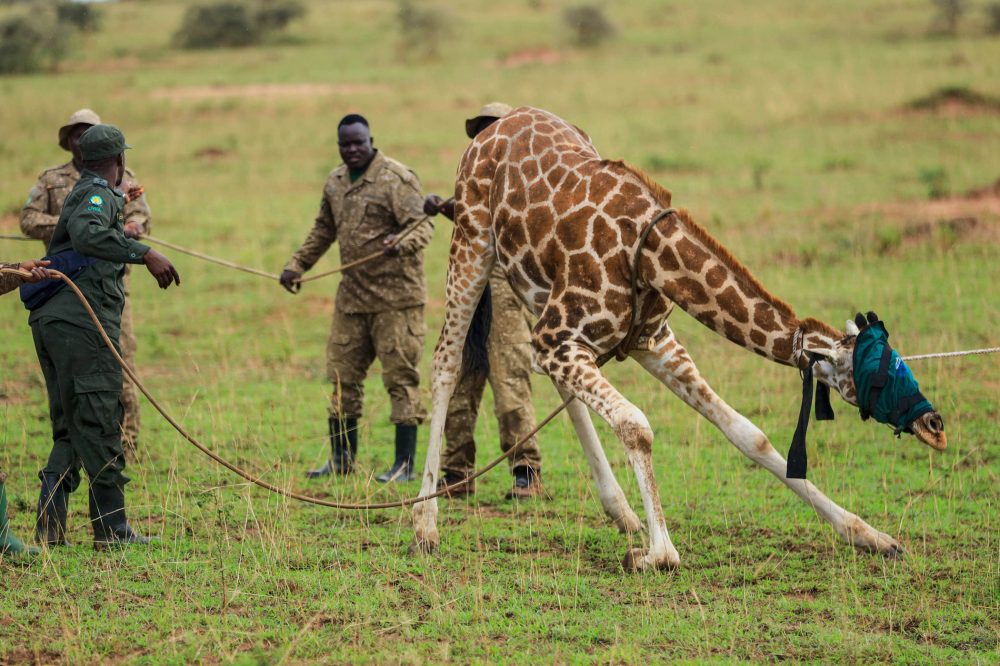
On Tuesday, rangers at Murchison Falls National Park began the process of moving 12 Nubian giraffes — Earth’s tallest land animals — approximately 106 kilometers (65 miles) to Ajai Wildlife Reserve. The multi-day effort is aimed at protecting the species, strengthening biodiversity, and opening new tourism possibilities.
The urgency of the move is tied directly to oil development. Roughly 40% of Uganda’s oil reserves are located in and around the Murchison Falls area, and heavy machinery has been moving through the park in recent months despite long-standing opposition from conservation advocates. Uganda is working toward producing its first oil from the region, and in June 2023, TotalEnergies officially launched drilling operations in the Tilenga project area within the park.
Patrick Atimnedi, the Uganda Wildlife Authority assistant commissioner for veterinary services who led Tuesday’s translocation effort, explained that building new animal populations in other protected areas would reduce strain on the existing habitat if drilling causes significant environmental damage.
Atimnedi said Uganda wants to expand the range of the critically endangered giraffes due to a combination of threats including oil and gas activity, tourism development, climate change, bush encroachment, and invasive species.
“This is shrinking the habitat of wildlife here, but especially giraffes,” said Atimnedi, referring to animals that can reach up to 6 meters (20 feet) in height and weigh as much as 2,000 kilograms (4,400 pounds).
“So having a seed population somewhere about 100 kilometers (62 miles) away from here within the same conservation area, the same zone, is the right conservation decision to make,” he added.
Following a final briefing from Atimnedi, the operation got underway as officials guided three giraffes at a time into waiting transport trucks, which had tree branches mounted inside for the animals to graze on during the trip.
At Ajai Wildlife Reserve, a team of a dozen rangers was on hand to welcome the new arrivals. The animals wasted no time stepping off the trucks and into their new 166-square-kilometer (64-square-mile) home. The reserve once supported a thriving and diverse wildlife population, but rampant poaching and prolonged civil unrest in the early 1980s wiped it out.
The arrival of the Nubian giraffes is part of a continuing effort to restore the reserve’s ecosystem. Other animals — including southern white rhinos, buffalo, zebras, and hundreds of Uganda kobs — are also being reintroduced to the area.
“The animals are now doing very well and are multiplying. Many are now pregnant. They are spreading all over the reserve, both inside the electric fence and outside the electric fence,” said Wilson Katamigwa, the senior warden in charge at Ajai Wildlife Reserve.
Wildlife officials are hopeful that Ajai, which was established in 1937, will become a thriving hub for Uganda’s animal population despite the ongoing pressures of human activity and environmental change. Sections of the reserve are being fenced off, ranger numbers have grown to combat poaching, and surrounding communities — which receive a portion of tourism revenues — are being educated on the value of conservation.
“They are ready to conserve with us, and we are having a good working relationship with the district leadership,” Katamigwa said.
Once the giraffe relocation is finished, local community members will be invited to visit the reserve to see animals that have been absent from the area for decades, he noted.
“The big dream is that we want to see the economy of this place growing bigger and bigger and for the Madi Okollo district to be included in the money economy using tourism,” Katamigwa said.
As the giraffes stepped off the trucks, community member Moses Ayoti made no effort to conceal his excitement about what the animals’ presence could mean for the local environment and economy.
“The community is aware, the vigilance is high, and I am sure they are going to take care of the animals because they belong to the local community, too,” Ayoti said.