
The United States’ top trade official said Wednesday he is hoping to reach limited trade arrangements with both Canada and Mexico before the year is out, while pushing the more complicated overhaul of the U.S.-Mexico-Canada Agreement to 2027.
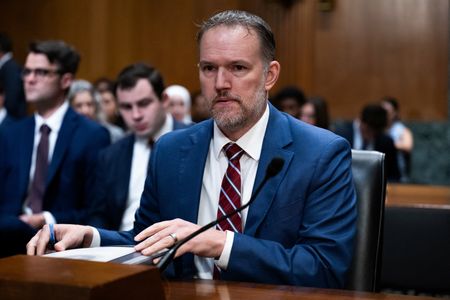
U.S. Trade Representative Jamieson Greer made the remarks during a Senate Finance Committee hearing, offering the clearest indication yet that a full renewal of the trade pact will not happen this year.
“I would love to have by the end of the year at least some arrangements — one with Canada, one with Mexico,” Greer told the committee.
Greer explained that complex issues — including stricter rules about where auto parts must originate, as well as labor and environmental standards — would need more time and further discussion “including with Congress in the following year.”
His statements made clear that a complete renegotiation of the six-year-old trade agreement will stretch into next year, extending a period of business and investment uncertainty that both Canada and Mexico have been eager to resolve.
Mexico’s Economy Ministry declined to offer a response to Greer’s comments. The Canadian government office responsible for U.S. trade relations did not immediately reply to a request for comment.
Greer said the U.S. is “moving with all due speed” on potential interim agreements. He added that his goal was to present options for President Trump, Mexican President Claudia Sheinbaum, and Canadian Prime Minister Mark Carney to weigh before year’s end, though he did not offer details on what those agreements might include.
Michael Camunez, chief executive of Monarch Global Strategies — a firm that advises businesses operating in Mexico — said the testimony sent an unmistakable message.
“Greer’s testimony confirms that the United States is no longer aiming for a clean USMCA renewal this year,” Camunez said. “The likely outcome is an interim political agreement that keeps negotiations moving but leaves the hardest issues — and much of the investment uncertainty — unresolved.”
The U.S.-Mexico-Canada Agreement and its predecessor, the North American Free Trade Agreement, have shaped the economies of all three countries for 32 years. The pact underpins nearly $1.6 trillion in what was once duty-free regional trade, with Mexico and Canada sending the overwhelming majority of their exports to the United States.
However, President Trump significantly disrupted the trade relationship last year by imposing national security tariffs — known as “Section 232” duties — of 25% on automobiles and 50% on steel and aluminum from both Mexico and Canada. Both countries are now pushing for relief from those tariffs.
Luis de la Calle, a former Mexican trade official, said that when it comes to an interim deal with Mexico, “a good place to start is elimination of the 232 duties.”
Relations between U.S. and Canadian officials have been strained in recent months. This week, Trump announced a 50% tariff on roughly $20 billion worth of Canadian goods — including beer, dairy products, and hockey sticks — as punishment for Canada retaliating against U.S. tariffs on autos and metals.
Greer was set to travel to Mexico City to participate in bilateral discussions about potential changes to the trade agreement. Canada has been left out of those talks, raising concerns that it could be pressured into accepting terms negotiated between the U.S. and Mexico.
The Trump administration is pushing Mexico to increase the share of regional content in vehicles built in North America as a condition for preferential trade access. The goal is to encourage more manufacturing within the U.S. and North America while limiting the use of Chinese-made components in vehicles. Mexico broadly supports the objectives but disagrees on how to get there, and has first sought reductions in U.S. tariffs on autos, steel, and aluminum.
Trump has been openly critical of the trade agreement he himself signed into law in 2020, repeatedly threatening to scrap it over ongoing U.S. trade deficits with both neighboring countries. On July 1, Trump chose not to renew the agreement — a move that starts a 10-year clock toward the pact’s expiration unless all three nations agree to extend it with modifications.
Greer also told senators that any interim deal with Mexico would likely need to address issues beyond trade. He cited U.S. demands that Mexico strengthen border security and comply with a 1944 treaty governing the flow of Rio Grande River water to Texas farmers.
“The president is going to have a hard time agreeing to renewal or even revisions if Mexico isn’t playing ball in all areas, and the water treaty is one of them,” Greer said.