
WASHINGTON — The Trump administration is gearing up to pour hundreds of millions of dollars into efforts to counter China’s expanding influence across the globe, reversing course after the government froze many of those same programs last year amid widespread budget and staffing cuts.
Late last week, the administration formally notified Congress of its plan to spend $175.8 million replacing aging and outdated undersea telecommunications cables in the Caribbean and Central America — a move aimed at preventing China from filling that void. The Associated Press obtained a copy of that notification on Monday.
The administration has voiced serious concerns about China’s footprint in the Western Hemisphere, including Chinese ownership of ports at both ends of the Panama Canal, infrastructure projects tied to China’s Belt and Road initiative, and Chinese investment in the telecommunications industry throughout the region.
A State Department official, speaking anonymously because they were not authorized to address the matter publicly, said China’s economic activities in the Western Hemisphere present risks to U.S. national security and economic well-being. The official said that while Chinese offerings may appear to be a bargain upfront, they often end up costing more in the long run due to cost overruns, hidden maintenance fees, and poor performance.
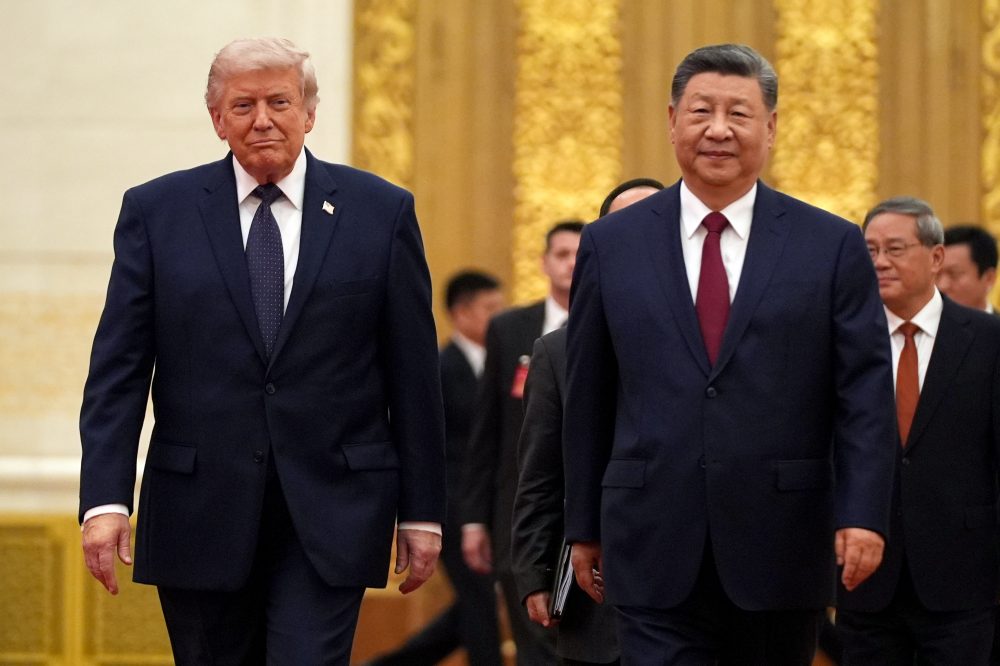
The undersea cable funding appears to be one piece of a much larger effort to revive programs targeting Chinese influence globally — an effort that could cost several hundred million dollars more. This is happening even as President Donald Trump and Chinese leader Xi Jinping have been projecting a cooperative relationship, with Xi expected to visit the United States this fall.
According to an internal State Department document obtained by the AP, the department is weighing spending close to half a billion dollars more on China-focused programs spanning the Western Hemisphere, Africa, and Asia.
“The United States must respond to the CCP’s growing economic, technological, and diplomatic leverage around the world which undermines our national interests,” the document states, referring to the Chinese Communist Party by its acronym.
Many of the proposed initiatives are aimed at “reclaiming diplomatic leverage” in areas where U.S. investment had previously existed but was cut off when the Elon Musk-led Department of Government Efficiency, known as DOGE, carried out sweeping budget and personnel reductions. Those cuts dismantled the U.S. Agency for International Development and eliminated several hundred diplomatic posts around the world, including some projects specifically designed to counter China.
A senior U.S. official, also speaking on condition of anonymity to discuss future plans, confirmed the administration’s intention to increase counter-China spending but said many of the specific proposals remain in early discussion stages.
The program described to Congress is officially called the “Countering CCP Control of Caribbean and Central America Undersea Cables project.” According to the congressional notification, it will fund the installation of strategically chosen undersea cable infrastructure and help foreign governments work with private-sector cable installers. The funding is intended to replace outdated cables in the region with secure alternatives backed by the U.S. and trusted partners.
Countries expected to benefit from the undersea cable program include El Salvador, Guatemala, Honduras, Nicaragua, and Haiti, according to the document. Despite Nicaragua being on the list, the U.S. has strained relations with that country’s government and would not be working directly with its leadership.
China’s embassy in Washington had not responded to requests for comment as of the time of this report.
Beyond the cable project, the administration has drawn up plans to fund more than 50 specific anti-China initiatives worldwide at a cost of over $340 million, according to the internal State Department document. Among the proposals being revived are the creation of security operations centers in Argentina and Belize to monitor Chinese threats to critical infrastructure and cybersystems. Plans are also being considered to shield Ecuador, Jamaica, Mexico, Paraguay, Peru, and Uruguay from alleged Chinese efforts to infiltrate port operations and exploit offshore fishing and critical mineral resources.
On a broader scale, the proposal would work to counter Chinese influence in the selection of a future successor to the Dalai Lama, push back against international backing for China’s space program, and oppose Chinese companies seeking to export surveillance and censorship technology abroad. The document did not go into specific detail on these initiatives.
The administration notified Congress in May that it had already spent several hundred million dollars in counter-China funding from the 2024 budget approved under the previous administration, though many other projects from 2024 and 2025 had been placed on hold.
President Trump is expected to sit down with Xi in September, around the time of the annual United Nations General Assembly in New York. Secretary of State Marco Rubio met last week with Chinese Foreign Minister Wang Yi at a regional security conference in the Philippines to help lay the groundwork for that meeting.
Trump’s relationship with Xi has shifted between tension and warmth over time, with the U.S. leader seeking to cultivate Xi as a partner even as China continues to pursue goals that conflict with many of the administration’s priorities. The full impact of these proposed new programs is not expected to be clear for many months or even years.