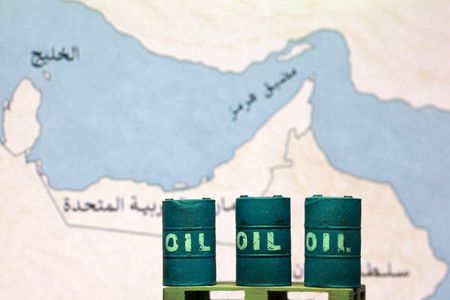

Oil prices slipped about 1% on Tuesday as investors processed the implications of a halt in U.S. military action against Iran, fueling cautious optimism that diplomacy could ease tensions and restore normal energy shipments from the Middle East.
Brent crude futures dropped $0.54, or 0.6%, settling at $87.82 per barrel as of 0046 GMT. U.S. West Texas Intermediate crude declined $0.66, or 0.8%, to $81.95 per barrel. Both benchmarks had fallen as much as 1% earlier in the trading session, touching their weakest levels in more than a week.
On Monday, U.S. President Donald Trump indicated that the United States was engaged in “good talks” with Iran and acknowledged the possibility of a resolution. At the same time, he warned that military strikes would resume if negotiations broke down. Iran echoed similar warnings about potential retaliation.
IG analyst Tony Sycamore addressed the market reaction in a note to clients, writing: “For now, the relief that an off-ramp has been found has taken the heat out of prices and eased concerns around Houthi attacks on Saudi infrastructure. However, the situation remains highly fluid.”
Adding another layer of complexity, Afrah al-Zouba, the foreign minister-designate of Yemen’s internationally recognized Saudi-backed government, stated that Yemen-based Houthi fighters were seeking to replicate Iran’s grip over shipping lanes through the Strait of Hormuz — this time at the Bab el-Mandeb strait.
Marex analyst Edward Meir offered perspective on the Houthis’ capabilities and the broader market impact: “Whether the Houthis have the military capacity to enforce a comprehensive blockade is questionable, especially given that the Saudis will attack them relentlessly. Still, there is no doubt that traffic has dropped off significantly in the Red Sea and the Strait of Hormuz.”
Meir also pointed to weakening demand as a factor keeping prices from climbing even higher, saying, “A key reason prices are not even higher than they are right now is the demand destruction that is taking place, especially in Asia.”
In a Monday research note, Barclays analysts reported that “flows through the strait remain subdued.” They noted that in the week ending July 24, combined crude oil and refined product net exports through the Strait of Hormuz averaged 2.9 million barrels per day — down sharply from 5.9 million barrels the previous week.
On the domestic supply front, a preliminary Reuters poll conducted Monday suggested that U.S. crude oil stockpiles likely declined last week, along with gasoline inventories, while distillate stocks were expected to have increased.