
South Korean chipmakers took a major hit on Tuesday, with Samsung Electronics losing as much as 9.5% of its value and SK Hynix tumbling nearly 11% as investors pulled back from artificial intelligence-related investments. Growing concerns about how AI infrastructure is being financed — combined with rising pressure from Chinese competitors — drove the sharp declines.
SK Hynix had already seen its U.S.-traded shares fall the night before, closing at $143.02 — a drop below the company’s initial public offering price of $149.
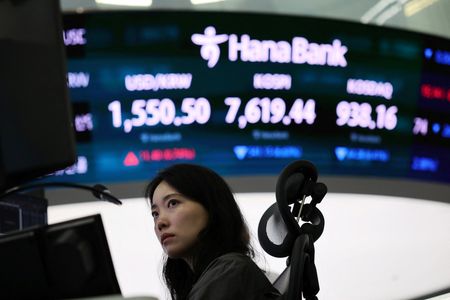
South Korea’s main stock index, the KOSPI benchmark, was down 7.3% as of early morning trading.
The widespread selloff across the chip sector was triggered by a series of developments that cast doubt on how long the AI-fueled semiconductor surge can continue.
SK Hynix supplies high-bandwidth memory chips — known as HBM — to Nvidia and has been among the biggest winners of the AI investment wave. That close relationship with Nvidia makes SK Hynix especially vulnerable when investor confidence in the AI sector wavers.
Market analysts said the decline reflected a mix of worries: questions about how AI data center projects are being funded, technological progress inside China, and the rise of Chinese firms as serious competitors in the global chip market.
A report from the Wall Street Journal revealed that Nvidia may be providing roughly $250 billion in financial backing for an OpenAI data center project. That news sent Nvidia’s own shares down nearly 5%, as investors questioned whether the AI chip giant was essentially financing the very customers it sells to.
On a separate front, reports emerged that China has been making strides in building its own deep ultraviolet lithography equipment — a type of advanced tool used in chip manufacturing. If successful, such progress could help China reduce its dependence on Western technology, even as the United States maintains restrictions on exporting advanced chip equipment to the country.
Further rattling the market, Chinese open-source AI models — including one called Kimi K3 — have been gaining traction as lower-cost alternatives. Their rise raised questions about whether future AI computing tasks might require less processing power than previously assumed, which would translate into weaker demand for high-end chips and HBM memory.
Adding to investor unease, Chinese memory chipmaker CXMT made a strong debut on the stock market, stoking fears about growing rivalry in the global memory chip industry.
The CXMT listing came on the heels of reports that Apple had been lobbying the Trump administration to permit the use of Chinese-made chips in some of its products — a development that further unsettled investors already on edge about China’s expanding role in the semiconductor world.