
Tesla announced Wednesday that its bottom line took a hit last quarter, with the electric vehicle company led by Elon Musk channeling a much larger share of its money into research and development — offsetting gains from a strong surge in car sales.
The Austin, Texas-based automaker posted second-quarter net income of $1.11 billion, or 32 cents per share. In the same quarter one year ago, the company had earned $1.17 billion, or 33 cents per share.
When stripping out certain charges, earnings landed at 33 cents per share — down from 40 cents per share in the year-ago period. That figure came in well below the 53 cents per share that Wall Street analysts had projected, according to FactSet.
On the revenue side, Tesla posted a 26% increase to $28.24 billion for the quarter, surpassing analyst forecasts of $26.42 billion.
Research and development costs jumped roughly 49% compared to the same period last year, reaching $2.37 billion — the highest level recorded over at least the past four quarters.
Following the release of the earnings report, Tesla’s stock dropped 2.7% to $363.98 in after-hours trading. Shares had already closed the regular session down 1.3%, and the stock remains down nearly 17% so far this year.
Earlier this month, Tesla disclosed that it delivered 480,216 vehicles during the second quarter — a 25% rise compared to the same stretch last year and the company’s second consecutive quarter of growth. Those delivery numbers also topped what analysts had anticipated, per a FactSet survey.
The rebound in Tesla’s sales this year represents a dramatic shift from a year ago, when the company faced consumer backlash in Europe over Musk’s public support of far-right political candidates in elections across the continent.
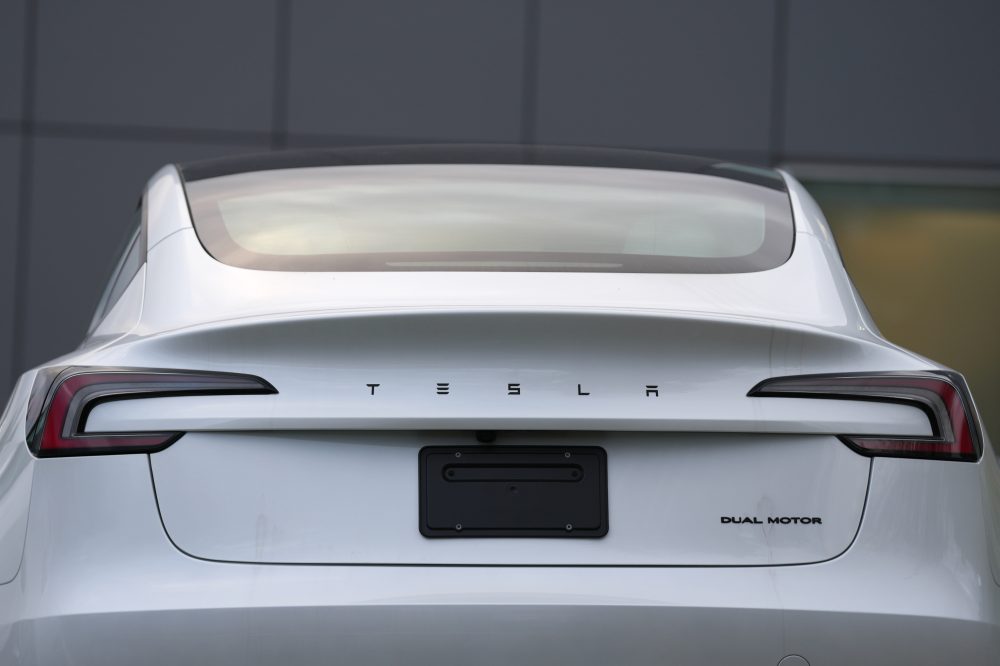
The bulk of vehicles delivered last quarter were the Model Y crossover SUV and the Model 3 sedan. Tesla introduced lower-priced versions of both models last year in an effort to attract more buyers, and also reduced leasing and loan costs in Europe.
European EV sales more broadly received a boost as gas and diesel prices climbed in the wake of the Iran war.
Just months earlier, Tesla had reported that its sales declined in 2025 for the second consecutive year, and the company had lost its title as the world’s top electric vehicle seller to China’s BYD.
While EV sales made up the largest portion of Tesla’s total revenue, the company also saw growth in its energy generation and battery storage division, which brought in $3.14 billion — a 13% increase from the second quarter of last year.
Tesla also received a lift from growing subscriptions to its driver assistance technology, known as Full Self-Driving (Supervised), which is available to customers in the United States.