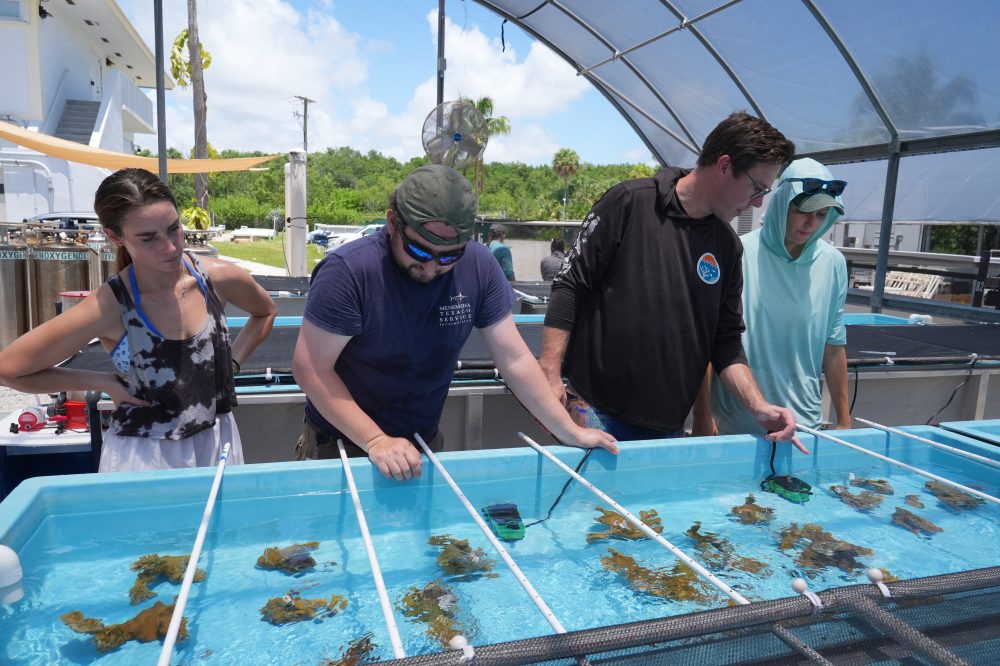

Scientists in Key Biscayne, Florida are taking drastic steps to prevent the complete loss of an already critically endangered coral species. On Wednesday, researchers transported 30 pieces of elkhorn coral from offshore nurseries to a land-based hatchery, hoping to shield them from what experts fear could be a catastrophic bleaching season this summer.
Diego Lirman, an associate professor of marine biology at the University of Miami, explained that elkhorn coral was devastated by a major heat wave in 2023, followed by another in 2024. Together, those events left the species functionally extinct — meaning the surviving colonies are too small and too spread out to reproduce on their own — across the stretch of coastline from Broward County to the Florida Keys. When ocean water gets too warm, coral bleaches, and if the stress lasts long enough, it dies.
Researchers had been growing new coral at nurseries along the coast, but warning signs pointing to 2026 being “a really bad year” for bleaching — potentially worse than 2023 — pushed them to move some specimens inland now. Lirman noted that coral is already showing signs of heat stress as water temperatures climb.
Coral reefs are far more than underwater scenery. These living structures support global seafood production, shield coastlines from storm surges, and drive tourism economies. But scientists are alarmed that climate change is making bleaching events more frequent. Florida’s coral has now endured four mass bleaching events in just the past ten years.
“They seem to be blending into each other and corals are not getting time to recover,” Lirman said.
On Wednesday, divers carefully collected coral pieces selected for their genetic variety, wrapping each one in wet bubble wrap and placing them into coolers. Once brought ashore, the pieces were sanitized and placed into tanks at the hatchery.
The University of Miami shares coral specimens with other researchers and institutions in an effort to preserve as much of the original genetic diversity as possible across multiple locations. As Lirman put it, “so if one goes down you don’t lose the last remaining genetic information.”
He stressed the importance of maintaining that variety: “You never know: You may have some that are resistant to disease, some that are resistant to temperature, some that are resistant to acidification. Once we lose them, then that information is lost.”