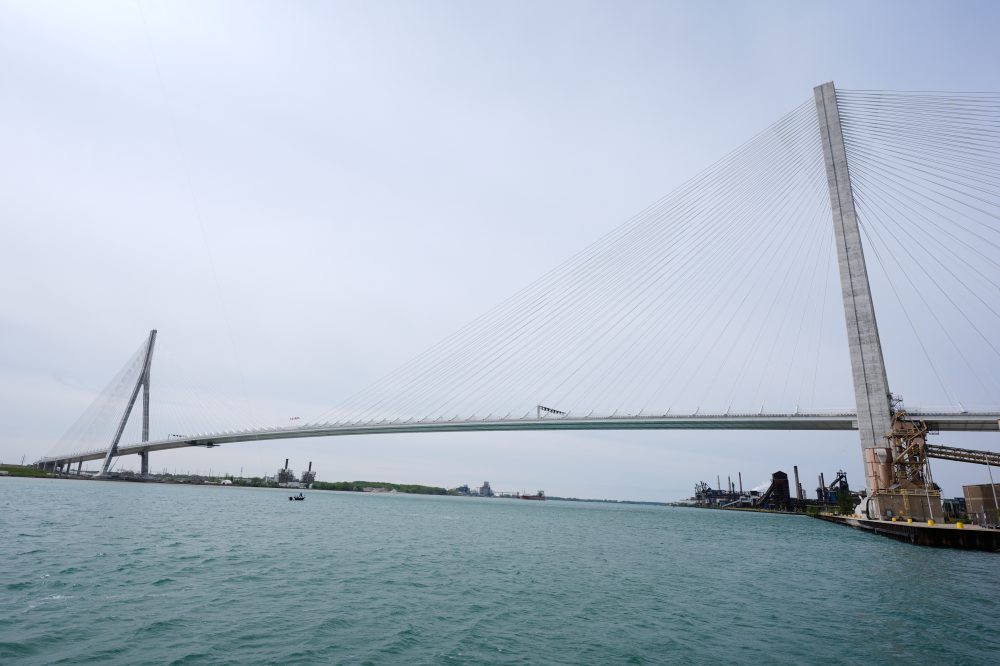

DETROIT — A landmark bridge connecting the United States and Canada is about to open its lanes to traffic, but the mood surrounding the milestone has been dampened by rising hostility between the two neighboring nations.
The Gordie Howe International Bridge — named for a celebrated Canadian hockey legend who played for the Detroit Red Wings — stretches six lanes high above the Detroit River, linking Michigan with Ontario. After years of planning and billions of dollars spent on construction, the structure is nearly ready for use.
However, a joint ceremony that had been planned for Friday, where officials from both countries were set to meet at the center of the bridge, has been called off. The cancellation came after President Donald Trump announced 50% tariffs on the majority of Canadian goods entering the United States this week.
A spokesperson for the Canadian minister of infrastructure stated that holding a shared celebration at this moment would be “inappropriate.” A separate event in Windsor, Ontario, is still on the schedule. Despite the diplomatic friction, the bridge is expected to open to vehicle and truck traffic on Monday, with pedestrian and bicycle access beginning August 5.
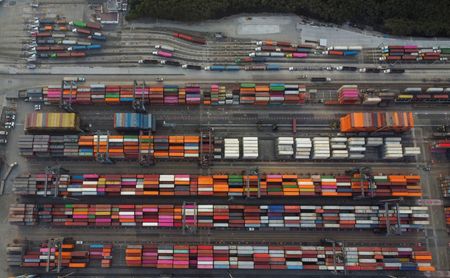
The stakes surrounding this bridge are enormous. More than 70% of Canada’s exports are bound for the U.S., making America the country’s top trading partner. Detroit ranks as the busiest port for truck crossings along the entire U.S.-Canada border, according to the U.S. Department of Transportation.
The goods crossing there — particularly auto parts — represent billions of dollars in trade. For many decades, large commercial trucks traveling between Detroit and Ontario had only one option: the Ambassador Bridge, a privately owned crossing controlled by the Moroun family’s Detroit International Bridge Co.
Facing the end of its exclusive hold on that lucrative toll traffic, that company fought the new bridge through repeated legal challenges and even funded a 2012 Michigan ballot referendum — but came up short every time. Construction on the Gordie Howe bridge broke ground in 2018, with Canada bearing the full cost.
Windsor Mayor Drew Dilkens said conversations about building an additional crossing began following the September 11 attacks, when authorities started thinking about what would happen if the Ambassador Bridge were targeted. Expanding trade capacity was also a driving factor. On the American side, the push for the bridge was championed by Michigan Gov. Rick Snyder before he departed office in 2019.
The Windsor-Detroit Bridge Authority, established by Canada, will manage the bridge’s operations. Under a recent agreement, Canada will share a portion of toll revenue with the U.S. government for 15 years. Michigan is also in line for a cut, though that won’t happen until Canada recoups its construction costs — a timeline that could stretch decades into the future.
“This will be the most technologically advanced bridge the moment that it opens, and it will give the most amount of certainty possible to the trucking industry,” Dilkens told CTV News in Canada this week, adding that “there’s a lot of excitement on both sides of the border.”
Still, that excitement has been significantly muted by the current state of U.S.-Canada relations.
Trump this week used a provision of the Tariff Act of 1930 to slap 50% tariffs on certain Canadian products, accusing Canada of treating American autos, alcohol, and dairy unfairly.
Ontario Premier Doug Ford has expressed concern about a potential trade war, and negotiations are expected before the tariffs officially kick in within 30 days.
“Canada’s been very, very tough on us over the years, for many years, and no other president’s done anything about it. … Without us, there’s no way they can survive,” Trump said in defense of the tariff measures.
Trump also criticized Canada over wildfires that have pushed hazardous smoke into the Midwest and East Coast, arguing the blazes are the result of poor forest management. Premier Ford called the blame from U.S. officials a “shame.”
“Maybe they should pay us some damages or something,” Trump said. Earlier this year, shortly after beginning his second term, Trump had also suggested Canada should become a U.S. state.