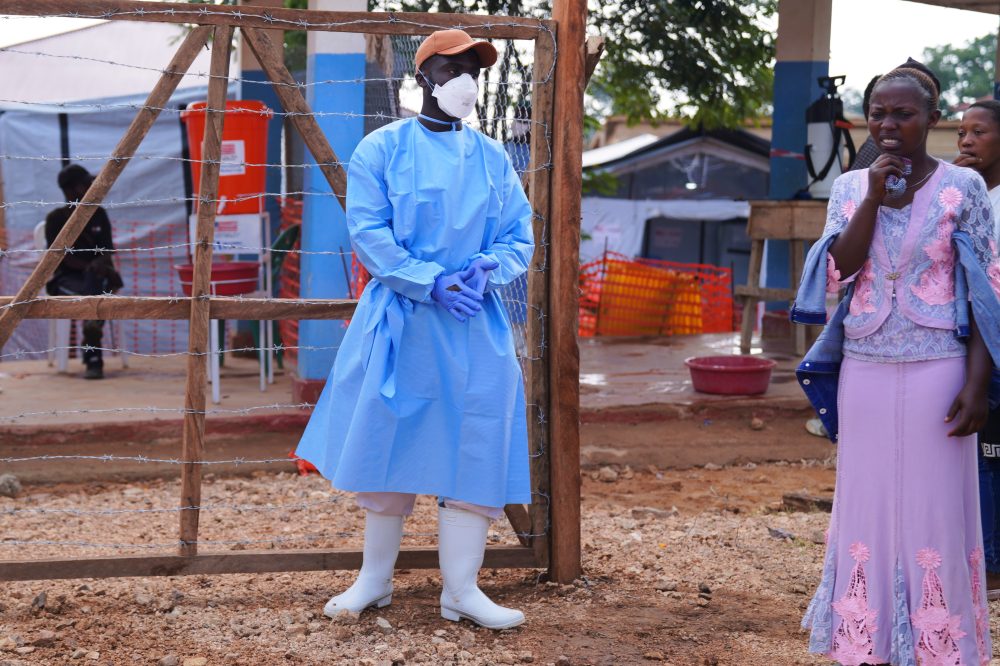

Health workers at an Ebola treatment center in eastern Congo staged a walkout Saturday over unpaid bonuses, bringing patient care to a near standstill in the heart of the country’s rapidly escalating outbreak.
According to government figures released Friday, Congo has now recorded 2,973 confirmed Ebola cases, with 1,309 of those resulting in death — a pace authorities describe as the fastest-growing outbreak ever documented.
Operations at the Elikya Ebola Treatment Center in Bunia, located in Ituri province, were largely brought to a halt after doctors, nurses, and security personnel refused to work. Around one hundred health workers gathered outside the facility to demonstrate, saying the failure to pay their bonuses was hurting morale and putting patients at risk. They urged Congolese authorities to pay the overdue amounts so they could return to their duties.
In a statement released the day before the strike, staff said they had voted unanimously to walk off the job until “concrete solutions” were reached regarding “two months of unpaid performance bonuses.”
This is not the first labor action in the area. The previous week, workers at Bunia General Hospital — the largest medical facility in the region — also went on strike over unpaid salaries. Some of those workers told reporters they had not received any compensation since they began working at the start of the outbreak.
The World Health Organization has reported that more than 100 healthcare workers have been infected with Ebola since the outbreak began.
Congo has been fighting this Ebola outbreak, caused by the rare Bundibugyo virus, since May 15. Currently, 766 patients remain in isolation or under hospital care, while 540 have recovered, according to the country’s Ministry of Health.
The eastern province of Ituri is the epicenter of the crisis, accounting for nearly 90% of all confirmed cases.
Despite an expanding response effort, the outbreak continues to outpace the ability of health officials to track it. Authorities have not yet been able to identify the original source of the infection, and the movement of people displaced by armed conflict and mining activity has made contact tracing extremely difficult.
The overall response is being undermined by a lack of adequate funding, attacks on health facilities, ongoing armed conflict in eastern Congo, and deep mistrust within local communities.
Adding to the challenge, there is no approved vaccine or treatment for the Bundibugyo virus, unlike the more common Zaire strain, for which a vaccine exists and which was responsible for the majority of Congo’s previous 16 Ebola outbreaks. However, enrollment in a clinical study examining two potential treatments recently got underway in Ituri.
The WHO has assessed the risk of the outbreak spreading beyond Central Africa as low, pointing out that Ebola is transmitted through direct contact with the bodily fluids of an infected person — not through the air — making it far less contagious than respiratory illnesses.