
NEW DELHI — The thought of sitting India’s most grueling medical school entrance exam a second time was more than 19-year-old Sheikh Sana could bear. The night before the retake, she wrote two words — “I am sorry” — on a blank piece of paper, and ended her life, according to her family.
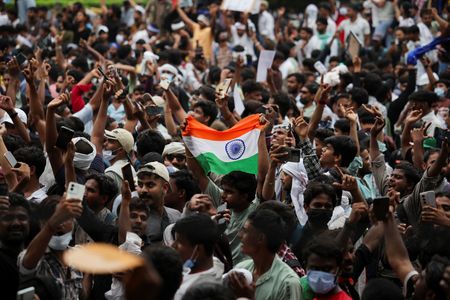
Her death, and the suicides of other young students who faced a forced retake of the National Eligibility-cum-Entrance Test — known as NEET — after exam papers were found to have been leaked, has ignited a nationwide wave of protests. Thousands of demonstrators have taken to the streets, directing their anger at Prime Minister Narendra Modi’s government and demanding answers.
The pressure reached a breaking point on Saturday when Education Minister Dharmendra Pradhan stepped down in the wake of the demonstrations.
What began roughly two months ago as outrage over the exam leak has grown into something much larger — a generational reckoning over education, economic opportunity, and government accountability in a country where 65% of the population is under 35 years old.
More than 2 million students took the pen-and-paper exam in May. When the leak became public, the government opened an investigation, withheld the results, and ordered a new exam in June — sending millions of students back into months of intense preparation.
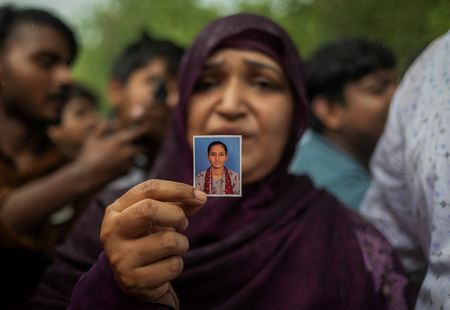
“The fear killed her. The fear of re-NEET,” said Sana’s father, Sheikh Jaffar Hussain, speaking to reporters at the Jantar Mantar protest site in New Delhi, where students have gathered to call for accountability.
The government has offered no public comment on the student deaths. Police officials in the states of Rajasthan, Telangana, and Gujarat confirmed they had classified the deaths of Sana and two other students as suicides, and said investigations remain ongoing. The specific reasons for the deaths could not be independently confirmed.
India’s federal Central Bureau of Investigation announced in mid-May that teachers and agents at private tutoring centers had sold exam questions to students for large sums of money. Thirteen suspects have been arrested so far, including a doctor and several teachers.
Prime Minister Modi addressed the scandal in a video message on Thursday, saying he was troubled by the leaks and vowing swift action, including trials in fast-track courts. “I know that paper leaks are not an ordinary issue. And for millions of students and their guardians, this is painful,” he said.
Demonstrations this week drew tens of thousands into the heart of New Delhi, where police deployed batons and tear gas to break up crowds. Opposition lawmakers disrupted parliamentary proceedings, joining calls for the education minister’s resignation.
Rahul Gandhi, who leads the main opposition Congress Party, told reporters there had been more than 150 exam leaks over the past decade, none of which resulted in punishment. The education minister’s office did not respond to questions about those claims.
A youth-led protest group called the Cockroach Janta Party, which has been at the forefront of the demonstrations in the capital, says it believes 21 students died by suicide in connection with the exam scandal — though that figure could not be independently verified.
In his resignation post on social media platform X on Saturday, Pradhan wrote: “I deeply respect the aspirations, feelings, and legitimate expectations of the country’s youth.”
Political analysts say the unrest poses a real challenge for a government that has long pointed to India’s young population as one of its greatest assets. “When young people are on the streets of Delhi protesting against a malfunctioning education system, it acquires much larger significance,” said Sabyasachi Basu Ray Chaudhury, a political science professor at Rabindra Bharati University in Kolkata.
Still, analysts note that Modi has survived major protest movements before — including demonstrations over a citizenship law and agricultural policy — without significant damage to his political standing.
For countless Indian families, the NEET exam represents a path to financial stability and social status in a country where professional credentials are prized and good jobs can be hard to come by. India’s youth unemployment rate stood at 9.9% last year, compared to an overall rate of just 3.1%. Only about 6% of test-takers ultimately earn a spot in medical school.
Rajesh Kumar, a farmer in Jhunjhunu district in the northwestern state of Rajasthan, sold land worth 2.8 million rupees — roughly $29,000 — and took out a bank loan of 1.1 million rupees to support his son Pradeep Kumar’s dream of becoming a doctor. The 22-year-old had relocated to the coaching hub of Sikar to study for the exam. He died by suicide on May 15, just days after the government cancelled the release of the exam results.
“We are farmers and hardly educated, but my son always wanted to become a doctor,” Kumar said, seated outside his modest home. He told reporters he blamed what he called a “failure of the system” for his son’s death, and that he refused to perform traditional Hindu last rites — immersing his son’s ashes in the Ganges — until the education minister resigned.
“I want accountability,” he said, adding that he was not seeking financial compensation.
A third student, 17-year-old Kahaan Patel from Gujarat — the prime minister’s home state — died in the days before the retake exam in June. His father, Prashant Patel, said his son had hoped to study medicine and eventually pursue higher education in the United States. After the retake was announced, the teenager tried to prepare again but could not cope with the uncertainty surrounding his future.
“He wasn’t able to fight more, so he ended it,” his father said.
Education activist Nandita Narain, a former president of the Delhi University Teachers’ Association, said the protests reflect deep frustration over the immense pressure students face and the growing influence of expensive private coaching centers in the education system. “The youth of India have finally awakened to the seriousness of the problem,” she said. “The anger which was building up for some time has come to the surface.”
At the protest site in Delhi, photographs of students who died by suicide were displayed on stage as demonstrators continued chanting, demanding answers from their government.