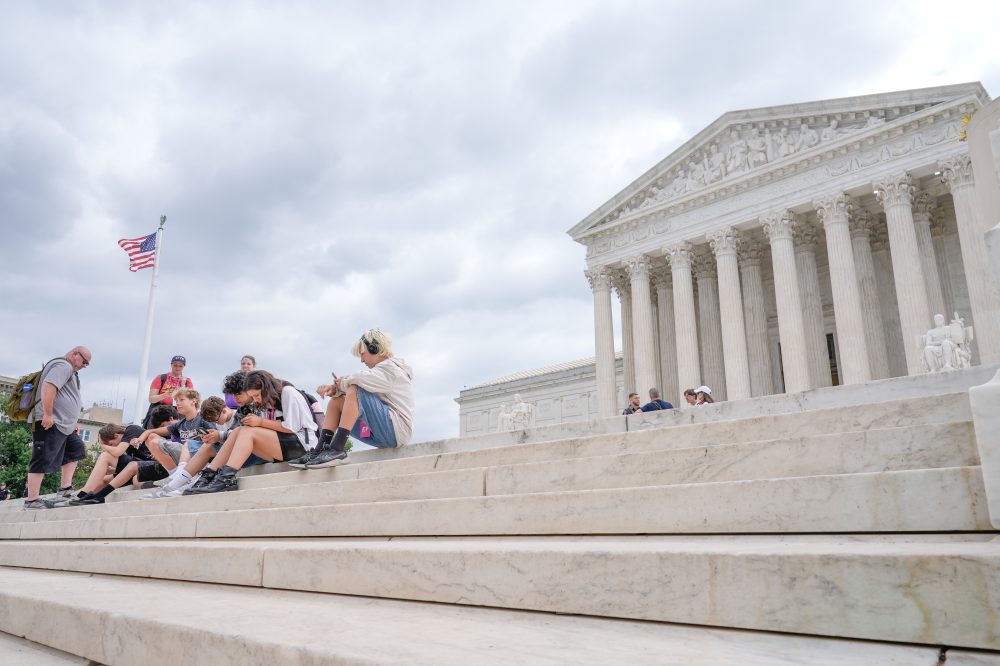

WASHINGTON — The U.S. Supreme Court has agreed to weigh in on a significant constitutional question: can states legally use juries of just six people in criminal cases, rather than the traditional 12? The case putting this issue before the nation’s highest court involves a Florida chiropractor in an unlikely but pivotal legal battle.
The justices will hear arguments this fall in the case of Hamed Kian, a 45-year-old chiropractor who contends that being tried by a six-person jury violated his constitutional rights. Kian was convicted of continuing to see patients after his license was suspended.
Court records show Kian’s license was pulled after three female patients complained that he had either kissed or touched them inappropriately. Despite the suspension, prosecutors gathered evidence that Kian kept operating out of his office in Jupiter, Florida. He was ultimately found guilty by a jury of six people.
Florida routinely uses six-person juries for all criminal cases not involving the death penalty. Five additional states — Arizona, Connecticut, Indiana, Massachusetts, and Utah — also conduct some criminal trials with juries of that smaller size.
Kian’s legal team argues the six-person jury runs afoul of the Sixth Amendment to the U.S. Constitution, which guarantees defendants the right to “a speedy and public trial, by an impartial jury of the state.” While the amendment doesn’t spell out a specific jury size, his attorneys argue that when the amendment was ratified in 1791, the word “jury” was universally understood to mean a group of 12 people. More than a century later, the Supreme Court affirmed that standard.
However, in 1970, the court reversed course in a 7-1 ruling — also stemming from a Florida case — determining that 12 jurors were not constitutionally required. Justice Thurgood Marshall was the lone dissenter in that decision.
In recent years, the Supreme Court has placed greater weight on the original meaning of the Constitution. In a related Sixth Amendment ruling in 2020, the court determined that criminal juries must reach unanimous verdicts, effectively overturning a 1972 decision that had allowed non-unanimous convictions in Louisiana and Oregon.
Kian’s attorneys drew a direct line between that ruling and the current case. “The same reasoning applies to the historical right to a jury of twelve,” they wrote in their appeal. “When the People enshrined the jury trial right in the Constitution, they did not attach a rider that future judges could adapt it based on latter-day social science views.”
Florida Attorney General James Uthmeier urged the court to let Kian’s conviction stand, defending the 1970 precedent as correctly decided. He warned that overturning it “would imperil thousands of criminal convictions in Florida and five other states that for more than 50 years have relied on its rule.”