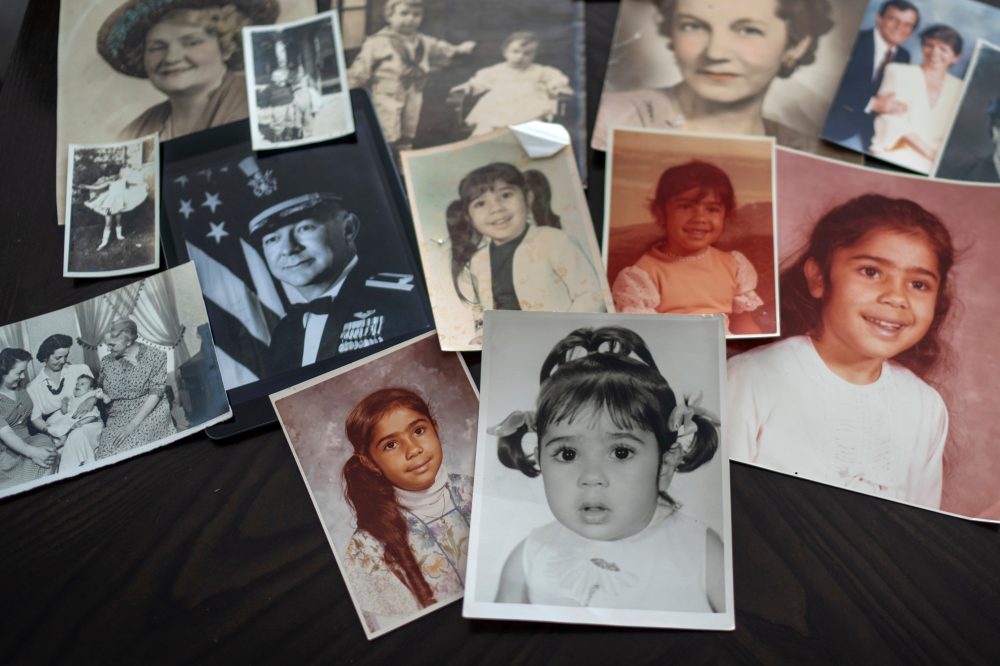

A federal immigration judge has awarded asylum to a 56-year-old California woman who was orphaned in Iran during the 1970s and later adopted by an American military veteran — the same woman immigration authorities threatened to deport earlier this year to a country the U.S. is now in conflict with.
The ruling by Judge Andrew Fishkin likely brings an end to a months-long nightmare for the woman, who is among thousands of international adoptees never granted U.S. citizenship due to gaps between adoption law and immigration policy.
The woman has resided in the United States since she was brought here as a toddler by her adoptive American parents and has no criminal history. The Associated Press has chosen not to identify her, as she fears her legal status could still be challenged if the government appeals. A federal judge has permitted her to go by the pseudonym “Ms. S” in her legal battle over her immigration status.
In February, she received a letter from the Department of Homeland Security ordering her to appear for deportation proceedings. Officials claimed she was eligible for removal because she had overstayed a visa in March 1974 — when she was just four years old.
She described the months that followed as terrifying and deeply humiliating.
She was raised in a Christian, military household on a Wisconsin farm and grew up with strong patriotic values. Yet government documents labeled her an “alien” and incorrectly stated she did not speak English — a language she has spoken her entire life.
Immigration officials told her she was under arrest, though she was released and required to wear an ankle monitor. She bought new pants to conceal the device and trained herself not to cross her legs during work meetings, afraid the monitor would jeopardize the healthcare corporate position she has held for nearly two decades.
Authorities fingerprinted her and collected her DNA. She said she was visibly crying in the mugshot they took of her.
Bracing for the possibility of detention, she set her bills to autopay and gave friends a spare key to her home.
Her attorney, Emily Howe, said the government had the authority to simply recognize her as an American citizen. “Instead they treated her like a terrorist, like she was the worst of the worst criminals,” Howe said. “It felt very Big Brother, very Orwellian.”
The Department of Homeland Security declined to comment on the case.
The Associated Press had previously featured the woman in a 2024 story about how many international adoptees were left without citizenship because their American adoptive parents never completed the naturalization process.
Her adoptive parents were living in Iran in the 1970s, where her father — a retired Air Force lieutenant colonel who had been held as a prisoner of war in Germany during World War II — was working for a U.S. government contractor. The couple discovered the toddler at an Iranian orphanage and returned to the United States with her in 1973, completing the adoption shortly after. At that time, adoptive parents were legally required to separately pursue naturalization for their children. Both of her parents have since passed away.
She did not discover she had never been naturalized until she applied for a passport at age 38. She still does not know exactly how the oversight occurred, but found among her late father’s papers a 1975 letter from a lawyer stating he had been working with immigration officials, that “it appears this matter is concluded,” and billing her father for the services.
Earlier this month, she filed a federal lawsuit seeking to block the government from deporting her and to compel it to grant her citizenship.
For years, she has believed she should legally be considered a U.S. citizen. She holds a Social Security card and a driver’s license, has been authorized to work, and has paid taxes for decades. Only the immigration agency disputes her citizenship. She suspects her paperwork was lost when militants stormed the U.S. Embassy in Tehran in 1979.
Judge Fishkin appeared to share that view, noting in his ruling that documents from that embassy are unavailable to either the woman or the U.S. government. He declared her a refugee with the right to work in the United States, and his ruling places her on a path toward formal citizenship recognition.
She said she felt a sense of hope when she learned her court date fell on her late father’s birthday. She had always felt a duty to protect not just herself, but her father’s legacy as well — a dedicated military man, she said, who would never have knowingly allowed such a serious oversight to leave his daughter in legal limbo.