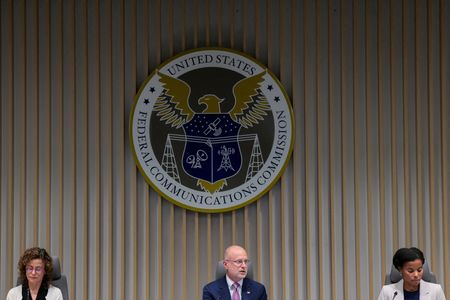

The Federal Communications Commission took a significant step Wednesday, voting to ban the sale of devices in the United States that include critical hardware components from Chinese companies considered threats to national security.
The FCC maintains an ongoing list of companies — among them Chinese telecom giants Huawei and ZTE — whose equipment is already prohibited from sale in the U.S. due to security concerns. However, a gap in the rules had allowed devices that merely contained parts from those banned companies to still receive market approval.
FCC Chair Brendan Carr announced the agency would “fully close the component part loophole.” While devices made by listed companies like Huawei have been blocked from receiving new authorizations since 2022, products that incorporated Huawei-made components were still able to gain entry into the U.S. marketplace. Under the new rules, any device containing logic-bearing hardware manufactured by Huawei is now prohibited.
Huawei did not provide a response when contacted for comment.
Chris McGuire, a former official on the White House National Security Council under former President Joe Biden, explained to Reuters that “compromised components, particularly semiconductors or communications devices, can be used to corrupt entire devices.”
The latest vote is part of a wide-ranging effort by President Donald Trump’s administration to restrict Chinese technology products from operating within the U.S.
Last month, the FCC moved to ban the import of additional equipment from a group of Chinese manufacturers, a measure that took effect July 16. On Tuesday, the agency also proposed banning the import of most military-grade drones.
In recent months, the FCC has also moved to block imports of new foreign drone and router models, and has proposed preventing U.S. telecommunications carriers from connecting their networks with Chinese telecom firms identified as national security risks.
Additionally, the FCC is weighing a ban on Chinese telecom companies that operate data centers or so-called Points of Presence — facilities located at internet exchange points — from interconnecting with other companies. If enacted, that measure would effectively force Chinese telecoms to shut down those U.S.-based operations.