
U.S. intelligence analysts are investigating whether Russia played a role in helping Iran carry out drone attacks on CIA facilities in the Gulf region, according to four people with knowledge of U.S. intelligence operations who agreed to speak only on the condition of anonymity.
The sources said no firm conclusions have been reached yet regarding possible Russian involvement in the attacks on CIA sites. However, they pointed to the apparent precision and effectiveness of the strikes, along with Russia’s well-documented technical support for Iran, as factors driving the inquiry.
Reuters and other news organizations have previously reported — and U.S. officials have confirmed — that Russia has supplied targeting assistance and other support to Iran for strikes against American targets in the Gulf region broadly. However, the intelligence community’s specific investigation into Russian involvement in the CIA facility attacks had not been previously made public.
At least two CIA locations were struck in March, according to Reuters and other outlets. One was the CIA station housed within the U.S. embassy in Riyadh, Saudi Arabia. A second site was located in eastern Iraq. Some sources indicated additional CIA facilities may have been targeted, though they declined to provide specifics.
A memo from a Western intelligence agency — described by a regional official who had access to the document — concluded that Russia has likely been involved in identifying CIA facilities in the region as targets. The official agreed to discuss the memo only if its specific origin was not revealed.
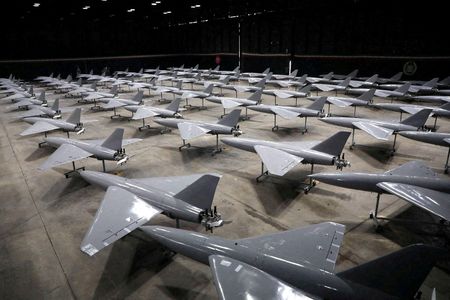
Two Western officials in the Gulf who had been briefed on intelligence reports said analysts believe the Riyadh attack involved two Russian-upgraded versions of Iran’s Shahed drones. According to those officials, one drone punched through a weak point in the embassy’s outer wall, and the second flew through the gap before exploding. No casualties were reported.
Although Russia’s support for Iran is not new given the two countries’ close relationship, the deliberate targeting of secretive CIA locations would suggest Moscow is prepared to take more aggressive steps to undermine U.S. operations as Washington works to end the ongoing conflict with Iran.
Alarm over potential Russian targeting assistance grew this past weekend following strikes on a U.S. air base in Jordan, where Iran launched ballistic missiles at army barracks, killing two soldiers.
The White House directed questions to the CIA, which declined to comment. Iran’s mission to the United Nations, Russia’s Defense Ministry, and the Saudi government did not respond to requests for comment.
The two Western officials in the Gulf said Russia has helped Iran extend the range of its Shahed drones and believes Iran used those enhanced versions in the Riyadh strike. A separate source said Russia supplied Iran with a satellite navigation system called the Kometa-M, which experts describe as significantly more accurate and more resistant to jamming than Iran’s own navigation technology.
The Wall Street Journal first disclosed in March that Russia had provided the Kometa-M system to Iran. Russia’s government denied the report, dismissing it as “fake news.”
CIA facilities abroad typically include country stations housed within U.S. embassies, as well as a range of other locations such as safe houses, logistics hubs, and surveillance sites. The locations of these facilities are kept strictly confidential.
Sources declined to reveal the exact number or locations of CIA sites struck by Iranian drones. One source described the total as “more than one and fewer than a dozen,” while another said several facilities were hit.
Intelligence analysts have been examining whether Iran used Russian-supplied targeting data for the embassy strike in Riyadh. Some sources cautioned, however, that Iran may have been targeting the U.S. embassy as a whole and happened to hit the CIA station by chance.
Several analysts have concluded that few countries other than Russia would have both the capability to obtain and the motivation to weaponize such sensitive targeting intelligence against the United States, the sources said.
Daniel Hoffman, a former CIA station chief and undercover operations officer, said it would come as no surprise if Moscow were helping Tehran go after CIA facilities, given the two nations’ close strategic alignment. “They share an interest in trying to reduce or eliminate U.S. influence altogether in their self-designated spheres of influence,” he said.