
Tuesday is the 75th anniversary of the 1951 Refugee Convention, an international agreement that emerged from the destruction of World War II to protect those forced to escape war, violence, and persecution. Supporters of the treaty say it has been responsible for saving millions of lives over the past three-quarters of a century.
However, the treaty’s principles have faced growing challenges. Several nations have turned away asylum seekers at their borders, and under U.S. President Donald Trump, American policy has shifted toward sending asylum seekers to third countries — a significant departure from longstanding U.S. practice.
Today, more than 41 million people remain forcibly displaced worldwide, with nearly 70% of them sheltered by low- and middle-income countries. The numbers may continue to rise: The International Committee of the Red Cross has identified more than 130 active armed conflicts across the globe.
The convention established a framework for defining who qualifies as a refugee, outlined their legal rights, and set standards for how they should be treated. Close to 150 nations are currently party to the agreement.
Elizabeth Tan, the director of international protection and solutions for the U.N. High Commissioner for Refugees, described the treaty’s significance: “It codified a simple but powerful principle that people forced to flee persecution, conflict or violence must be able to find safety and protection.”
At the heart of the convention is the concept of “non-refoulement” — a prohibition against returning people to places where they would face persecution, torture, or other grave harm. The underlying idea is that no nation is permanently immune from war, persecution, or sudden upheaval.
Here are the stories of six refugees and what the convention has meant to them.
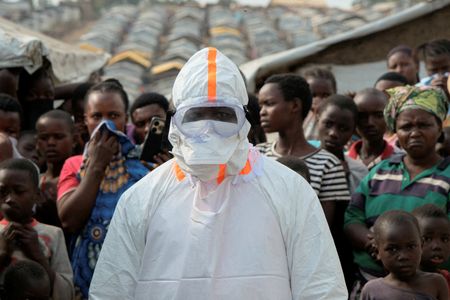
Sayed Alom is a humanitarian aid worker and one of approximately 700,000 Rohingya people who crossed from Myanmar into neighboring Bangladesh in 2017. He has been living in refugee camps there ever since. Speaking from camps near Cox’s Bazar, Bangladesh, Alom described the horrors that drove his people out: Myanmar’s military “raped our mothers and sisters, burned down our homes, threw our children into the river and set them on fire. We were persecuted until we could no longer live there.” He had expected to return home soon, but says the situation has grown “imaginably worse,” plagued by kidnappings for ransom and natural threats including extreme heat, flooding, and landslides that continue to devastate the camps.
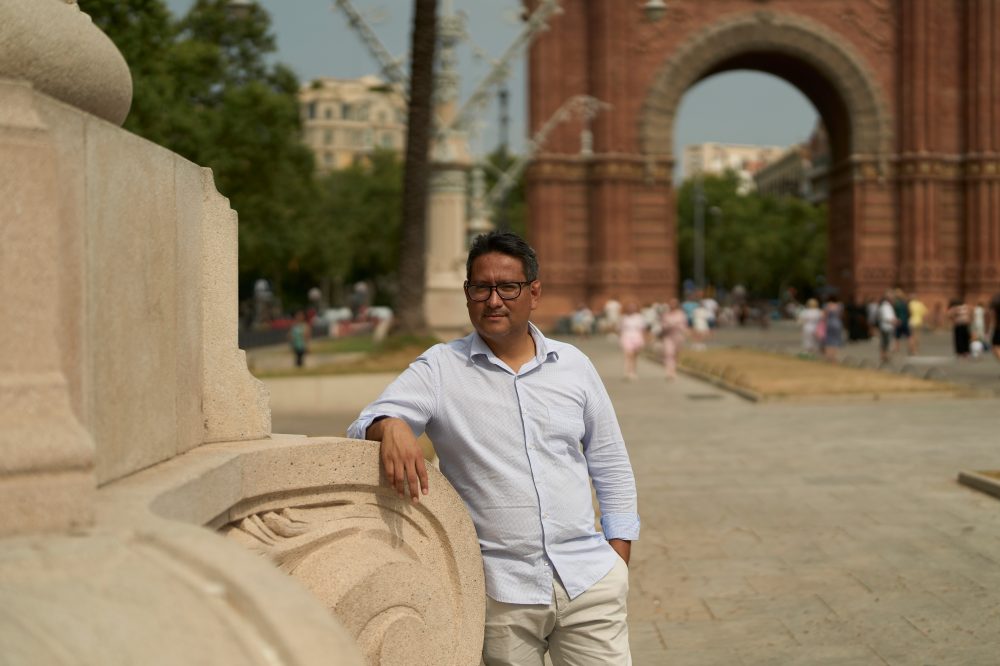
Human rights lawyer Juan Carlos Arce believes the convention saved his life. He fled Nicaragua on foot in 2018 after a violent government crackdown on protesters left hundreds dead. The organization he worked for, the Nicaraguan Center for Human Rights, had documented the violence and was subsequently labeled a “terrorist organization” by President Daniel Ortega’s government. Arce escaped to Costa Rica, where he was granted asylum. When rights defenders and Nicaraguan opposition figures began facing attacks and assassinations in Costa Rica, he relocated last year to Barcelona, Spain, through a resettlement program run by UNHCR and the U.N.’s International Organization for Migration. Standing beneath Barcelona’s Arc de Triomf as tourists and locals passed by, he reflected: “Feeling safe and protected, that is priceless.”
More than seven decades after being uprooted from her home, 88-year-old Hussniyah Ahmad Ghozlan still carries vivid memories of the journey that brought her family to Lebanon. She was a child when her family fled during the 1948 war, after their village of Yajur — located southeast of Haifa, Israel — was depopulated. “We got by because we worked, raised our children and built our lives,” she said from an alley near her home in Shatila camp for Palestinian refugees in Beirut. When asked whether she was aware of the 1951 Refugee Convention, Ghozlan laughed and said she had never heard of it — explaining that she never learned to read or write.
Hershel Greenblat came into the world in 1941 inside a cave in Ukraine, born while his Jewish family hid from Nazi forces during World War II. After the war ended, the family quietly made their way into Austria, living in U.S. Army camps for displaced persons. They initially considered relocating to Israel but ultimately chose the United States, receiving immigration approval in 1949. Greenblat recalled being awakened by his father in the middle of the night as their Army transport ship drew near the Statue of Liberty. The children were given welcome boxes packed by American middle school students. Now 85 and living in Atlanta, where his family has resided for decades, Greenblat said today’s refugees often receive a very different kind of welcome. Though he said he wasn’t previously aware of the convention, he believes refugees deserve legal protections and access to work and education. “Refugees in the ’50s worked their butts off to get what they wanted, what they needed,” he said.
Wenyen Gabriel’s parents were also no strangers to hard work. He was born in 1997 in Khartoum, the Sudanese capital, after his parents escaped civil war in southern Sudan. The family later moved to Egypt as refugees before being resettled in New Hampshire, where Wenyen arrived at just 2 years old. Standing 2.08 meters — nearly 6 feet, 10 inches — he went on to earn a basketball scholarship at the University of Kentucky and played in the NBA. In 2024, he represented the young nation of South Sudan at the Olympic Games in Paris. Though he sometimes felt “a little bit different from the people in the community” growing up in New Hampshire, he found comfort in the presence of other refugee families nearby. On Monday, he was named the newest goodwill ambassador for UNHCR, the U.N. refugee agency. “We had to struggle and figure out how to become something inside of the United States,” he said at UNHCR headquarters. “It’s not easy to make something of yourself in a foreign country.”
Sisters Yusra and Sarah Mardini fled war-torn Syria in 2015, part of a massive wave of refugees from their country that year. Their harrowing journey — which has since been adapted into a widely acclaimed film — took them first to Lebanon, then to Turkey, where they paid smugglers to ferry them by sea to Greece. When their overcrowded boat threatened to capsize, they jumped into the water to keep it afloat. After a grueling overland journey through southeastern Europe, they were granted refuge in Germany. Yusra was appointed a UNHCR goodwill ambassador in 2017. Now that the conflict in Syria has ended, Mardini expressed cautious hope: roughly 1.3 million Syrians have already returned home. But she acknowledged that healing from such trauma takes time. “You can’t just snap your fingers,” she said. “I do believe that my country and its people are very strong and that I’m going to contribute in the best way possible.”