
BUNIA, Democratic Republic of Congo — On a typical day, just four vehicles are available to transport Ebola surveillance teams throughout Bunia, the city at the heart of a worsening outbreak in the Democratic Republic of Congo. On the day Reuters reporters accompanied the teams, all four were already in use.
That left Dr. Moubarack Kano with no choice but to use his personal white Subaru Forester. He loaded the car with emergency alert forms, brought a colleague, and headed out — a rosary hanging from the rearview mirror — to help contain one of the world’s most dangerous diseases across a region of 1 million people spread across 23 health districts.
What followed was a window into the exhausting and often frustrating reality facing those trying to stop Ebola’s spread.
‘WE’RE JUST CHASING IT’
The lack of a vehicle was hardly Kano’s most pressing concern. At clinic after clinic, he found that staff had failed to report suspected Ebola cases to central health authorities. Frontline workers described delayed test results and patients who refused to be screened — all of it slowing the effort to map how the virus was moving through the population.
“We discover the disease only after it has already spread,” Kano said. “We’re just chasing it.”
One of his first stops was a small clinic with a faded blue exterior on an unpaved road. Going through handwritten patient logs, Kano noted several recent cases of typhoid fever — a condition whose early symptoms closely resemble those of Ebola. The strain currently spreading in Congo, known as the Bundibugyo variety, has no approved vaccine or treatment and can be especially hard to identify because its initial symptoms tend to appear less severe than other forms of the virus.
“Normally, the nurses should call to report these cases, so we can start investigating and see if we need to test them,” Kano explained. When he asked the nurse on duty whether she was familiar with the Ebola alert system, she acknowledged knowing it existed but said she didn’t have the phone number to reach it.
CLINICS HOLDING BACK ON REPORTING
The outbreak has now infected 3,200 people and killed 1,405, according to government figures released on Sunday. The World Health Organization has warned that the true scale of the crisis could be two to four times greater than what the data shows.
At a second health facility in Bunia’s Nyakasanja neighborhood, Kano reviewed the patient register and stopped at the record of a teenage boy whose older brother had tested positive for Ebola and died. No alert had been issued. The teenager’s location was unknown, and there was no address or phone number on file.
“We’ll have to wait until he comes back,” Kano said.
He estimated that 12 other cases at that facility should have prompted alerts but did not. He explained why some clinics hesitate: “Health facilities don’t always want to alert. When they do so, they risk losing a patient because the patient may be transferred elsewhere. For them, it is a loss of money.”
The cost of making phone calls is also a barrier. “If people don’t have phone credit, they don’t call,” said Dr. Rachel Ulingisayi, who oversees Bunia’s surveillance teams.
And even when calls do come in, there aren’t always enough responders available. “A few days ago, a father called to say his two children were sick,” Ulingisayi recalled. “Two days later, he called again to say they had died.”
MOTHER REFUSES TO ALLOW CHILDREN TO BE TESTED
At the same Nyakasanja facility, two children lay side by side on a bed, feverish and in pain, with IV lines in their arms. Standard protocol would call for them to be moved to a treatment center for testing and isolation, but their mother refused, saying she did not believe they had Ebola. The surveillance team arranged for a psychologist to meet with the family.
Kano is one of 27 field investigators working in Bunia. He is no stranger to this kind of crisis — he worked through Congo’s previous major Ebola epidemic, which killed more than 2,000 people between 2018 and 2020. During that outbreak, he said, there was time to properly investigate cases and train staff. This time, he described a response hampered from the beginning by poor planning, logistical problems, and the hiring of workers without adequate experience.
He also noted that, like many of his colleagues, he had not received a paycheck since the current outbreak was officially declared on May 15.
Congo’s Ministry of Public Health and the National Public Health Institute did not respond to requests for comment. However, authorities have acknowledged the difficulties. Congolese Health Minister Samuel-Roger Kamba stated this month that the government is actively working to resolve the payment issues.
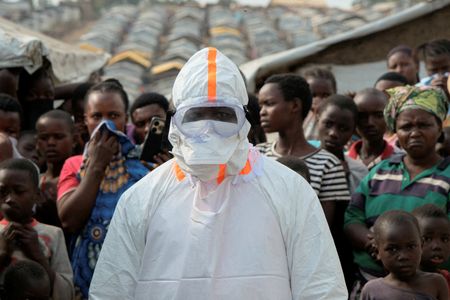
Kano’s final stop of the day was at a private home where a 67-year-old man had died the previous afternoon. Health workers in protective gear were already on site, disinfecting the area and arranging a safe burial as neighbors looked on from a distance. Kano began interviewing those nearby, building a list of people who may have come into contact with the man — all while knowing the virus had almost certainly already moved on to its next victim.