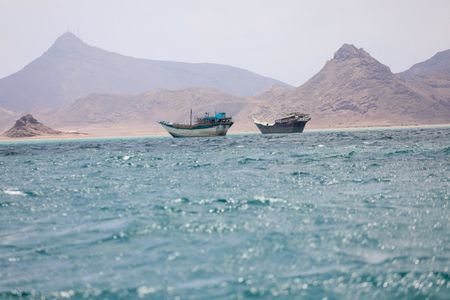

Shipping activity through the Bab el-Mandeb strait climbed to its highest level in four days on Monday, with 28 vessels making the passage, according to data from Kpler. The uptick comes amid growing optimism that the ongoing conflict between the United States and Iran may be heading toward a resolution.
Despite the increase, traffic remained well below the month’s peak of 46 vessels, which was recorded on July 14.
U.S. President Donald Trump stated Monday that negotiations between Washington and Tehran are making progress and could bring the conflict to an end. However, he cautioned that military operations could be resumed if the diplomatic talks break down. Iranian officials echoed similar warnings about potential retaliation if negotiations fail.
Of the 12 vessels that entered the Red Sea on Monday, four were oil tankers, according to Kpler data recorded at 0512 GMT Tuesday. That group included one very large crude carrier, known as a VLCC, two Suezmax tankers, and one Aframax tanker. A VLCC is capable of carrying roughly 2 million barrels of oil, while a Suezmax typically holds about half that amount. An Aframax tanker can transport approximately 700,000 barrels.
On the other side of the equation, 16 ships departed the Red Sea on Monday, 10 of which were oil tankers. That outbound group consisted of four Suezmax tankers, three Aframax tankers, two medium-range tankers, and one VLCC.
Among the departing vessels was the Hong Kong-flagged VLCC New Pearl, which was carrying 2 million barrels of Saudi crude oil bound for Zhoushan port in eastern China. The New Pearl became the fourth Chinese supertanker to exit the Red Sea since Houthi forces announced a naval blockade of the waterway.
Traffic through the Strait of Hormuz told a different story, remaining at low levels with only six cargo-carrying vessels transiting the strait on Monday. That group included one Iranian-linked Suezmax tanker and a VLCC that passed through with its tracking transponder switched off. Four of those vessels entered the strait while two exited it.
On Sunday, seven ships moved through the Strait of Hormuz, among them three Iranian-linked oil products tankers that were outbound from the waterway.