
TOKYO (AP) — A major earthquake with a preliminary magnitude of 7.1 rattled the Kumamoto area on Kyushu, Japan’s southern main island, late Tuesday afternoon, prompting the Japan Meteorological Agency to issue a tsunami advisory.
The advisory covered Ariake Bay along the western coastline of Kumamoto, a region located roughly 900 kilometers — about 560 miles — southwest of Tokyo.
Japan’s Prime Minister Sanae Takaichi took to social media platform X to warn residents to stay away from coastal areas, where waves of up to 1 meter, or about 3 feet, were anticipated. She also announced that her administration had established a task force to collect information, evaluate potential damage, and be ready to launch rescue efforts if the situation required it.
“We are putting people’s lives as the top priority,” Takaichi stated, adding a caution to those in heavily affected areas to remain alert for potentially powerful aftershocks.
Shinji Kiyomoto, a planning officer for earthquake and tsunami countermeasures at the Japan Meteorological Agency, addressed reporters at a news conference, warning that the shallow quake had set off a period of heightened seismic activity in the region. He advised residents to remain especially vigilant over the next two to three days in case another significant earthquake occurs. Kiyomoto also noted that no tsunami had actually been detected from the inland quake and that the agency expected to lift the advisory relatively quickly.
Japan’s Fire and Disaster Management Agency reported that no damage to major public facilities or infrastructure had been confirmed in the region, though officials were continuing to evaluate the full extent of the quake’s impact.
Japan’s Nuclear Regulation Authority announced that inspections of three nearby nuclear power plants revealed no irregularities following the tremor.
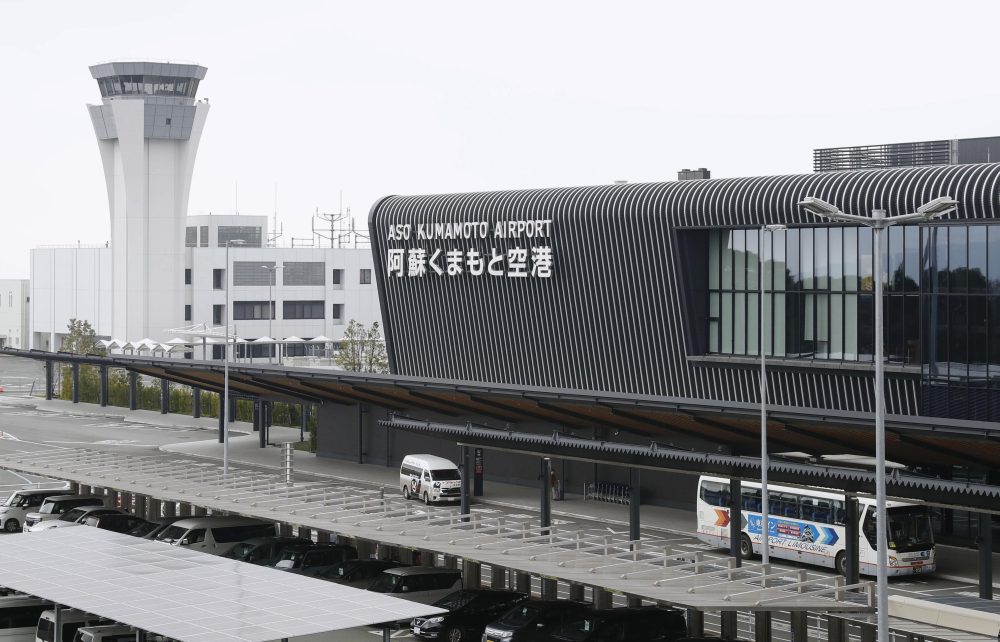
Shinkansen bullet train and local rail services across Kyushu were temporarily halted for safety inspections. The runway at Aso Kumamoto Airport was also shut down after the quake, with the airport’s website stating there was “no prospect of resuming operations.”
Japan’s Defense Ministry confirmed it had sent aircraft to the region to assess conditions on the ground.
The U.S. Geological Survey initially measured the earthquake at a magnitude of 7.1 before revising that figure down to 6.8.
The Kumamoto area has experienced devastating seismic events before — a deadly earthquake struck there in 2016, killing more than 50 people, injuring approximately 1,800 others, and damaging or destroying tens of thousands of homes.