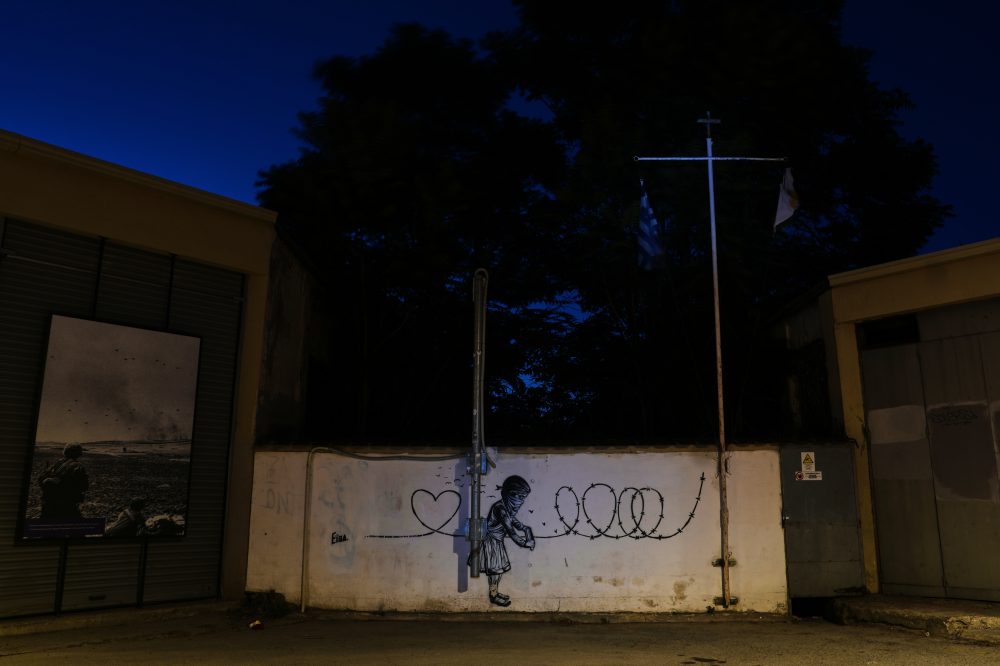

NICOSIA, Cyprus — Trendy nightclubs, eclectic cafes, and packed bars sit just a short distance from guard posts, barbed wire, and sandbags — the stark markers of one of Europe’s last unresolved conflicts.
A buffer zone controlled by the United Nations cuts through the heart of the Cypriot capital’s ancient center, drawing a line between breakaway Turkish Cypriots to the north and Greek Cypriots living in the internationally recognized southern portion of the island.
Cyprus has been split since 1974, when Turkey launched a military invasion following a coup backed by Greece, with leaders who sought to merge the island with Greece.
Although there are several crossing points where both cars and pedestrians can move between the two sides, Nicosia holds the distinction of being the only remaining divided capital in Europe where soldiers continue to stand watch on both sides of the divide.
Within the no-man’s land between the two sides, bullet-scarred houses and long-shuttered businesses have slowly deteriorated from years of abandonment. Access to the zone is generally restricted to United Nations soldiers on patrol.
Over the decades, numerous rounds of UN-brokered negotiations aimed at healing the island’s division have fallen apart without resolution.
The most recent significant attempt at a deal — which brought together the foreign ministers of the three nations with guarantor power status over Cyprus, namely Greece, Turkey, and Britain — collapsed in bitterness nearly ten years ago.
Now, UN Secretary-General António Guterres is making a visit to the island as one of his last major efforts before departing office, with the aim of persuading both sides to formally restart peace discussions.
His schedule includes separate meetings on Tuesday with President Nikos Christodoulides, who represents the Greek Cypriot community, and Turkish Cypriot leader Tufan Erhurman, followed by a joint session on Wednesday.
The broader objective is to generate enough momentum for an informal gathering later this year involving senior officials from Greece, Turkey, and Britain, at which an announcement of revived peace talks is hoped to be made.
Reaching a final settlement is widely viewed as an uphill challenge, with both sides having grown more entrenched in their positions over the years.
Nevertheless, a resolution in Cyprus could help reduce tensions across a volatile region where competing interests tied to energy resources, territorial claims, and regional influence all come into play.