
WASHINGTON — Republican senators have introduced legislation that would allocate $1 billion toward enhancing White House security measures, specifically targeting improvements connected to President Donald Trump’s proposed ballroom initiative following a recent security incident.
The Republican proposal, made public Monday evening, would earmark these funds for the U.S. Secret Service to implement “security adjustments and upgrades” for the ballroom initiative that Trump and his party have championed since Cole Tomas Allen allegedly attacked the April 25 media event at the Washington Hilton while armed with firearms and blades. The proposed law states these funds would support improvements to the ballroom initiative, “including above-ground and below-ground security features,” while explicitly prohibiting use of the money for elements unrelated to security.
White House representative Davis Ingle commended Republicans for incorporating funding for this “long overdue” initiative, stating it would “provide the United States Secret Service with the resources they need to fully and completely harden the White House complex, in addition to the many other critical missions for the USSS.”
This funding represents a component of broader legislation designed to support Immigration and Customs Enforcement and Border Patrol operations, as Democratic lawmakers have prevented funding for these departments since mid-February. While Congress approved bipartisan funding for the remaining Homeland Security Department on April 30 following an extended shutdown, Republicans are employing a partisan legislative strategy to advance ICE and Border Patrol funding independently. House representatives have yet to unveil their version, though Senate voting on their proposal is anticipated next week.
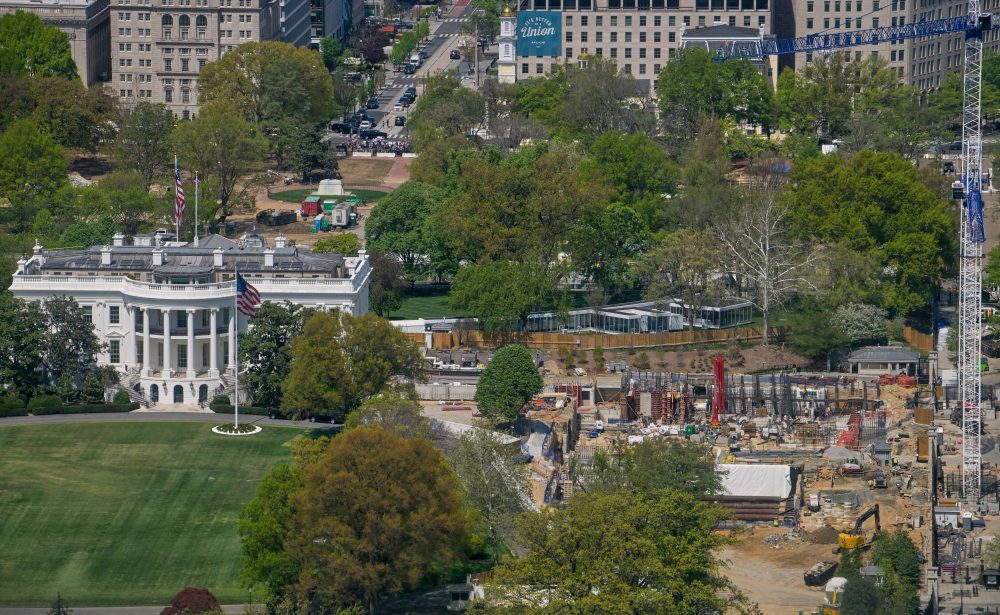
The specific allocation of the $1 billion remains undefined, with the sum significantly surpassing the estimated $400 million construction cost for the ballroom itself. Court filings from the White House describe the East Wing initiative as “heavily fortified,” featuring underground bomb shelters, military facilities, and medical infrastructure beneath the ballroom space. Trump has advocated for bulletproof glass installation and drone-resistant capabilities.
Legal challenges from the National Trust for Historic Preservation seek to halt the project’s construction, though a federal appeals court ruled last month that work may proceed during litigation.
Administration officials have indicated private funding would cover construction expenses while taxpayer money would address security components. Some Republican lawmakers have proposed full public financing, citing the dinner security breach as evidence the president requires a protected venue for hosting events.
“It would be insane” to conduct the dinner at a hotel venue again, stated Republican Senator Lindsey Graham of South Carolina, who partnered with Senator Katie Britt, R-Ala., to introduce ballroom construction funding legislation.
Democratic representatives have pledged opposition to any ballroom funding efforts.
“While Americans are struggling to make ends meet as a result of President Trump’s failed policies, Republicans are focused on providing tens of billions of dollars for the President’s vanity ballroom project and cruel mass deportation campaign,” declared Illinois Senator Dick Durbin, the senior Democrat on the Senate Judiciary Committee, which provides oversight for the U.S. Secret Service.