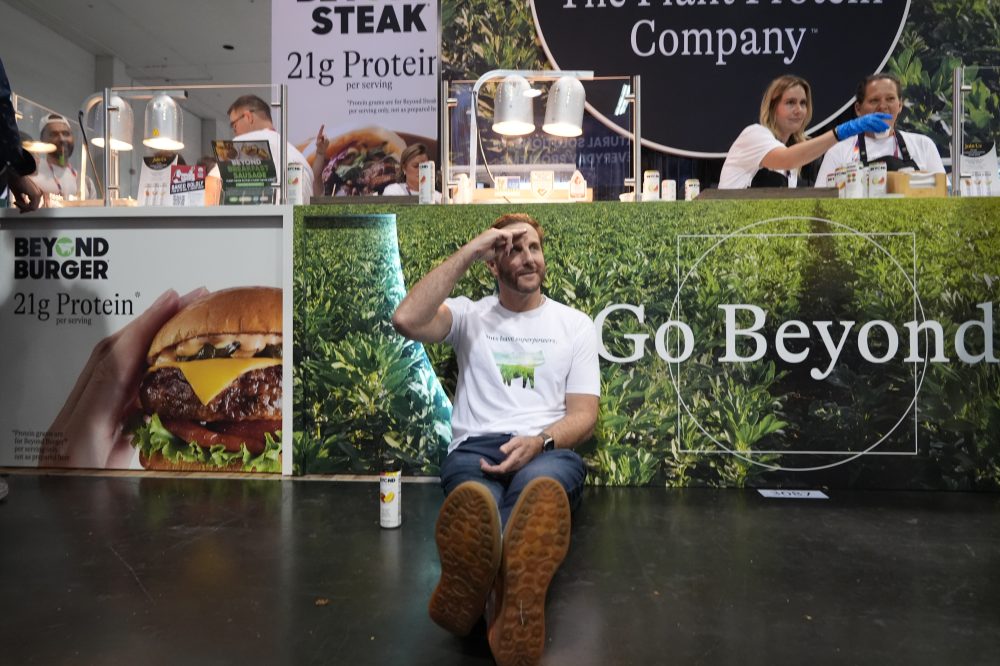

The plant-based food company formerly known as Beyond Meat has undergone a major rebrand, now calling itself Beyond The Plant Protein Co. as it shifts away from the declining market for meat substitutes toward protein beverages and snack products.
This week, the California-based company updated its website and social media presence to reflect the new identity, with packaging simply displaying “Beyond.” The rebrand coincides with the January launch of Beyond Immerse, a sparkling protein beverage, and plans for a protein bar release this summer.
The transformation comes at a crucial time for the struggling brand. Revenue fell 14% during the first nine months of 2025, while stock prices have remained under $1 throughout this year. The broader plant-based meat industry has seen retail sales crash 26% over the past two years following a 2020 peak, according to NIQ data.
Company founder and CEO Ethan Brown, who established the business in 2009, explained the strategic shift. “For me, it is an opportunity to reshape the company around very real food that is directly from plants,” Brown stated. “It’s about delivering all those benefits of the plant kingdom to the consumer in ways that they’re going to be able to easily integrate it into their lives.”
Beyond isn’t alone in this industry pivot. Several plant-based companies are racing to capitalize on surging consumer protein demand. Eat Just launched a mung bean protein powder last spring, while Impossible Foods partnered with Equii Foods in January to create protein-enhanced breads and pastas. Plant-based dairy brand Silk also debuted a protein drink in January.
Industry expert Chris Costagli from NIQ attributes the plant-based meat decline to consumer skepticism about ingredient lists containing unfamiliar additives, excess sugars, and high sodium levels. “There’s a lot of fillers and gums and texturizers and things that give those products a more familiar feel,” Costagli explained. “I think as people have been paying closer and closer attention to what they’re actually ingesting, it’s causing some products to stumble.”
Costagli believes simplified, healthier reformulations could revive the category, similar to successes in plant-based dairy. Beyond is banking on this approach, having already redesigned its signature burger in 2024 for better nutrition. Last summer introduced Beyond Ground, featuring just four components: faba bean protein, potato protein, psyllium husk, and water, with no “meat” reference on packaging.
Moving forward, Brown says the company will emphasize products that highlight plant origins, such as chickpea sausages and faba bean strips. The goal is to “celebrate the realness” of simplified ingredients while potentially drawing customers back to meat alternatives.
“Hopefully, at some point people will say, ‘Wait a minute, how did we get here, where protein taken from red lentils, peas and brown rice and oil taken from avocado and mixed together into a burger is somehow not good for you?’” Brown questioned.
Currently, newer products like Beyond Ground and Beyond Immerse are exclusively sold through the company’s online Beyond Test Kitchen platform. Brown says this allows rapid innovation and feedback collection before eventual retail distribution.
The El Segundo-based company will maintain production of traditional plant-based burgers, chicken alternatives, and similar meat-mimicking products, which remain successful in European markets, including McDonald’s menus abroad.
Despite current challenges, Brown maintains optimism about plant-based meat becoming “a much more dominant choice” within the next decade or two, though acknowledges navigating through what he terms “a period of confusion.” “It’s just not the moment for plant-based meat right now,” he admitted.