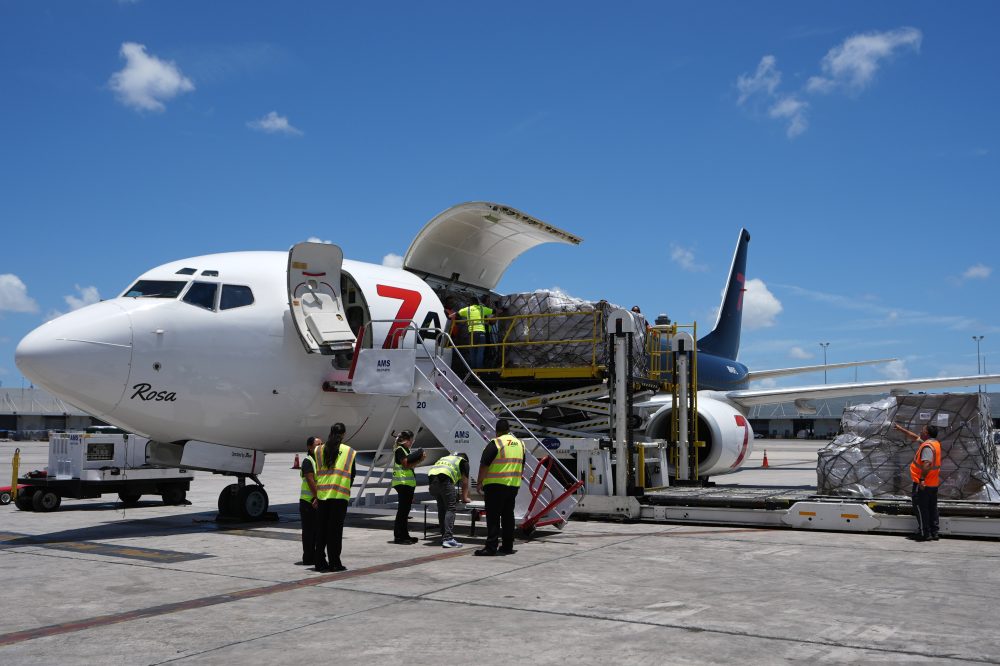

A cargo plane loaded with food and hygiene kits took off from Miami on Tuesday, heading to Cuba as part of a U.S. initiative to get direct relief to ordinary Cuban residents without going through the island’s government.
The flight carried 700 packages intended to be handed out by Catholic organizations operating within Cuba, according to the U.S. State Department. By routing the aid through religious groups rather than government channels, U.S. officials hope to ensure the supplies actually reach Cuban citizens.
Tuesday’s delivery represents the first installment — valued at $60 million — of a total $100 million aid package the United States offered to Cuba some time ago. The shipment arrives amid months of escalating U.S. pressure on the Cuban government, including major sanctions targeting the country’s military and intelligence agencies. An energy and oil blockade has effectively brought Cuba’s economy and daily life to a near standstill.
Just one day before the flight, the State Department released an extensive report accusing Cuba of operating a large-scale espionage and left-wing influence campaign inside the United States over the past five decades.
Secretary of State Marco Rubio, whose parents immigrated from Cuba, has made pushing Cuba toward changes in its socialist system a personal priority. President Donald Trump has also suggested on multiple occasions that the U.S. might use military force to remove the island’s communist government from power.
Jeremy Lewin, the State Department’s top official overseeing foreign assistance, humanitarian affairs, and religious freedom, noted that the current effort builds on a previous program that sent $9 million in direct aid to Cuba last year following Hurricane Melissa.
Lewin acknowledged that one of the biggest hurdles has been persuading the Cuban government to allow the aid to be distributed without seizing it. Because local priests and Catholic communities are handling the deliveries, he said, “there’s very little, if any, opportunity for the regime to interfere with the delivery of the assistance.”
Sean Callahan, president and CEO of Catholic Relief Services, said he traveled to Cuba a few weeks ago to personally verify that accountability measures were in place for how the aid would be distributed.
“We’re hoping that this is one small step forward on the humanitarian side,” Callahan said. “But hopefully we’ll bring the people of the United States and Cuba together into the future.”
Cuba’s government and state-run media made no mention of Tuesday’s humanitarian flight from the United States.
Earlier this month, Cuban Foreign Minister Bruno Rodríguez dismissed earlier announcements about the still-undelivered aid as “fantasy,” and argued the amount was minimal compared to the economic damage caused by the U.S. blockade and sanctions.
“One hundred million dollars would certainly help, although we must acknowledge that it only amounts to five days of the blockade,” the foreign minister said.