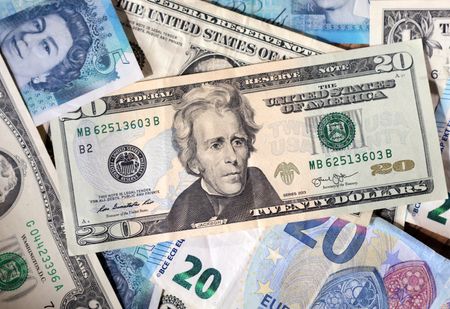

The American dollar maintained stability during early Friday trading in Asia and is on track for its largest weekly increase in more than a year as intensifying Middle Eastern tensions push investors toward safer financial havens.
Both the euro and Japanese yen struggled as the ongoing crisis pushed oil prices higher, creating inflation concerns for nations that rely heavily on energy imports and altering predictions for Federal Reserve and other central bank policies.
Initial optimism about potential de-escalation faded amid new uncertainties, with Iran cautioning that Washington would “bitterly regret” the destruction of an Iranian naval vessel. President Donald Trump expressed his desire to participate in selecting Iran’s future leader following joint U.S. and Israeli airstrikes that resulted in Supreme Leader Ali Khamenei’s death during the conflict’s opening phase.
“If the Middle Eastern conflict continues at its current intensity, it’s likely to bring sustained higher inflation, a stronger U.S. dollar, and a vastly reduced chance of Fed rate cuts,” market analyst Tony Sycamore from IG wrote in his analysis.
The dollar index, which tracks the greenback’s performance against multiple currencies, dropped slightly by 0.06% to 99.00, though it remains positioned for a 1.4% weekly increase that would mark the strongest performance since November 2024.
The euro showed minimal movement at $1.1612, while the yen gained 0.06% to reach 157.5 per dollar. The British pound remained nearly unchanged, rising just 0.04% to $1.3361.
Thursday saw the conflict intensify as American and Israeli aircraft targeted locations throughout Iran while Gulf cities faced renewed attacks.
During a telephone conversation with Reuters, Trump indicated that Mojtaba Khamenei, the deceased supreme leader’s son who had been viewed as a potential successor, would be an improbable selection.
The dollar emerged as among the few beneficiaries during turbulent trading sessions that have negatively impacted stocks, bonds, and occasionally even traditionally safe precious metals.
Energy price increases stemming from the Middle Eastern conflict have heightened concerns about returning inflation, with overnight index swaps revealing changes in interest rate expectations for major central banks.
Market participants have delayed their timeline for the Federal Reserve’s next rate reduction to either September or October, based on LSEG data. Expectations for rate cuts from the Bank of England have similarly been reduced, while financial markets have increased speculation about European Central Bank rate increases potentially occurring this year.
“The fears of what happened to inflation when the Russia-Ukraine war began and what we saw post-pandemic with supply shocks, that’s still sort of front of mind,” explained Skye Masters, National Australia Bank’s head of markets research, during a podcast appearance. “You see that repricing in OIS curves, and you are seeing some meaningful repricing in bond markets as well.”
With attention focused on the conflict, currency traders largely ignored Thursday’s economic indicators.
Weekly unemployment benefit applications among Americans remained steady, while February layoffs declined significantly, indicating stable employment market conditions.
Friday’s employment data has become the market’s primary focus. Economic forecasters surveyed by Reuters anticipate nonfarm payrolls likely grew by 59,000 positions last month following January’s 130,000 increase. The unemployment rate is projected to remain at 4.3%.
Jayati Bharadwaj, TD Securities’ head of FX strategy, believes there’s potential for short-term adjustments in dollar positioning given current risk-averse market sentiment. However, she anticipates the Iranian situation will stay limited, particularly during a U.S. midterm election period.
“(The) U.S. dollar upside should persist only while risk premia remain elevated in crude oil, potentially echoing the price action seen in June 2025 until a regime shift happens in Iran with U.S. backing,” Bharadwaj noted in her analysis.
The Australian dollar gained 0.16% against the American currency to $0.7017. New Zealand’s dollar increased 0.15% to $0.5903.
In digital currency markets, bitcoin decreased 0.26% to $70,956.52, while ethereum dropped 0.27% to $2,074.84.