
LIMA, Peru — Peru’s voters head to the polls Sunday facing an unprecedented choice among 35 presidential candidates, including a former government official, an entertainer, and the daughter of a deceased former president, as the South American nation seeks its ninth leader in just one decade.
The historic election unfolds against a backdrop of escalating violent crime and corruption scandals that have left citizens deeply frustrated with their political system. Voters express little confidence in the candidates’ honesty or readiness to lead the country. The crime crisis has prompted many hopefuls to offer dramatic solutions, from constructing massive prison facilities to limiting inmates’ meals and bringing back capital punishment for severe offenses.
Construction worker Juan Gómez, 53, expressed the despair many feel while carrying groceries to feed his family of five children. “You can’t trust anyone anymore, nothing’s going to change,” he said. “(Criminals) come on motorcycles, put a gun to your head… you look around and there’s no police officer. What are you going to do? You just let them rob you.”
Over 27 million Peruvians between ages 18 and 70 are required to participate in the mandatory voting process, with approximately 1.2 million expected to vote from overseas, primarily from the United States and Argentina.
Given the fractured political landscape and enormous candidate field, no contender is expected to secure the necessary 50% majority for an outright victory, making a June runoff election almost certain.
The crime epidemic dominates public concerns and has sparked regular demonstrations across the country. Government statistics show homicides have doubled while extortion incidents have multiplied by five during the current decade.
Retiree Raúl Zevallos, 63, described the daily fear residents experience. “You get on the bus, and you have to sit far from the driver; you don’t know if you’ll make it home alive,” he explained. “Criminals drive by on motorcycles, shoot, kill the driver, and you could die, too.”
The violence claimed the lives of more than 200 public transportation operators in Peru during 2025. A government survey conducted by the National Institute of Statistics and Informatics revealed that 84% of urban residents fear becoming crime victims within the next year.
Among the 35 contenders is conservative politician Keiko Fujimori, a former legislative member and daughter of the late President Alberto Fujimori, making her fourth bid for the presidency.
Fujimori campaigns on tough anti-crime measures while simultaneously supporting legislation that legal experts argue hampers criminal prosecutions. Her political party has backed laws in recent years that eliminated pre-trial detention in specific situations and increased requirements for confiscating criminal proceeds.
Her proposed reforms include anonymous judges for criminal proceedings and requiring prisoners to work for their meals if she wins the presidency.
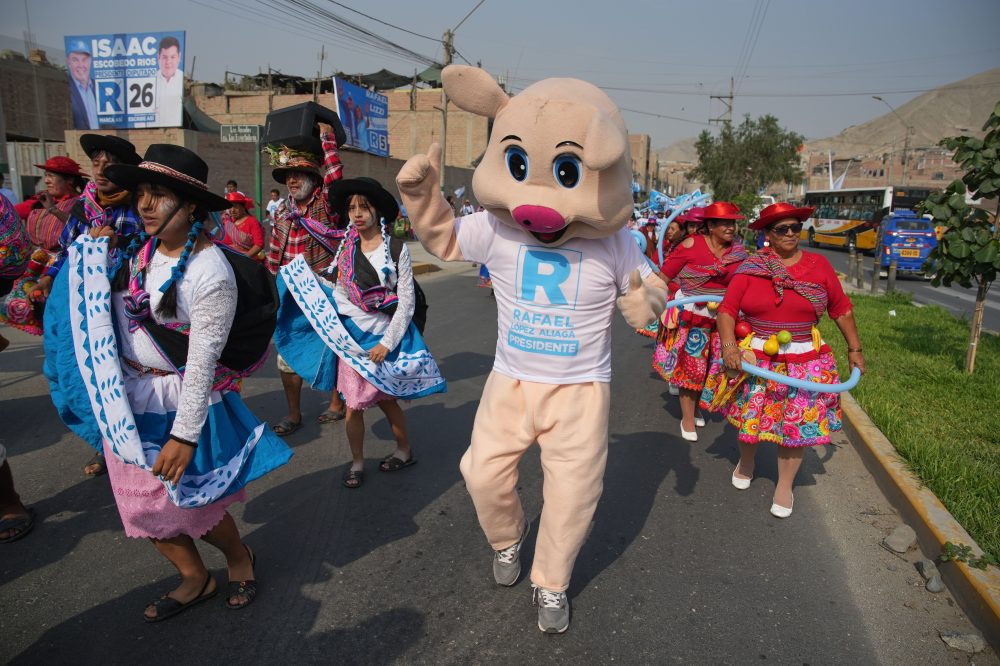
Another major candidate is Rafael López Aliaga, a conservative politician who previously served as Lima’s mayor. His platform includes establishing correctional facilities in Peru’s Amazon territory, permitting judges to hide their identities, and deporting foreign nationals residing illegally in the country.
Comedian-turned-politician Carlos Álvarez seeks voter support by pledging to bring together leaders from El Salvador, Denmark, and Singapore to share their security expertise with Peru.
This election also marks Peru’s return to a two-chamber legislative system for the first time in over three decades, following recent constitutional changes that will place significant authority in the new upper house. Unlike previous arrangements, the president cannot dissolve the Senate, though senators will possess the power to remove presidents from office.
The new bicameral structure actually makes presidential impeachment simpler, requiring only 40 of 60 senators for approval. The previous single-chamber system needed 87 of 130 lawmakers to vote for removal, a power they used repeatedly and contributed to the country’s presidential instability over the past ten years.
This legislative change proceeds despite 80% of voters rejecting the bicameral system in a 2018 public referendum. Lawmakers modified the Constitution in 2024 to enable the transition.
Alejandro Boyco, who studies politics at the Institute of Peruvian Studies, explained that senators will select and oversee senior government officials, including the national Ombudsman, Constitutional Court justices, and certain Central Bank leadership positions. The upper chamber will also examine and modify legislation from the lower house.
“They’ve concentrated too much power in a 60-people chamber,” Boyco observed. “They are not going to be immune to being corrupt.”