
BARCELONA, Spain (AP) — Grab one from the shelf. Let yourself be drawn in by its shining cover. Look at the incredibly muscled figure wearing a form-fitting costume. The hero will undoubtedly be flying, yelling, or launching a bad guy into oblivion.
They’re absurd. They’re irresistibly wonderful. Superhero comic books are purely American creations.
When you contrast the slender comic book with Europe’s graphic novels, they seem fragile and childish. Stack the American comic against Japanese Manga and they look pure in their obsession with good versus evil; they recall a bygone era of American values.
Previously costing a nickel, a dime, a quarter, now priced like a coffee drink, they represent American consumer culture. The comic book is storytelling in fast-food form. Visual treats, mental candy.
But what makes them distinctly American products is the narrative that unfolds across their 32 pages month after month, year after year.
When the Fantastic Four embarked on their life-changing space mission in 1961 and “cosmic rays” changed the foursome into reluctant superheroes, comics ventured into strange territory where the mighty were also the unwilling, thoroughly contemporary casualties of science and fate.
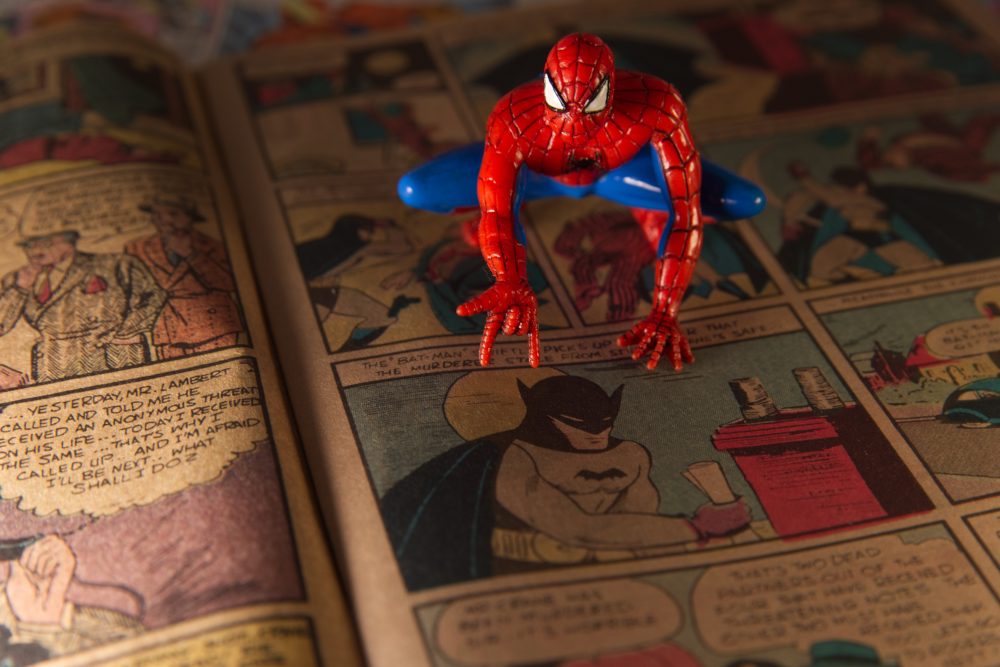
Spider-Man, the Hulk, Wolverine (the roster continues) received extraordinary powers that turned them into outsiders, forcing them to become imperfect saviors.
They were, through some aspect of the American spirit, tied to Peter Parker’s ethical code: “With great power comes great responsibility.” They represent variations of an American Sisyphus, destined to rescue us repeatedly.
What could be more distinctly American — that strength, when coupled with a moral compass, ultimately triumphs? So noble, so innocent.
Even now, despite darker themes, Marvel and DC, the industry giants, keep reimagining American identity.
Previously supporting characters in stories dominated by white male protagonists, Gwen Stacy, Jean Grey and Susan Storm have recently stepped forward as leaders to refresh the Spider-Man, X-Men and Fantastic Four storylines. Absolute Wonder Woman has pioneered new territory with stunning artwork. Miles Morales represents Spidey for today’s audience.
Still, the fundamental conflicts persist.
Bruce Wayne struggles to form connections beyond his butler; he embodies the isolated individual in fragmented America. Steve Rogers carries the weight of symbolizing the “Greatest Generation” from World War II. He remains a Captain America perpetually displaced, even in his homeland.
And could there be a more representative tech billionaire manipulating humanity’s destiny than Superman’s enemy Lex Luthor and his megalomaniacal fantasies? If only our reality included a glasses-wearing Clark Kent watching over us. Just to be safe.