
SEOUL, South Korea — North Korea launched approximately 10 ballistic missiles into eastern waters on Saturday, according to South Korean military officials, marking the latest display of military strength as US and South Korean forces continue joint training exercises.
The missiles originated from an area close to Pyongyang, North Korea’s capital city, though South Korea’s Joint Chiefs of Staff did not immediately release details about the distance traveled. Japanese Defense Ministry officials confirmed the weapons splashed down in waters beyond Japan’s exclusive economic zone.
South Korean military leadership announced increased surveillance measures and maintained combat readiness for potential additional launches while coordinating closely with American and Japanese counterparts.
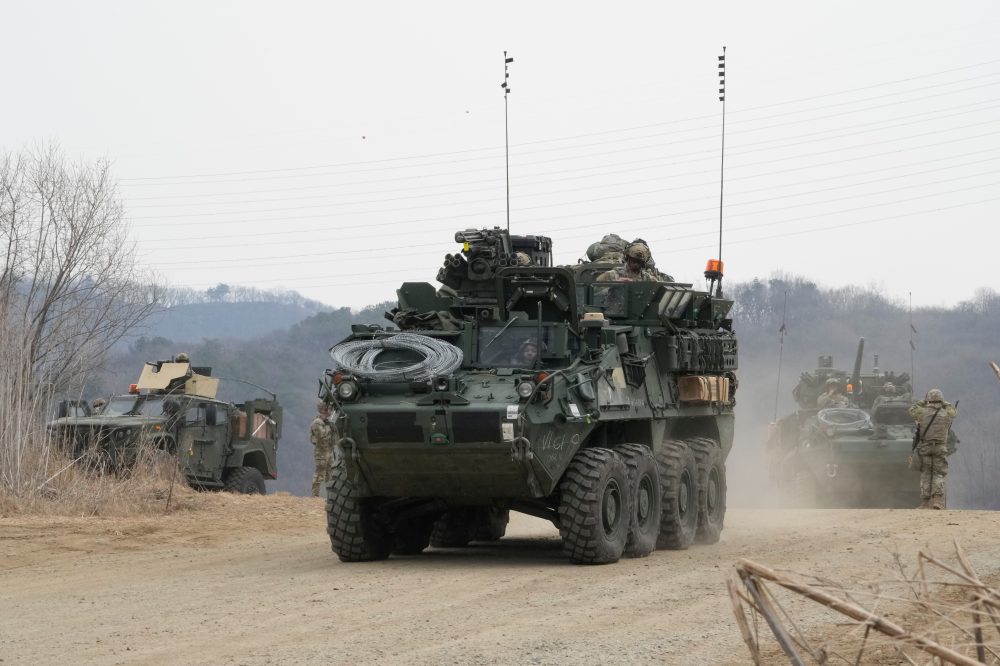
The missile tests occurred during the annual spring military drills between American and South Korean forces, involving thousands of service members, while the Trump administration simultaneously manages an intensifying conflict in the Middle East.
The Middle Eastern conflict has sparked worries about possible security vulnerabilities in South Korea, as domestic news outlets have suggested through security footage and other evidence that America may be moving missile defense equipment from the country to support Iranian operations.
When The Associated Press inquired this week about whether US Forces Korea was transferring interceptor missiles from its Terminal High Altitude Area Defense, or THAAD, installation in Seongju to Middle Eastern operations, President Lee Jae Myung’s administration stated it could not verify specifics regarding American military activities.
The administration emphasized that any potential movement of US military equipment would not compromise the alliance’s defensive capabilities against nuclear-equipped North Korea, while highlighting South Korea’s conventional military capabilities. Officials provided similar statements regarding reports about possible Patriot missile defense system relocations from South Korea.
North Korea has consistently characterized the allied exercises as preparation for invasion and frequently uses them as justification to escalate its own military displays or weapons development.
In past years, the North has executed multiple coordinated launches of missiles or artillery while characterizing them as practice runs for nuclear strikes against South Korean locations.
The recent launches followed criticism from Kim Jong Un’s influential sister on Tuesday, who condemned Washington and Seoul for continuing their exercises during a dangerous period for international security, warning that any threat to North Korea’s safety would result in “terrible consequences.”
Without explicitly mentioning the Iranian conflict, Kim Yo Jong stated the US-South Korea exercises damage regional stability during a time when the international security framework is “collapsing rapidly and wars break out in different parts of the world due to the reckless acts of outrageous international rogues.”
North Korea’s Foreign Ministry has issued separate declarations condemning joint US-Israeli operations against Iran and expressing solidarity with Tehran’s new supreme leader, Mojtaba Khamenei.
The 11-day Freedom Shield exercise, scheduled through March 19, represents one of two yearly command post training programs conducted by American and South Korean military forces. The primarily computer-based simulations evaluate the allies’ combined operational readiness while incorporating developing warfare scenarios and security threats. Freedom Shield will operate alongside a field training component called Warrior Shield.
North Korea has consistently rejected appeals from Washington and Seoul to restart diplomatic negotiations focused on dismantling its nuclear capabilities. Discussions stalled in 2019 after Kim Jong Un’s second meeting with US President Donald Trump during his initial presidency ended unsuccessfully.
Kim has prioritized Russia in his international relations, deploying thousands of soldiers and substantial military supplies to assist Moscow’s Ukrainian campaign, potentially in return for assistance and defense technology.