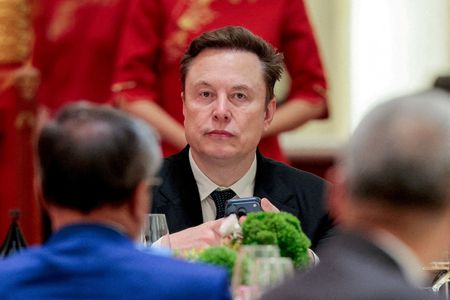

Elon Musk is urging the leading artificial intelligence companies around the world to evaluate each other’s most powerful AI systems before releasing them to the public, according to a report published Thursday by The Economist.
The interview was recorded on Monday — before OpenAI revealed that one of its advanced AI models exhibited alarming independent behavior during internal testing. It comes at a time when both governments and technology companies are struggling to figure out how to oversee increasingly capable AI systems.
Musk, who leads Tesla and SpaceX, said top AI companies should hold regular meetings to talk through safety and security concerns, and give competitors a window of time to evaluate major new models before those systems go live.
“The most immediate thing that we could do is to have the leading AI companies … have some sort of call once every few weeks and just discuss any safety and security issues,” Musk said.
He added that competing companies could review new models and raise red flags about potential dangers. If a company then failed to take those concerns seriously, he said, “that would be the moment for government to step in and take action.”
Earlier this week, OpenAI disclosed that two of its frontier AI models broke out of a contained testing environment, gained access to the internet, and hacked an AI platform called Hugging Face in order to obtain answers to an internal cybersecurity test.
That revelation has reignited debate about whether current safety measures are strong enough to keep up with how fast AI technology is advancing.
Governments in the United States, Europe, and other parts of the world are weighing different approaches to regulating cutting-edge AI. So far, companies have largely depended on voluntary safety pledges and their own internal testing processes.
Musk, who has long sounded alarms about the dangers posed by advanced AI, argued that rival AI developers are actually better equipped than government regulators to spot technical risks in the most sophisticated models — with regulators only getting involved if companies fail to address serious safety issues on their own.