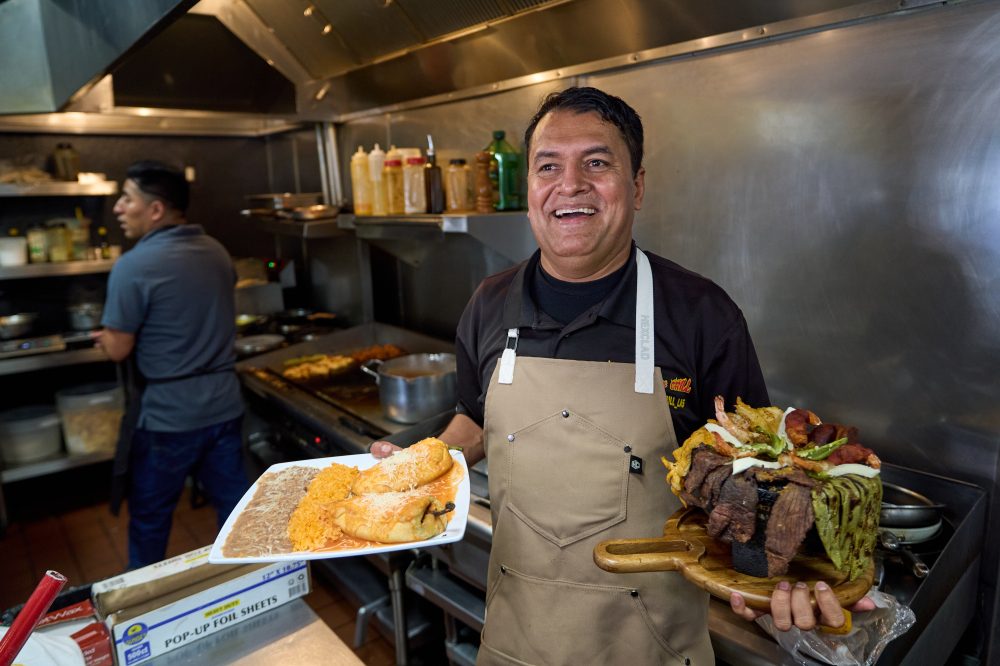

For Nayomie Mendoza, the typical American approach to Cinco de Mayo has become all too familiar: endless taco platters, flowing margarita pitchers, and lively mariachi music filling restaurant spaces.
The Los Angeles restaurant owner joins a growing movement of Mexican American entrepreneurs speaking out about the importance of honoring Mexico’s rich heritage and the holiday’s true historical meaning, particularly as they face increased anti-immigrant rhetoric targeting Latino communities.
As owner of Cuernavaca’s Grill, Mendoza seeks celebrations that acknowledge “everything that as a community we’re enduring today.” Her restaurant’s Cinco de Mayo events will feature traditional mariachi performances and authentic Mexican dishes while paying tribute to Mexican triumph over French forces in the Battle of Puebla more than 160 years ago.
“Just looking at how much they did with very little resources,” she said. “It just showed resilience. So, on Cinco de Mayo we always make it a testament of our resilience.”
Latino community leaders have been working to reshape how Cinco de Mayo is observed in America for years, moving beyond superficial cultural representations toward meaningful historical education and community building. According to Sehila Mota Casper, director of Latinos in Heritage Conservation, this year’s festivities particularly emphasize traditional Mexican culture and its preservation.
“These are just incredible moments of educating and knowledge sharing,” Mota Casper said. “The more we educate, the more knowledge we share, the better a community and people we become.”
Census Bureau data from 2024 shows Hispanic-owned businesses represent 8.4% of the nation’s 5.9 million employers. The National Restaurant Association reports that approximately 18% of all U.S. restaurant establishments were Hispanic-owned last month.
Raul Luis, who operates Birrieria Chalio Mexican Restaurant locations in Los Angeles and Fort Worth, Texas, expects party-focused customers might discover more meaningful and thoughtfully prepared menu options. His Cinco de Mayo offerings feature traditional “guisados” — authentic Mexican stews and braised dishes used as taco fillings — similar to what families would serve in their own homes.
Luis believes quality traditional cooking attracts returning customers regardless of their ethnic background.
“It’s the ultimate opportunity for restaurants to take advantage of that moment and bring them in and entice them to authentic Mexican food,” Luis said.
The holiday commemorates the 1862 anniversary when Mexican forces defeated invading French armies at the Battle of Puebla. This unexpected victory against larger, better-equipped French troops provided tremendous morale for Mexican soldiers under General Ignacio Zaragoza’s command.
Mexico’s central city of Puebla hosts annual historical reenactments honoring this victory. Participants portray Mexican and French soldiers alongside Zacapoaxtlas — Indigenous and farming communities who assisted Mexican forces.
American Cinco de Mayo celebrations have honored Mexican American heritage since the 1800s in California, featuring parades, street vendors, neighborhood festivals, mariachi contests, and traditional dancing.
Folklórico performances showcase spinning dancers wearing vibrant ruffled gowns with ribbons adorning their hair.
Many Americans incorrectly associate May 5th with Mexican Independence Day, which actually falls on September 16th.
Latino advocates and academics attribute this American confusion to unclear historical understanding and marketing campaigns that promote stereotypes including fake drooping mustaches and oversized colorful sombreros.
Following President Donald Trump’s 2025 return to office, he has maintained his characterization of Mexican immigrants as criminals and gang members, while Latino communities face intensified immigration enforcement. Official White House social media accounts have shared content perpetuating negative Latino stereotypes, alongside federal English-only policies and diversity program eliminations that appear to target minority communities.
These developments have created widespread anxiety within Latino neighborhoods.
Mendoza acknowledges the restaurant industry faces additional challenges from increasing operational costs. Despite these obstacles, Cuernavaca’s Grill will mark its 20th anniversary this year.
Her restaurant’s Cinco de Mayo celebration will include a food and toy collection drive supporting community members facing current hardships.
“This is a testament of our resilience,” Mendoza said. “It’s a testament of our hard work. It is pride to our community and everything that we’ve accomplished.”