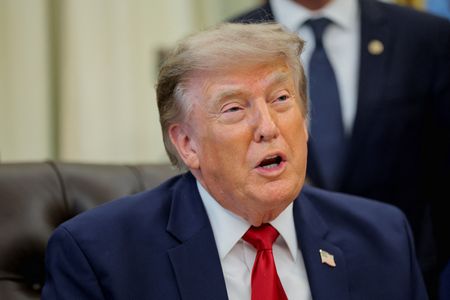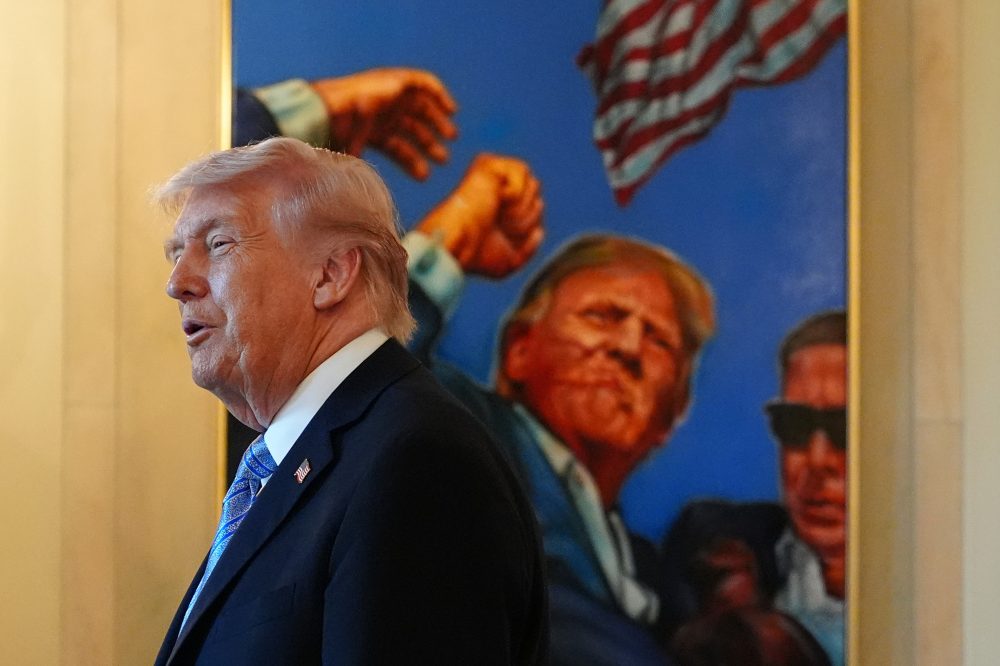

Former President Donald Trump’s effort to exact political revenge on Republicans who oppose him continues Tuesday with primary elections targeting seven Indiana state senators who blocked his redistricting proposals designed to boost GOP representation in Congress.
Across state lines in Ohio, primary contests for U.S. Senate and governor will determine the final candidates for two high-stakes races that could have national consequences.
Meanwhile, Michigan voters in a competitive district will select someone to fill an empty state Senate position, with results that could alter the power dynamic in this key swing state.
Trump has set his sights on seven GOP state senators in Indiana who rejected his strategy to reshape congressional maps in ways that would benefit Republican House candidates.
Organizations supporting the former president have poured millions into campaign advertisements, representing an unusual amount of money and focus for contests that normally receive little attention.
These contests serve as a measure of Trump’s continued influence within the Republican Party as GOP members express growing concern about November’s midterm elections.
The outcomes will send a message to Republicans nationwide about the potential consequences of separating themselves from Trump, even as his approval ratings decline. They will also reveal whether the former president can still effectively threaten retribution against party members who oppose him.
All seven targeted state senators represent areas Trump won in 2024, with most victories coming by margins of 20 percentage points or greater.
The districts worth monitoring include 1, 11, 19, 21, 23, 38 and 41.
Ohio’s primary serves as preparation for the main event. Despite the state’s shift toward conservatism, Democrats see Ohio as crucial to regaining control of the U.S. Senate.
Democratic hopes rest on former Sen. Sherrod Brown, who previously lost Ohio’s other Senate seat to Bernie Moreno in 2024.
Brown is anticipated to compete against Republican Sen. Jon Husted, who received an appointment last year to replace JD Vance after Vance became vice president.
This contest is a special election to complete Vance’s remaining two-year term.
For governor, Republican Vivek Ramaswamy has leveraged his national profile, technology sector ties, and Trump endorsement into unprecedented fundraising success. Rather than focusing on Republican opponent Casey Putsch, he’s directing his campaign events and television spots toward the general election.
Putsch, an engineer and vehicle designer who brands himself as “The Car Guy,” has built a following through bold YouTube content that challenges Ramaswamy and criticizes national Republicans on issues including the Epstein documents, energy-intensive data facilities, and Israel policy.
Amy Acton, who previously served as Ohio’s public health director and was instrumental in the state’s COVID-19 response, faces no opposition for the Democratic nomination.
A special election for a central Michigan state Senate position carries significant weight beyond its local scope.
This race represents another measure of voter enthusiasm in a string of special elections that have consistently favored Democrats since Trump’s return to office. The results could also impact Michigan’s legislative balance. A Democratic win would secure the party’s state Senate majority, while a Republican victory would create a 19-19 deadlock.
The district shows close political divisions, with Democrat Kamala Harris defeating Trump by under 1 percentage point in the 2024 presidential race.
The position has remained unfilled for over a year, following Democrat Kristen McDonald Rivet’s resignation to join Congress.
Democrats have demonstrated unexpected success in special elections and off-cycle races nationwide, securing victories in unlikely locations and substantially closing margins even in defeats.
While this pattern may not persist through midterm elections with higher voter participation, it has nevertheless motivated Democrats and concerned Republicans about maintaining their congressional control.