
Written by Katy Gorsuch
As temperatures rise and daylight hours extend, residents across our region are spending more time outdoors. Maryland’s Department of Natural Resources continues examining the state’s rich ecological diversity by looking at springtime lunar traditions and their connection to local wildlife.
Dating back to English records from 1779, Native American peoples throughout the Americas created names for full moons, typically linking them to seasonal animal behaviors or significant local events.
Moon naming practices differed greatly based on geographic regions and tribal language groups among Indigenous communities. Additionally, some traditional moon names originated from European colonists or developed within the past century.
Using traditional Algonquian lunar names offers an excellent opportunity to examine Maryland’s distinctive wildlife and seasonal transitions.
Spring Lunar Cycles:
April
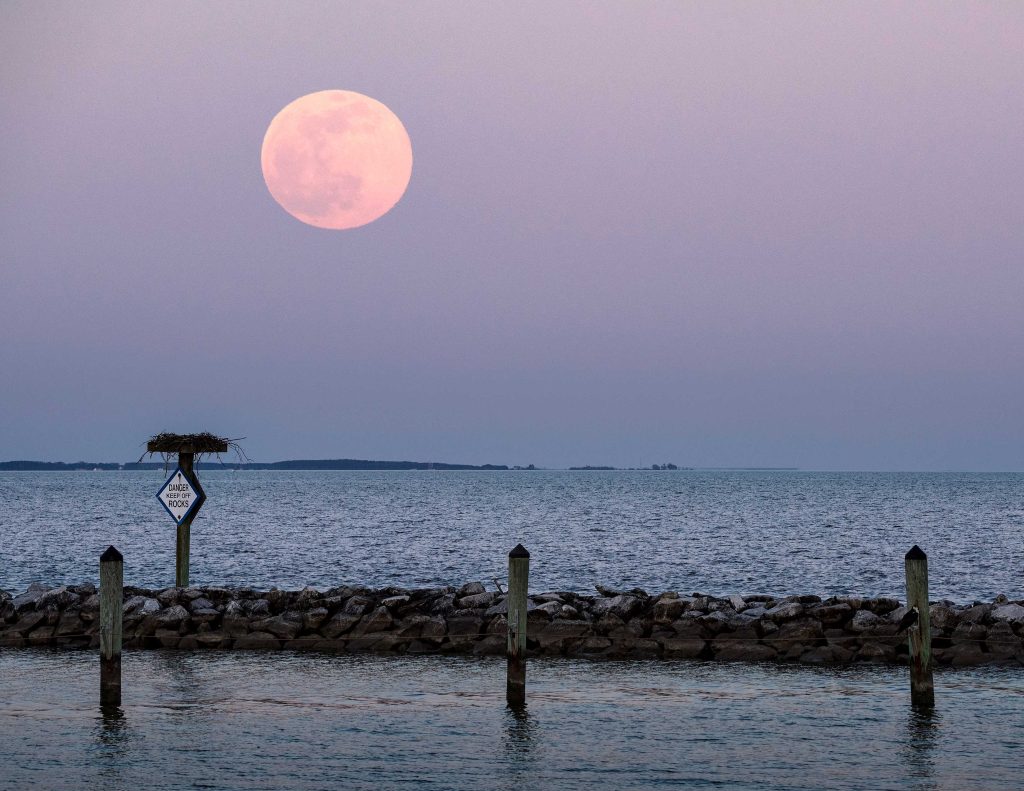
This lunar period is commonly known as the Pink Moon, linked to the flowering of moss phlox or the related creeping phlox species. An alternative designation might be the Breaking Ice Moon, referencing spring’s warming temperatures.
Both phlox varieties have recently gained recognition as excellent alternatives to conventional grass lawns, serving as low-maintenance ground cover that benefits both humans and pollinators. While their peak blooming occurs in April, these plants can flower as early as February in Maryland, with intermittent blooms continuing through September.
Phlox represents just one of many native species producing vibrant pink flowers.
Redbud trees, a native small to medium species, also bloom during April. Their bright magenta flowers compete with famous cherry blossoms in visual appeal. Softer pink tones appear in Southern and sweet crabapples, both supporting pollinators and native wildlife.
Wild geranium starts blooming in April, though its coloration leans more purple. Early azalea begins flowering in mountainous areas during April, living up to its name.
Many indigenous plants, including flowering dogwood, transition through pink on their way to white flowers, or combine pink and white like the pinxter flower. Flowering dogwood provides year-round color with red autumn foliage and berries that birds enjoy during fall and winter.
Gardeners can maintain native pink flowers throughout the entire growing season.
Several invasive plants also bloom pink in April, making them easier to identify and remove, including Common Vetch and Incised Fumewort.
Recommended Pink Moon Activities: Design your garden to incorporate more native flowering plants!
Consider replacing at least part of your lawn with moss phlox this year. It remains low – maximum six inches – meaning fewer hot days cutting non-native grass lawns.
May
Flower Moon
Explorer Jonathan Carver documented May as the Flower Moon in 1779, noting the name was common among several Indigenous peoples in northern states. By May, numerous flowers bloom throughout Maryland’s varied ecosystems.
Flowering plants utilize scent and color to attract pollinators, but one less visible element involves colors only seen under ultraviolet light. Human vision doesn’t include much UV spectrum, but many pollinators, including bees and butterflies, perceive wavelengths invisible to humans.
Bee color vision is sometimes called “bee purple,” and while humans cannot see this spectrum, researchers have developed methods to visualize patterns flowers create to attract pollinator attention.
May marks Gardening for Wildlife Month – perfect timing for considering how garden flowers affect native pollinators. Native flowers support more than butterflies; many native moths, birds, and bees feed directly from them, while bats, birds, frogs, and others consume the insects that feed on them. During bird breeding season, insect protein is crucial for rapid chick growth. Research shows 96% of terrestrial birds feed insects to their babies, requiring 6,000-9,000 insects to raise a single Carolina chickadee brood.
Recommended Flower Moon Activities: Continue garden work in May’s beautiful weather, but challenge yourself further by replacing ornamental flowers with native species or planting one for a neighbor.
June
Strawberry Moon, Hot Moon
June is called either the Strawberry Moon or Hot Moon, depending on sources. While North American strawberry species deserve attention, considering water sources early in the season may prevent hot months from becoming unbearable.
For wildlife, even small water amounts can make suburban or urban habitats tolerable versus desert-like. Backyard ponds are familiar options, but bird baths, puddling stations for bees and butterflies, rain gardens, and water drips are also valuable features that may be more manageable for those without space, time, or ability to maintain ponds.
A common concern about standing water features involves creating mosquito breeding sites. For frequently changed water locations like puddling stations or bird baths, this is less concerning. Adding pumps, fountains, or waterfall features to ponds prevents larvae survival.
Where this isn’t possible, larvae can be controlled using Bacillus thuringiensis israelensis (Bti) or Bacillus sphaericus. These bacteria affect mosquito larvae’s digestion, killing larvae while leaving other animals and people unharmed. Avoid pesticides around water features, as these kill more than targeted insects and can be consumed by birds, amphibians, reptiles, and fish.
Recommended Hot Moon Activities: Ensure your outdoor space includes a water feature! Select and install one that’s easy to maintain, placing it somewhere quiet. Puddle containers and bird baths don’t need to be expensive – a large ceramic thrift store bowl or unused clay pot bottom works as effectively as costly options and is easier to clean.