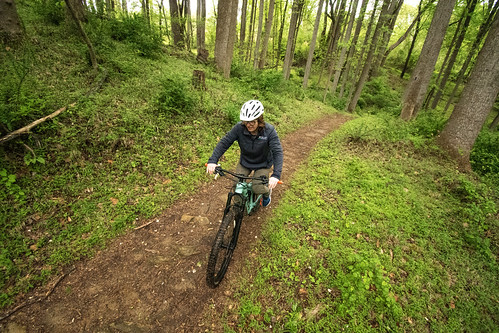

Riders with pedal-assist electric bikes now have access to multi-use trails on Maryland’s public lands, following the approval of new regulations by the Maryland Department of Natural Resources.
The rules, which were published in the Maryland Register in May and are now in effect, specifically allow Class 1 e-bikes — electric bicycles that only provide motor assistance while the rider is pedaling and that automatically shut off that assistance once the rider hits 20 miles per hour.
The intent behind the change is to bring new groups of riders onto state trails, expand access for people with mobility limitations, and keep trails safe and environmentally sound.
Department of Natural Resources Secretary Josh Kurtz expressed enthusiasm about the development. “We’re excited to formally welcome e-bikes to public trails throughout Maryland’s state park system and public lands,” he said. “These new regulations will allow more people to respectfully explore the state’s beautiful natural scenery while ensuring their e-bikes travel at safe speeds that enable them to yield to more vulnerable trail users such as hikers, horseback riders, and mountain bikers.”
When using state trails, e-bike riders are required to ride safely and courteously, follow posted speed limits and right-of-way rules, and only ride on trails where e-bikes are explicitly allowed.
Maryland Office of Outdoor Recreation Director Sandi Olek emphasized the importance of clear, consistent rules. “Our goal is to provide predictability and consistency in biking regulations across state lands,” she said. “Updating our regulations to address the demand within a framework forges a clear path forward for e-bikes in Maryland, with safety in mind.”
Not all electric bikes qualify under the new rules. E-bikes that operate without pedaling, or that continue providing motor assistance beyond 20 mph, are banned from state trails. Those types of bikes are restricted to motor vehicle areas such as roads, parking lots, and zones designated for off-road vehicles, dirt bikes, and ATVs.
Riders who break the rules face serious consequences. Violations — including operating a prohibited e-bike, speeding, reckless riding, damaging property or wildlife, or riding in restricted areas — carry fines starting at $500 for a first offense and can result in up to a year in jail. Riders caught under the influence of drugs or alcohol must appear in court and could face substantial fines and other penalties.
There is an exception for adaptive e-bikes, which are specialized devices used by people with physical disabilities or mobility challenges. These are permitted under the same 20 mph restriction but are allowed to have motors that function without pedaling.
The final regulations reflect public input. The Office of Outdoor Recreation adjusted its original proposal after receiving feedback from community members who raised concerns about allowing bikes that don’t require pedaling and bikes that assist riders up to 28 mph, citing potential safety risks to other trail users. More than 60 public comments were submitted on the proposed regulation, with roughly 87% supporting the operational rules as written.
One commenter captured a sentiment shared by many supporters: “Allowing e-bikes would make the trails more inclusive for everyone — older adults, people with health challenges, and those who may not have the endurance for traditional biking. Maryland’s trails are one of our state’s greatest treasures, and they should be available for all residents to enjoy, regardless of age or ability.”
The expanded access is also expected to have economic benefits. Biking contributed $36.5 million to Maryland’s economy in 2024, according to the Bureau of Economic Analysis. Market research firm Circana reports that national e-bike sales surged from 50,000 units in 2017 to more than 500,000 in 2022, and opening state trails to e-bikes could further stimulate that market in Maryland.
Olek also reminded all trail users that the rules of courtesy haven’t changed. “Our well-developed trail system is highly valued by hikers, bikers, equestrians, hunters, and other outdoor enthusiasts across the state,” she said. “The new e-bike regulations don’t change the rules of the road or who has the right of way on the trail. Visitors should still look out for others, familiarize themselves with yielding to more vulnerable trail users, and ride in a safe manner that respects the resource and makes it enjoyable for all.”
All trail users — whether on foot, horseback, or bike — are encouraged to wave to one another, yield to pedestrians and equestrians, and keep speeds safe. Maryland’s trail etiquette motto sums it up simply: “Say Hey, Give Way, and Enjoy the Day.”
Additional details on the regulations and the trail etiquette campaign are available on the Department of Natural Resources e-bike webpage.