
BANGKOK — A new round of U.S. tariff increases is drawing sharp criticism from trading partners around the world, with officials from multiple countries calling the move unfair and economically damaging.
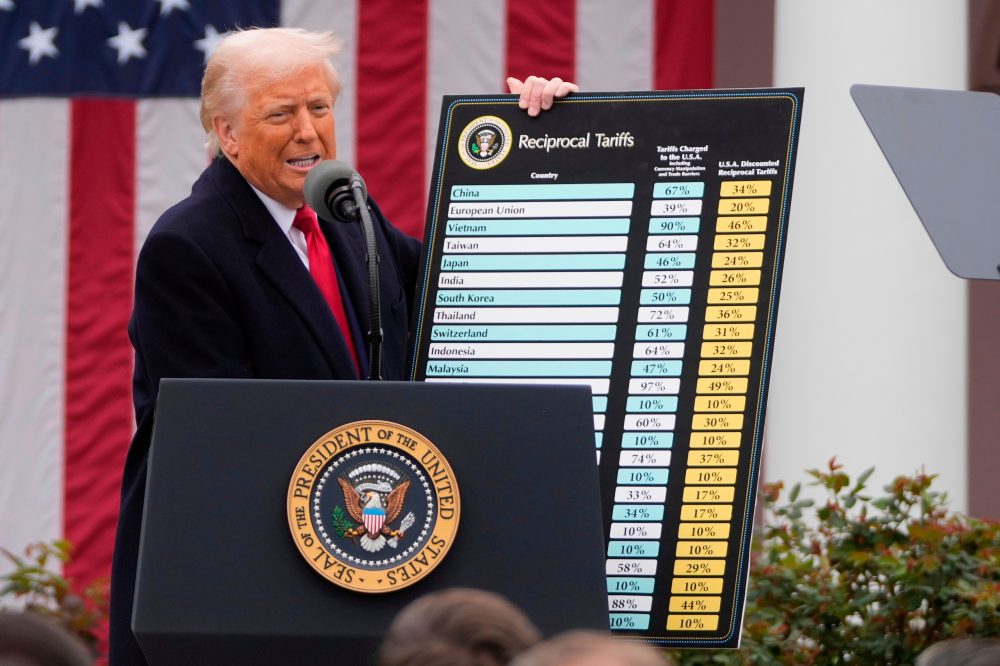
The Trump administration announced additional import duties of between 10% and 12.5% on goods from 60 economies late Thursday, arguing those countries had not done enough to stop the flow of products made using forced labor. The tariffs kicked in at 12:01 a.m. Friday, right as temporary levies — put in place after a setback at the Supreme Court — were set to expire.
Australia’s Trade Minister Don Farrell was among the most vocal critics, flatly rejecting any suggestion that his country, a significant exporter of beef, gold, and copper, has ties to modern slavery. The new tariff rate on Australian goods rises to 12.5%, up from the 10% level set during last year’s so-called “Liberation Day” tariff round.
“We believe that amongst all of the countries in the world Australia does take the issue of slavery, modern slavery, seriously, and will continue to do that,” Farrell told reporters in Adelaide.
He added that Australia considers the increased tariffs “completely unjustified” and pledged to keep pressing the U.S. Trade Representative to eliminate all tariffs on Australian products.
New Zealand’s Prime Minister Christopher Luxon echoed that frustration, describing the 12.5% duty placed on his country’s exports as “extremely disappointing,” unwarranted, and damaging to trade. He argued on X that “tariffs are not the way — they drive up costs and uncertainty for businesses.”
European Union foreign policy chief Kaja Kallas also questioned the reasoning behind the tariffs. “If you compare our labor laws to the ones of the United States, I mean we have, people have paid vacations, we have very good conditions, labor conditions for our employees, so it’s not really grounded,” she said in an interview with Channel News Asia.
Japan registered its own protest over the 12.5% tariff on its exports, pointing out that Tokyo had received assurances from the Trump administration that no additional tariffs would be piled on top of a prior agreement setting a 10% import duty. Chief Cabinet Secretary Minoru Kihara addressed the issue at a routine press briefing.
“Our understanding is both sides are still committed to that,” Kihara said. He called it “regrettable” that tariffs were being imposed on the grounds that Japan lacked measures banning forced-labor goods, when in fact Japanese industry and trade comply with international standards.
South Korea said it would stay in close contact with the United States to protect a mutual “balance of benefits.” The country’s trade ministry noted that while the announcement reduced some uncertainty about U.S. trade policy, a separate investigation into alleged Korean excess production is still ongoing. South Korea said the combined tariff burden on its exports should not top 15%.
Wendy Cutler, a former senior U.S. trade official and senior vice president of the Asia Society Policy Institute, said the latest tariffs held “few surprises” given their relatively modest range of 10% to 12.5%. The U.S. Trade Representative’s office spent four months conducting the investigation behind these tariffs to satisfy legal requirements under Section 301 of the U.S. Trade Act of 1974.
“Time will tell whether the third attempt to impose tariffs is the charm and this action stands up to legal challenges,” Cutler said, adding that these duties are less likely to be struck down by U.S. courts than earlier rounds were.
She also warned that additional tariffs related to alleged structural excess production by trading partners could arrive in the fall.
William Bratton of BNP Paribas noted in a research report Friday that Washington appears to be moving toward greater trade friction overall. He did point out a silver lining: “On the positive side, however, these tariffs are lower than the earlier (Emergency Powers Act) ‘reciprocal’ tariffs and appear to exempt a substantial proportion of Asia’s current trade flows with the U.S.”
Cutler noted that the administration carved out many product exclusions — particularly for goods the U.S. doesn’t manufacture domestically. Even so, she cautioned that the tariffs will still push prices higher for consumers and businesses that rely on imported materials and equipment.