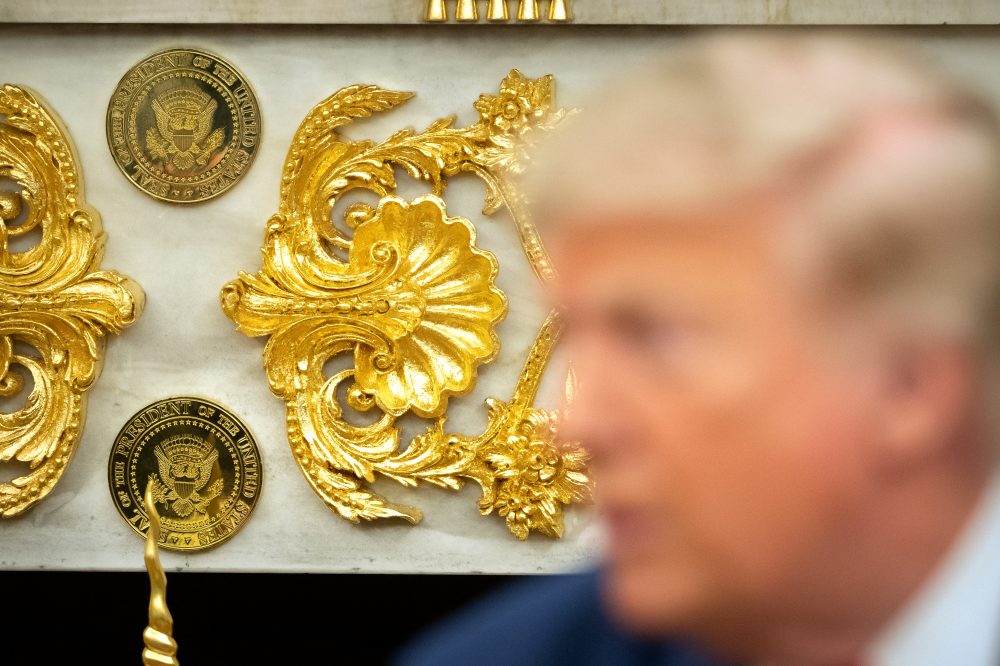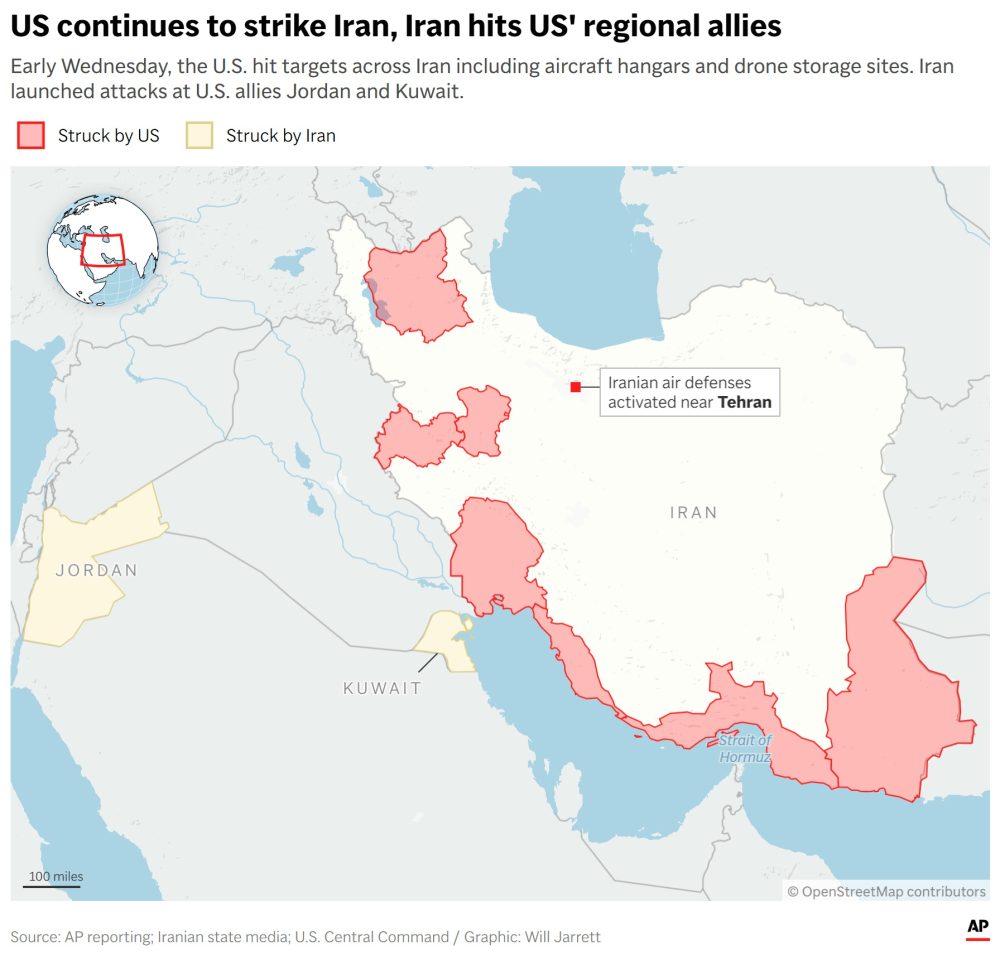

Maritime traffic through the critical Strait of Hormuz has come to a complete stop, according to intelligence reports, while petroleum prices surged on Monday following President Donald Trump’s social media declaration that America would implement a naval blockade of the strategic waterway.
The U.S. Central Command subsequently clarified that the blockade would target vessels entering or leaving Iranian ports and coastal regions, while permitting ships traveling between other nations’ ports to continue using the strait – a modification from Trump’s initial threat to completely seal off the entire passage.
Trump validated the timeline and certain aspects of CENTCOM’s announcement through a post on his social media platform early Monday morning.
Iran’s Revolutionary Guard declared the waterway remained under Tehran’s “full control” and stayed accessible to civilian vessels, though military ships would face a “forceful response,” according to reports from two semi-official Iranian media outlets.
These developments followed extensive U.S.-Iran ceasefire negotiations in Pakistan that concluded without reaching any accord, creating conditions for a potential confrontation.
Iranian parliament speaker Mohammad Bagher Qalibaf, who headed Iran’s negotiating team, delivered a direct message to Trump upon returning to Iran: “If you fight, we will fight.”
The ongoing conflict, now in its seventh week, has resulted in thousands of casualties and disrupted international markets.
Japan voiced backing for the weekend U.S.-Iran discussions held in Pakistan and stated it continues monitoring developments while hoping for swift de-escalation.
Chief Cabinet Secretary Minoru Kihara informed reporters Monday that Tokyo believes achieving de-escalation, including guaranteeing safe transit through the Strait of Hormuz, remains paramount.
“We hope a final agreement will be reached swiftly through diplomatic efforts,” Kihara stated.
When questioned about Japan potentially deploying warships for minesweeping operations in the vital waterway, Kihara indicated no decisions had been made.
Southeast Asian nations called on Washington and Tehran Monday to continue peace talks, implement a ceasefire, and reestablish secure passage for vessels, maritime workers, and aircraft through the Strait of Hormuz.
Foreign ministers from the Association of Southeast Asian Nations issued this urgent appeal during an emergency video conference – their second in recent weeks – to evaluate the Middle East conflict’s impact, including rising fuel costs, and explore cooperative responses to global crises.
The 11-member organization emphasized “the obligations of all states to resolve their differences through peaceful means, to respect the sovereignty and territorial integrity of all nations, to protect civilians and civilian infrastructure in armed conflicts.”
It demanded “the full and effective implementation of the ceasefire, aimed at preventing further suffering and loss of lives, ensuring maritime security and freedom of navigation and overflight.”
Tehran issued warnings against Persian Gulf and Gulf of Oman ports following America’s announcement of blocking Iranian ports and coastline.
“Security in the Persian Gulf and the Sea of Oman is either for everyone or for NO ONE,” stated the Islamic Republic of Iran Broadcasting. “NO PORT in the region will be safe,” Iranian military officials declared.
Petroleum prices began rising and Asian financial markets largely fell Monday as U.S. military forces prepared to block ships traveling to or from Iranian ports through the Strait of Hormuz.
Monday saw benchmark U.S. crude oil surge $6.71, nearly 7%, reaching $103.28 per barrel. Brent crude, the global benchmark, climbed $6.20, or 6.5%, to $101.40 per barrel.
Oil costs have been increasing as shipping through the strait has virtually ceased since late February. Brent crude oil has risen from approximately $70 per barrel before the conflict began in late February to over $119 at peak times.
Japan’s benchmark Nikkei 225 dropped 0.7% to close at 56,502.77. Australia’s S&P/ASX 200 declined 0.4% to 8,926.00. South Korea’s Kospi fell 0.9% to 5,808.62. Hong Kong’s Hang Seng slipped 1.1% to 25,613.85, while Shanghai Composite remained nearly flat, rising less than 0.1% to 3,988.56.
Iraq’s petroleum exports collapsed in March to 18.6 million barrels, dropping from 99.87 million in February due to the Strait of Hormuz closure, official data released Monday revealed.
The government-run Organization for Marketing of Oil reported revenues also plummeted to merely $1.95 billion, down from over $6.81 billion.
Data indicated that Kurdistan Region exports through Turkey’s Ceyhan port also fell to 1.27 million barrels, declining from 5.55 million barrels in February.