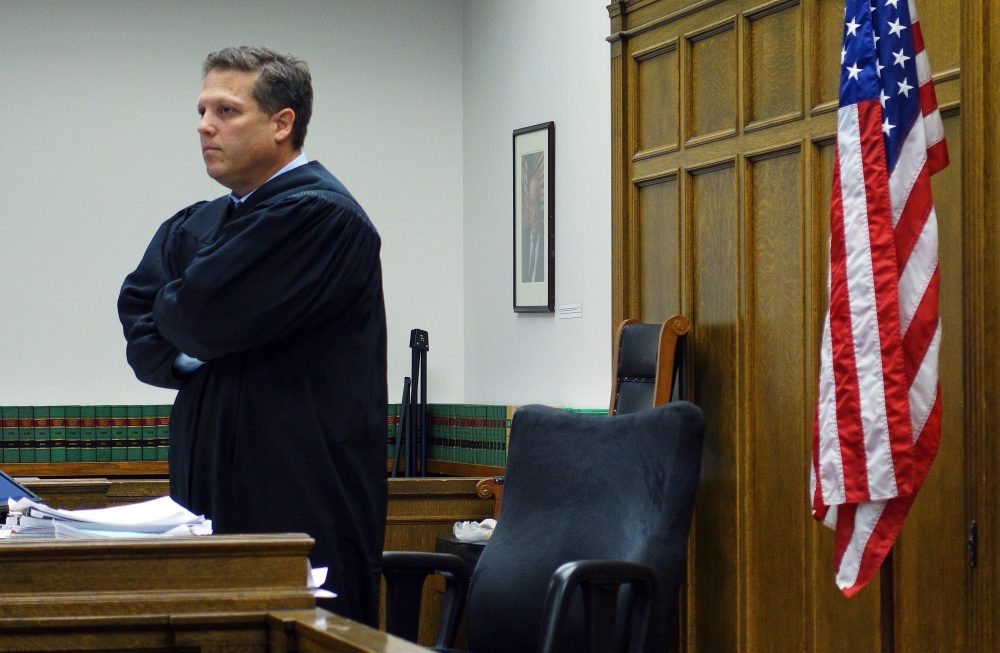

WASHINGTON — A federal prosecutor who was dismissed less than an hour after taking his oath of office last week has filed a lawsuit challenging his firing, setting the stage for a significant legal battle over the Trump administration’s push to place its own choices in key Justice Department positions.
Roger Rogoff, the top federal prosecutor for western Washington state, is among several court-appointed U.S. attorneys who have been removed by the Trump administration. However, he is believed to be the first of that group to take the fight to court. His lawsuit raises fundamental questions about the government’s power to both appoint and dismiss federal prosecutors.
Rogoff was chosen unanimously by the federal judges in his district to serve as U.S. attorney. Shortly after he was sworn in last Wednesday, he received an email notifying him that President Donald Trump had ordered his termination.
The lawsuit argues that the sudden dismissal was unconstitutional and that it ignored the legal authority granted to the district’s judges to appoint Rogoff to the role while the position awaited a Senate-confirmed nominee.
“The President’s actions violate the law, and they ignore the protections of the Constitution of the United States,” Rogoff said in a statement released by the law firm representing him. “His removal of me, like his removal of other court-appointed U.S. attorneys across the country, is illegal and cannot stand.”
U.S. attorneys serve as the leading federal prosecutors in regional areas across the country. They are ordinarily nominated by the president and confirmed by the Senate. When a vacancy exists, the attorney general may appoint an interim U.S. attorney for up to 120 days. Once that temporary appointment runs out without a Senate-confirmed replacement in place, federal judges in the district have the legal authority to name someone to fill the role — which is exactly what happened in Rogoff’s situation.
Under the Trump administration, however, the Justice Department has sought to either keep unconfirmed prosecutors in place indefinitely or move to remove those appointed by the courts.
The Justice Department released a statement Tuesday saying that “the district court did not coordinate with DOJ on this selection. Consistent with other firings of this type, this is wholly within the President’s authority.”
The lawsuit points out that even before Rogoff was fired, acting Attorney General Todd Blanche had signaled his intention to dismiss whoever the judges picked, stating that the selection did not have the president’s backing.
After the firing took place, Blanche posted online: “District court judges can appoint a temporary U.S. Attorney, and POTUS can fire them.” He added that the judges from the western district “abandoned the time-honored process of consultation with the administration so that the selected U.S. Attorney is qualified to serve in the administration. Roger Rogoff has been fired by the President.”
Rogoff’s district has been without a Senate-confirmed U.S. attorney since 2023. He put his name forward for the role last January after the federal judges indicated they planned to fill the vacancy left when the 120-day appointment of Charles Neil Floyd — who had been named to the position by then-Attorney General Pam Bondi — came to an end.
Similar conflicts between the courts and the administration have played out in other parts of the country. In New Jersey, Trump’s former personal attorney Alina Habba stepped down in December after an appeals court ruled she had been serving in the role unlawfully. In Virginia, another of Trump’s personal lawyers, Lindsey Halligan, departed her position as acting U.S. attorney after a judge determined her appointment was unlawful and ordered that indictments she had brought against New York Attorney General Letitia James and former FBI Director James Comey be dismissed.