
Elias Shimon still feels overwhelmed when reflecting on his combat service in Gaza following the October 7 attacks.
The 29-year-old reservist with the Paratroopers Brigade participated in multiple combat operations against Hamas, fighting alongside fellow soldiers he described as courageous and strong, several of whom lost their lives in the conflict.
Shimon recalled engaging the enemy “under intense fire.”
While he didn’t receive a formal PTSD diagnosis, Shimon acknowledged that his combat experience fundamentally altered him, as it has countless other Israelis.
“As Israelis, it is one event after another, one tragedy after another,” Shimon told The Media Line. “We have been at war for almost three years. People cannot even begin to understand what we went through and how much we need to stop and deal with ourselves before we go on.”
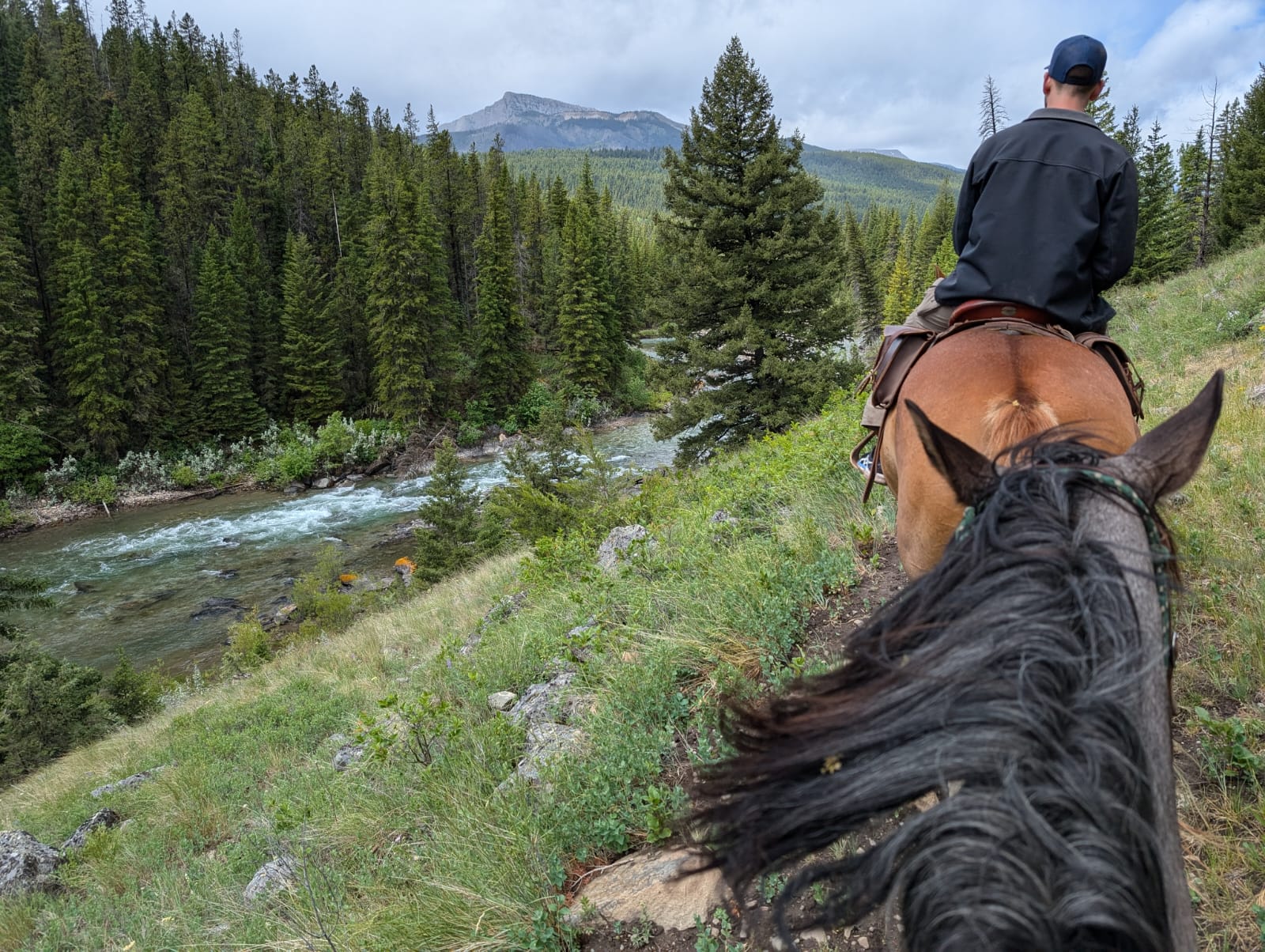
Looking for an opportunity to work through his experiences, Shimon traveled to Montana through an initiative operated by Healing in Nature (HiN), an Israeli nonprofit organization that assists Israel Defense Forces combat veterans by providing therapeutic experiences in peaceful, natural environments throughout the United States. The initiative also uses cutting-edge research techniques and technology to establish a comprehensive healing atmosphere.
During his Montana retreat, Shimon spent 10 days in comparative solitude, removed from everyday stresses and responsibilities.
His experience included equestrian activities, cold water immersion, breathing techniques, and athletic pursuits, alongside consultations with licensed psychiatrists and social workers.
“We started a healing process,” Shimon said.
Co-founders Omri Barkin and Roei Friedberg established HiN to assist Israeli combat veterans in healing, reconnecting, and reconstructing their lives using natural environments, technology, and community support. The initiative combines nature-focused therapy, comprehensive healing methods, advanced research, and practical coping strategies.
According to Barkin, each participant undergoes an extensive months-long screening process that starts with a comprehensive one-hour questionnaire to collect preliminary information. After completing this assessment, participants engage in an evaluation conversation with one of HiN’s professionals to better understand their background and confirm the retreat’s appropriateness.
“We’re going to places that are so remote, so far away, we want to ensure the safety of the participants,” Barkin explained.
After initial screening, participants meet with a therapist for a preliminary session. They then participate in a comprehensive evaluation day at Tel Aviv University. This approximately four-hour session incorporates questionnaires, eye-tracking technology, and additional biofeedback measurements to better understand each participant and customize the program accordingly.
“That all happens before the 10-day retreat,” Barkin added. “When they return to Israel, they go through another evaluation day at Tel Aviv University. That one is about a month after their return.”
Participants typically come from the same military unit or share comparable combat backgrounds, even if they served in different capacities. For instance, a group might consist of lieutenant colonels who served in Gaza or Lebanon.
“It is important to create that organic feeling before they go on the retreat, so they can feel as comfortable as they can during the retreat,” he told The Media Line.
Program activities differ but primarily take place outdoors and encompass fishing, hiking, swimming in rivers or therapeutic springs, and peaceful reading near water.
“We start every morning with our alternative therapist for mind-body work,” Barkin said, noting that participants also engage in cold-water exposure, Tai Chi, and journaling. Group sessions with professionals including social workers and psychologists are also conducted.
A distinctive aspect of the program is what Barkin terms “organized free time,” where participants can choose their activities, provided they remain outdoors.
“I want them to be outside … in nature as much as they can,” Barkin added.
Many retreat locations are so isolated that cellular service and internet access are unavailable, enabling participants to completely disconnect without interruptions. Each evening, the group gathers to discuss the day’s experiences and complete brief feedback surveys.
What distinguishes HiN, according to Barkin, is not just the natural environment but also the scientific foundation of the program. Beyond the pre- and post-retreat assessments, participants engage in several months of continued monitoring. This involves responding to brief questionnaires three times daily for two weeks before and after the program to help researchers monitor their responses and progress following the retreat, and to evaluate the effectiveness of the tools provided.
Upon program completion, participants have a final summary conversation with their therapist.
“The main goal is really to check in on the participants to make sure they all return home in a good way,” Barkin said.
After all data collection is complete, information is compiled and forwarded to HiN researchers at Tel Aviv and Cambridge universities for examination. Several months later, participants receive individualized reports showing their progress compared to their initial assessment.
“We understand that creating a long-lasting effect is important,” Barkin said, explaining that HiN maintains an alumni network that remains connected and provides support to members, particularly when soldiers are recalled for reserve service.
Nimrod Hertz serves as HiN’s principal researcher. He explained to The Media Line that comprehensive research already demonstrates nature’s ability to provide a peaceful environment for recovery, and can help diminish hyperarousal and other trauma-related symptoms. He said the team expands upon this existing knowledge, along with research on the advantages of stepping away from routine life, and providing people space to heal by eliminating environmental stress factors.
“The premise was that there are a lot of great mental health initiatives in Israel aimed at veterans, especially workshops that focus on processing combat experiences,” Hertz explained. “The problem is that we don’t have enough evidence and scientific measurement to actually show, first of all, that these sorts of projects and programs are effective, and also we don’t have enough data showing the ways in which they are effective, meaning what the direct effects that these programs have are. What we wanted to do here is use science.”
Hertz explained that the research enables the team not only to better customize the program for participants’ requirements but also to refine and enhance it over time as additional information becomes available.
“We also believe that combining science gives us the opportunity to also use what we do in order to communicate knowledge further so that the effects of the program will not be just for the participants but also other people, the scientific community, the clinical community, the therapeutic community, not only in Israel but around the world. We see this as an opportunity to expand the effects beyond the program itself.”
Participants are monitored for approximately six months, spanning the period before and after the retreat. One significant discovery, according to Hertz, is that initial trauma responses don’t necessarily indicate long-term outcomes. In certain instances, symptoms naturally diminish over time.
“It very much resembles the entire clinical thinking or diagnostic thinking of trauma, where you don’t diagnose trauma over the first month because you know that in the first month, you can have a lot of different reactions that then can either relax over time or maybe they remain fixed, and then you develop PTSD,” he told The Media Line.
Hertz, working with other researchers from Israel, the UK, and the United States, published findings in the journal Elsevier demonstrating that some individuals who initially presented in severe condition improved over time without intervention.
“Which means sometimes that even if someone comes back and you are very concerned about them, so of course give them your attention, monitor them, make sure that you are there for them, but also hold the place in your mind to sort of wait and see if it naturally relaxes because it often happens. We also sometimes see the opposite trajectory, that people who started very low in terms of symptom severity all of a sudden are exacerbated over those two months.”
The team also examines how trauma impacts attention, observing that people frequently become more hypervigilant and develop increased sensitivity to potential dangers.
To better comprehend these reactions, researchers combine standard questionnaires with sophisticated tools. Artificial intelligence is integrated into clinical interviews, and facial recognition technology is utilized to evaluate biological indicators. This information is then examined alongside the content of participants’ interviews.
“For example, if a person is sharing an anecdote from their service and then we detect, for example, a heightened heart rate when they’re talking about it, it gives us a clue that this might be a trigger for that person, and even if that person doesn’t tell it as such or does not admit it,” Hertz said.
“One message that we want to send out is about the importance of being evidence-based and of measurement,” Hertz added.
He emphasized another crucial point is the necessity to differentiate between experiencing trauma and developing PTSD.
“There are traumatic exposures, and this by itself has an effect on people. It doesn’t need to qualify all the way to a full-blown post-traumatic stress to be distressing,” he said.
Barkin explained to The Media Line that he initially conceived the idea for HiN in 2016 following his participation in Operation Protective Edge. Though he sustained no physical injuries and didn’t develop PTSD, he said his father observed that he was having difficulties.
He eventually traveled in 2016 to visit family friends, the Wallis family of Missouri, who own a ranch in Montana. The visit proved profoundly therapeutic and motivated him to help others similarly. However, at that time, he was uncertain how to bring a group of reservists from Tel Aviv to Montana.
This changed following October 7. When his unit deployed to Gaza and he couldn’t participate due to a medical condition, he felt driven to take action. One month after the attack, he collaborated with Friedberg, who now chairs HiN, and together they decided to make the concept a reality. The Wallis family also joined the effort, providing their location and initial financing. The complete program costs approximately $10,000 per soldier.
Shortly afterward, the Jewish Federations of St. Louis, Minneapolis, Atlanta, and other private contributors became involved.
The initial group consisted of 15 reservists. Since then, over 100 have participated, and the waiting list has expanded to more than 600.
HiN doesn’t need to promote the program due to high demand. Barkin explained that the team carefully selects participants to maximize the program’s impact. The objective is to reach soldiers from underserved units and support them early, before symptoms deteriorate or create a broader community burden.
“The sooner we provide them with help and the tools that they need in order to heal, the better off our country is going to be in the long term,” he told The Media Line. “History will judge if we did it properly or not.”
He added, “I’m just trying to do my little good in this world.”
Shimon recognized that recovering from his wartime service is an ongoing process, but said HiN provided a crucial foundation.
“The Healing in Nature journey did not only help me with what I went through in Gaza, but in general,” he told The Media Line. “The program helped us look at our service and everything we have gone through in our lives and gave us space to talk … and leave the pain behind.”
He said he continues applying the techniques he learned from the program in his everyday life.
“I am building a better life and developing more and more as a person,” Shimon concluded. “I am a much better person than I was before I started the HiN journey.”