
BANGKOK — International energy markets are experiencing severe disruption as military conflict near the Persian Gulf blocks critical oil and natural gas deliveries, sending fuel costs skyrocketing across the globe.
Asian nations face the greatest vulnerability because they depend extensively on imported energy supplies, with much of their fuel traveling through the Strait of Hormuz — a critical waterway that handles one-fifth of worldwide crude oil and liquefied natural gas commerce.
Energy consulting firm Kpler reports that approximately 13 million barrels of oil traveled through this strategic corridor daily in 2025, representing roughly one-third of all ocean-transported crude petroleum that gets refined into gasoline and diesel fuel.
The strait also serves as a pathway for about 20% of global LNG — natural gas that’s been cooled into liquid for simpler storage and shipping. The U.S. Energy Information Administration notes that over 80% of LNG moving through this waterway in 2024 was destined for Asian markets.
Following the start of the Iranian conflict, Brent crude prices — the global benchmark — have surged 15% to approximately $84 per barrel, marking the highest levels seen since July 2024.
President Donald Trump announced Tuesday that America would provide risk insurance for shipping companies and potentially deploy naval forces to safeguard vessels if necessary. However, the supply disruptions are creating ripple effects far beyond the immediate region. When energy supplies become limited, wealthier nations typically outbid developing countries for available fuel shipments, leaving economically vulnerable areas facing shortages. Similar patterns emerged during previous energy crises triggered by Russia’s 2022 invasion of Ukraine.
“The crisis, with the closure of the Hormuz Strait as the latest development, would not only raise oil and gas prices but also grind global economic activity to a halt,” stated Zulfikar Yurnaidi from the Association of Southeast Asian Nations’ Centre for Energy.
The massive scale of Asia’s two largest populations amplifies these energy security concerns.
China leads the world in crude oil imports while India ranks third globally. Extended periods of elevated oil prices would create widespread economic impacts, affecting transportation systems, manufacturing sectors, and household budgets.
While China purchases more Iranian oil than any other nation, Beijing has made energy security a priority and maintains alternative supply sources, including significant renewable energy capacity. Last year, China imported roughly 1.4 million barrels daily from Iran, accounting for about 13% of its total seaborne crude purchases, according to Kpler data.
Most Iranian oil shipments are currently in transit and should meet Chinese demand for an additional four to five months, Kpler estimates. China also maintains considerable strategic petroleum stockpiles, though exact quantities remain classified government information.
The country can increase purchases from Russia through its independent refineries — industry term “teapots” — which have become primary buyers of Iranian, Russian and Venezuelan oil, often at significant discounts due to Western sanctions risks. Despite war-related supply interruptions, global oil availability remains adequate overall.
“It is therefore unlikely that China would struggle to source enough crude to power its economy or meet domestic demand,” explained Muyu Xu, a senior crude oil analyst at Kpler. “The real question is at what price.”
India may restart Russian crude oil purchases despite pressure from Trump to avoid such transactions.
The country maintains crude reserves lasting less than one month. Energy analyst Vibhuti Garg from the Institute for Energy Economics and Financial Analysis in Delhi warns that the next two weeks are crucial, and conditions could rapidly worsen, driving up fuel expenses and general inflation if fighting continues.
“It is a very, very volatile situation,” Garg noted.
The primary concern involves higher costs for perishable food products susceptible to supply disruptions. Additionally, a weakening rupee and increased borrowing expenses could slow economic growth, she explained.
East Asia remains among the most vulnerable regions to Middle Eastern energy supply interruptions.
Japan imported 2.34 million barrels of crude daily in January, representing about 95% of that month’s total imports, according to its Ministry of Economy, Trade and Industry. Japan typically ranks as the world’s second-largest LNG importer.
South Korea depends almost entirely on energy imports. The Korea International Trade Association reports the country obtains approximately 70% of its crude oil and 20% of its LNG from Middle Eastern sources.
Taiwan imports nearly all its LNG requirements. While attempting to reduce Middle Eastern dependence, it still sources about one-third from Qatar, which suspended LNG production following attacks on its facilities.
Japan and South Korea maintain substantial energy stockpiles. Taiwan has announced sufficient supplies for March and established contingency plans for future needs.
However, analysts emphasize that reserves provide only temporary protection, and energy-dependent industries like Taiwan’s semiconductor sector remain at risk.
Governments are operating in “hope for the best, prepare for the worst” mode, according to Grant Hauber from IEEFA, who warns some may regret not diversifying earlier into renewable energy — a “natural hedge” against supply disruptions.
Fossil fuels continue dominating energy systems across all three East Asian economies. Renewable sources provide less than 10% of electricity in South Korea and Taiwan, and approximately 22% in Japan, based on International Energy Agency data.
Developing Southeast Asian nations with growing energy needs face risks of being outbid by wealthier countries as supplies tighten.
Singapore officials have advised businesses and residents to prepare for increased energy costs.
Manila authorities prohibited non-essential government vehicle travel and personal use of official cars to reduce fuel consumption.
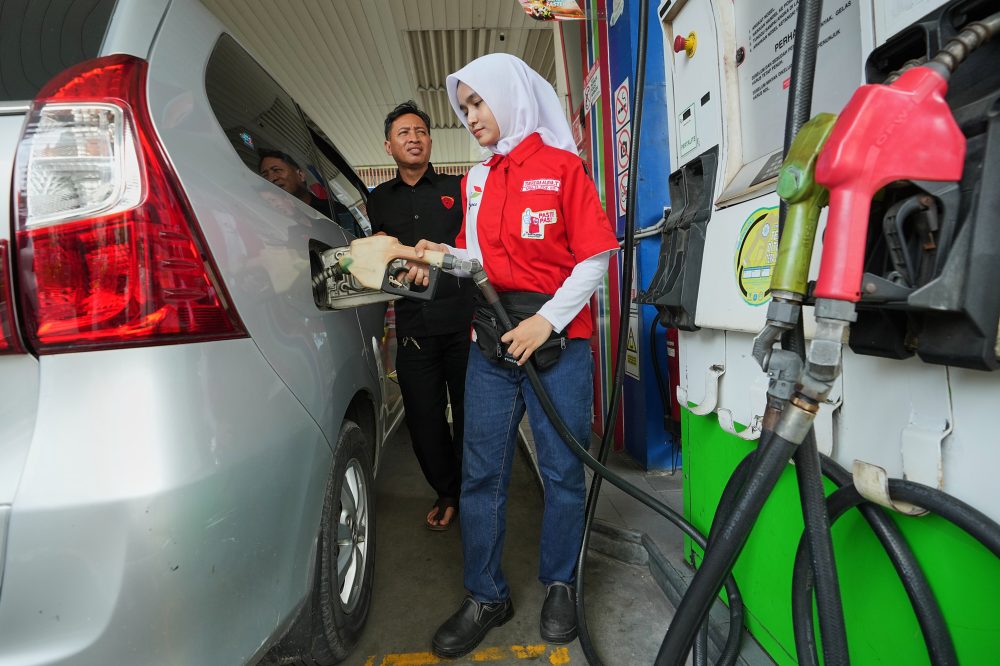
Thai officials have encouraged public energy conservation as motorists queue at gas stations amid climbing prices.
Full-time delivery workers and drivers — crucial for moving goods and people through Thailand’s crowded cities — rely on fuel for their livelihoods. In the northern city of Chiang Rai, 64-year-old taxi driver Sommit Sutar expressed uncertainty about conserving fuel while maintaining his work.
“Gasoline was already expensive. This war will make the problem even worse,” Sutar said.
Thailand’s government has halted petroleum exports to strengthen domestic reserves, which officials say can last up to 61 days while increasing natural gas production from the Gulf of Thailand and Myanmar.
Thailand’s heavy reliance on spot-market LNG leaves it “highly exposed to price and geopolitical volatility,” noted Amy Kong from Brussels-based research organization Zero Carbon Analytics. This vulnerability makes the country susceptible to bidding competitions with wealthier nations.