
India’s food safety authority is holding its ground against major beverage companies, ordering them to remove the term “energy drink” from their products — a decision that has put regulators on a collision course with some of the world’s biggest brands.
The Food Safety and Standards Authority of India, known as FSSAI, announced through social media in early July that it had sent notices to companies stating that no official Indian standards exist for such products. The regulator also said claims that a beverage can “vitalize body and mind” or “aid in general weakness” amount to misleading consumers.
Behind closed doors, the agency went further, privately directing Pepsi, Red Bull, Monster Beverage, billionaire Mukesh Ambani’s Reliance, and Hell Energy to drop the “energy drink” label entirely — along with any similar wording — according to confidential documents and sources familiar with the matter.
The directive has created a standoff with the industry. Companies worry that stripping away the category name could seriously harm brands that have been built on promises of instant energy and disrupt their sales.
At a private meeting with top industry executives last Friday, FSSAI Chief Executive Rajit Punhani dismissed concerns about the business consequences, telling companies they were welcome to take the matter to court if they disagreed, according to two people with knowledge of the conversation.
Neither FSSAI nor Punhani responded to media requests for comment. Pepsi declined to comment, and the remaining companies did not reply.
A source within the Indian government said the industry ultimately agreed to make the labeling change following Friday’s meeting, and the FSSAI has given companies 90 days to come into compliance.
Concerns about energy drinks have been growing among health regulators around the world, given their high levels of caffeine, sugar, and taurine — an amino acid. England is set to ban the sale of high-caffeine energy drinks to anyone under 16 starting next April, and certain regions in Pakistan already require these products to be labeled as “stimulant drinks.”
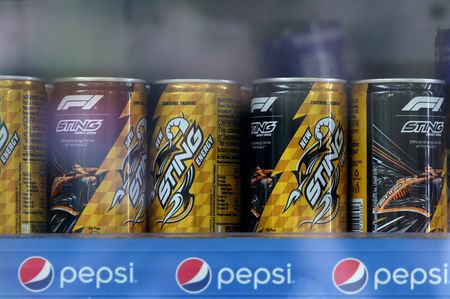
The energy drink business has long relied on aggressive marketing centered on instant energy. Red Bull’s globally recognized “Gives You Wiiings” slogan is one example, while Pepsi promotes its Sting drink in Indian advertisements depicting lightning coursing through the body, promising “electrifying energy.”
The Indian Beverage Association, which represents major players in the industry, said it is committed to following regulations and working with authorities on science-based policy. However, in a confidential letter dated July 6 sent to FSSAI, the group warned that publicly disclosing preliminary regulatory notices could hurt company reputations, disrupt operations, and leave consumers confused. The association called for a “risk-based enforcement approach” and urged regulators to consult with the industry before making major interpretive changes.
“Regular stakeholder consultations before implementing significant interpretational changes would facilitate smoother compliance, reduce litigation,” the association wrote, adding that a “predictable, consultative and transparent” framework was essential.
India’s energy drink market took off after Pepsi introduced its Sting product in 2017. The drink’s affordability — sold in plastic bottles for 20 rupees, or about $0.21 — made it especially popular with young people between 15 and 19 years old and in rural communities, helping it become a market leader, according to market research firm Euromonitor. Retail sales are forecast to hit $1.6 billion by 2028, growing at 12.6% per year — a faster pace than in the United States or China. Sales volumes nearly doubled annually between 2018 and 2023, Euromonitor reports.
Sunny Rajvansi, a 24-year-old bicycle mechanic in Uttar Pradesh state, described how the drinks have become part of his daily routine. “Every time when we feel hungry or go out for a smoke, I buy one drink. It fills my stomach and it gives me strength to work,” he said, adding, “I feel I am addicted to them.” Rajvansi said he regularly drinks both Sting and Reliance’s Campa Energy brand.
Meanwhile, the state of Rajasthan has already launched its own enforcement campaign this month, seizing thousands of cans of Sting, Campa Energy, and Red Bull, as documented in government social media posts. On July 8, Rajasthan authorities also sent a letter to e-commerce platforms — including Amazon, Walmart’s Flipkart, Eternal’s Blinkit, and Swiggy Instamart — directing them to ensure no product is advertised as an “energy drink” on their platforms. None of those companies responded to media inquiries.