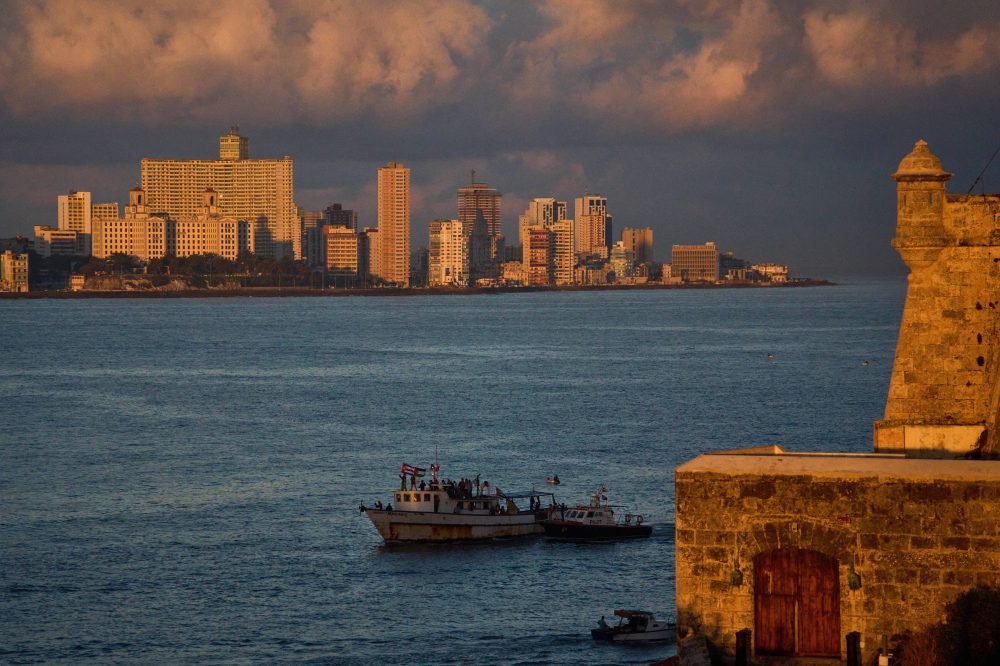

HAVANA — A humanitarian relief vessel reached Cuba’s capital Tuesday, delivering crucial supplies including solar panels, bicycles, food, and medical equipment as the Caribbean nation confronts mounting economic and electrical power challenges.
The ship carried approximately 30 passengers and represents the first of three vessels scheduled to dock in Cuba while the country battles widespread electrical outages, deteriorating infrastructure, and energy supply restrictions from the United States.
“This type of economic warfare shouldn’t exist, this attitude of a pirate state that doesn’t respect international law,” activist Thiago Ávila told reporters as he disembarked from the ship, christened “Granma 2.0” in homage to the ship that ferried revolutionary leader Fidel Castro to the island in 1956.
“These ships are a drop in an ocean of need…at the same time, it’s a gesture of solidarity,” Ávila said.
The vessel left Puerto Progreso in Mérida, Mexico, last week, with two additional ships making their way toward Cuba.
“The help is important for us, so that it can be seen that the revolution is not alone,” Antonia Santamaría, a 72-year-old retiree, said as she watched the boat slowly approach the dock.
This maritime mission forms part of the “Our America Convoy to Cuba” initiative, which brought more than 650 supporters from 33 nations to the island over the weekend carrying tons of relief supplies. President Miguel Díaz-Canel welcomed the international delegation.
Notable participants included British parliamentarian Jeremy Corbyn, Colombian Sen. Clara López, Spanish politician Pablo Iglesias, U.S. labor leader Chris Smalls, and the popular Irish hip-hop trio Kneecap.
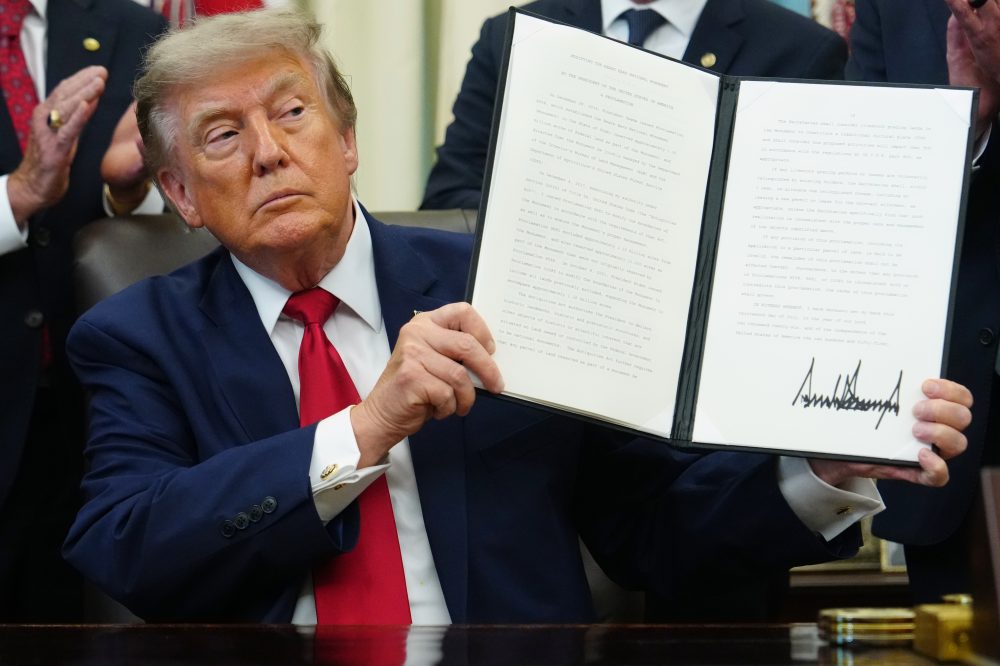
The energy restrictions implemented by U.S. President Donald Trump in late January, designed to pressure political change on the island, have worsened a five-year economic downturn that began with COVID-19 pandemic disruptions and earlier American sanctions against the Caribbean nation.
Cuba currently experiences transportation difficulties, shortened work schedules, canceled flights, and most critically, power failures, including two complete island-wide blackouts in recent days.
Trump and U.S. Secretary of State Marco Rubio — whose parents emigrated from Cuba in the 1950s — have indicated readiness to “take” the island. Officials from both nations acknowledge ongoing discussions, though specific details remain undisclosed.
Cuba’s Deputy Minister of Energy and Mines Argelio Abad Vigo revealed last week that the nation has spent three months without receiving diesel, fuel oil, gasoline, jet fuel, and liquefied petroleum gas shipments — all essential for economic activity and power generation. Cuba domestically produces only 40% of its required fuel.
A Hong Kong-flagged ship reportedly transporting 200,000 barrels of diesel from Russia to Cuba has instead arrived in Venezuela, according to MarineTraffic, which monitors global vessel movements using public data.
International leaders and social organizations have cautioned that Cuba may be approaching a humanitarian emergency.
Nations including Mexico, China, Brazil, and Italy, along with American non-governmental organizations, have provided assistance.
Caricom, a Caribbean trade organization, announced Tuesday it would deliver aid including powdered milk, medical supplies, and water storage tanks to Cuba through Mexico, which has offered free maritime transport.
International assistance is typically distributed without charge by the government through Cuba’s food distribution network, unless donors specify particular recipients, such as medical supplies designated for hospitals.