
Creating the ultimate documentary about artificial intelligence proved to be an enormously challenging goal. The timeframe made it even more daunting.
Academy Award-winning creators from “Everything Everywhere All At Once” and “Navalny” began discussing a joint project during Oscar season, initially believing they could complete it within twelve months. Instead, “The AI Doc: Or How I Became an Apocaloptimist” required nearly three years before reaching viewers. Directors Daniel Roher and Charlie Tyrell, along with co-producer Daniel Kwan, worked to step back from daily news cycles and provide audiences with a lasting perspective on humanity’s stakes as artificial intelligence advances rapidly.
“The film is a journey of understanding that casts me as sort of a proxy for everyone, as a pea-brain regular person who’s trying to understand what the (expletive) is going on in the world,” Roher explained to The Associated Press in an earlier interview with Tyrell.
The team focused on basic inquiries: What is artificial intelligence? What makes it beneficial? What are its dangers? What essential information should people have?
“And that simple task,” Roher noted, “was (expletive) impossible. It was like making a film about outer space or China or the Bible. Like, fit that into 90 minutes.”
Producer Diane Becker echoed this difficulty when the documentary debuts in cinemas Friday, calling it her most demanding project ever – a never-ending challenge where “literally the minute we started making it, it was out of date.”
The team found motivation in the topic’s pressing nature and their belief that they were creating more than just an introduction to a complex subject, but rather an essential, unbiased appeal for action. “The AI Doc” addresses concerns beyond science fiction scenarios. Center for Humane Technology co-founder Tristan Harris sees it as battling against an “antihuman future.”
“The only thing that would give humanity a shot for not ending in a dystopian or antihuman future would be for us to have collective clarity that we are heading towards that future,” Harris explained. “My hope is that this film is kind of like ‘An Inconvenient Truth’ or ‘The Social Dilemma’ for AI.”
Harris joins numerous other contributors including OpenAI’s Sam Altman, Anthropic’s Daniela and Dario Amodei, and Google DeepMind’s Demis Hassabis. Ultimately, over 40 individuals representing diverse perspectives and expertise levels participated in filmed interviews, generating approximately 3,300 pages of transcripts.
Securing these participants required significant effort. Three weeks following the 2023 Oscar ceremonies, veteran producer Ted Tremper, known for his work on “The Daily Show,” sent more than 80 emails to industry leaders requesting interviews. Only six responded initially. Through patience, relationship-building, and numerous confidential discussions, those six contacts helped establish connections that eventually led to CEO participation. Tremper compared the process to John Nash’s paper-and-string-covered workspace in “A Beautiful Mind.”
“It turns out, it takes a lot of humans to talk about AI,” Becker observed.
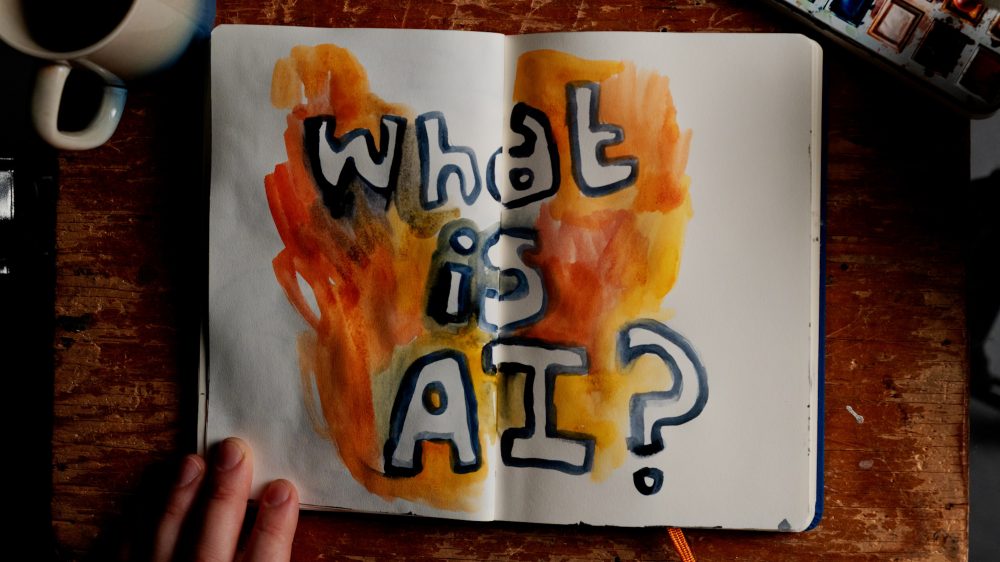
Beyond the on-camera experts, a substantial team worked behind the scenes to process incoming information and determine how to present it visually. Tyrell explained their decision to use an anti-digital aesthetic, incorporating handcrafted elements – including Roher’s constantly-used notebook for sketching – and stop-motion animation.
Viewers seeking confirmation that artificial intelligence is entirely positive or negative won’t find that here. The documentary presents disturbing accounts of generative AI threatening its creators and catastrophic predictions involving warfare and widespread job loss. It also shares optimistic visions of a beneficial future featuring medical breakthroughs, enhanced creativity, and increased freedom, plus various middle-ground perspectives – including how sandwich preparation in New York faces more regulation than AI development and the current technological arms race.
The subtitle “or how I became” suggests the film will reach a clear conclusion. However, the term “apocaloptimist” hasn’t received official recognition from the AP Stylebook or definition from Merriam-Webster. For Roher, this concept represents the documentary’s core message.
“I am not an optimist and I do not believe this will be the apocalypse. I believe it is both at the same time and that’s critical,” Roher stated. “What I take solace in is the idea that we still have agency over steering this thing towards the good and away from the bad. If we can walk this narrow path between the two and be very thoughtful and discerning, I think it will be OK.”
Tremper emphasized that the documentary “assumes zero knowledge of the subject matter” from viewers. His 78-year-old father, “who’s never owned a laptop in his life, watched it and understood it,” he reported.
The production team hopes audiences will choose theatrical viewing, or at minimum, watch with others present.
“It is entertaining in a theater. It’s cinematic in its own way. It’s not just 40 talking heads. You have an emotional ride with it,” Becker said. “And the best part about it is, the lights go up and you want to have conversation.”
Harris also encourages people to view the film “with your friends, with your church group, with your business.” However, he has no financial interest in its commercial performance – his primary goal is public education.
“I honestly think if 99% of people on the planet were just to understand the basics of, like, what’s going on here, they would say, ‘That doesn’t sound good,’” Harris commented.
“The film is meant to be a catalyst for a broader conversation, and for a movement that’s the size of humanity,” Harris continued. “This one actually is a risk that we all face in the next single-digit number of years. It’s unlike climate change, it’s unlike specific political topics. This literally affects everyone, your well-being, your ability to put food on the table, your job, your livelihood, and I think everyone can get behind that.”