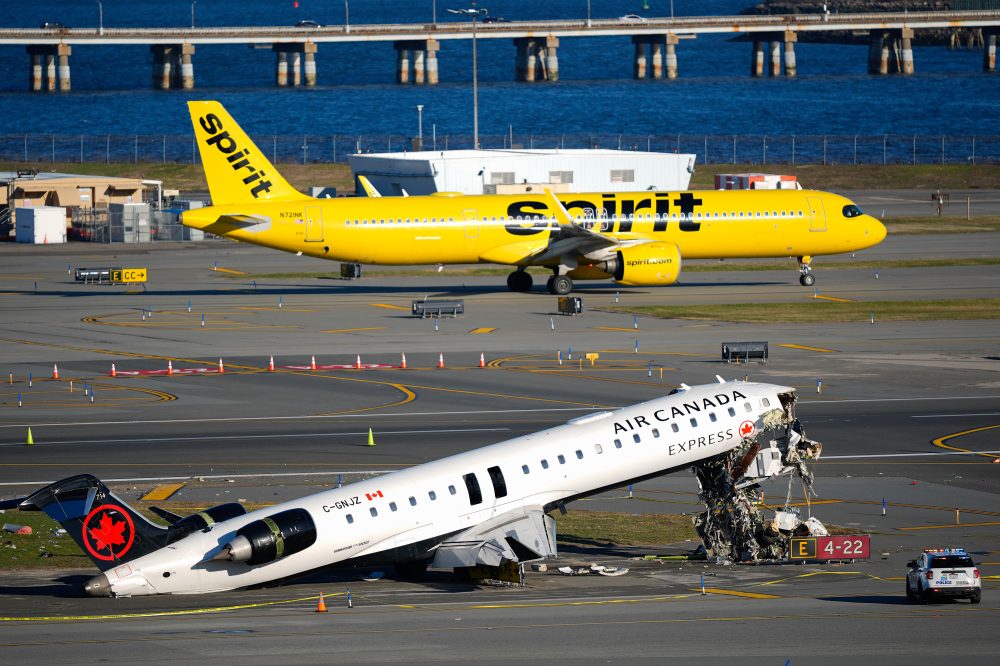

Federal crash investigators are examining cockpit voice recordings and air traffic control tower communications from the moments leading up to a deadly collision at LaGuardia Airport between an Air Canada aircraft and an emergency vehicle.
The National Transportation Safety Board is scheduled to release preliminary findings from their investigation during a Tuesday press briefing.
The aircraft, which had more than 70 people on board, struck the fire truck during its Sunday evening landing approach, resulting in the deaths of both pilots and injuries to multiple passengers. The majority of those aboard managed to evacuate the damaged plane, including a flight attendant who survived being ejected from the aircraft while still secured in her seat.
Key unanswered questions center on why the emergency vehicle was positioned on the active runway during the aircraft’s approach and why it failed to move despite urgent last-minute alerts from air traffic control.
Federal investigators are also examining the actions of air traffic controllers and whether they may have been overwhelmed while managing the late-night emergency alongside another aircraft situation.
The incident occurred during a period of widespread travel disruptions across the United States, including extended security checkpoint waits due to the federal government shutdown, severe winter weather, and increased airfare costs.
Although LaGuardia Airport – the New York area’s third-largest aviation facility – resumed operations Monday, the crash site runway remained shuttered and numerous flights experienced significant delays continuing into Tuesday.
The damaged aircraft continues to occupy the closed runway, which NTSB Chair Jennifer Homendy indicated will likely remain inaccessible for several days while the investigation proceeds.
“Investigators need to sift through a lot of debris,” Homendy explained.
Recovery teams extracted the aircraft’s voice and flight data recording devices by cutting through the plane’s roof structure, then transported them to NTSB laboratories in Washington for detailed examination, according to Homendy.
The Jazz Aviation aircraft carried 72 passengers and four crew members on its route from Montreal, operating under Air Canada’s banner, the airline confirmed.
Approximately 40 individuals, including two fire truck occupants, required hospital treatment. While some sustained significant injuries, most patients were discharged by Monday morning, with others requiring no medical attention.
The deceased pilot and co-pilot involved in LaGuardia’s first fatal aviation accident in 34 years were both Canadian-based crew members, according to Kathryn Garcia, executive director of the Port Authority of New York and New Jersey, which manages the airport.