
Federal lawmakers are pushing to stop the Department of Homeland Security from purchasing and using a controversial full-body restraint system following revelations about its deployment during deportation operations.
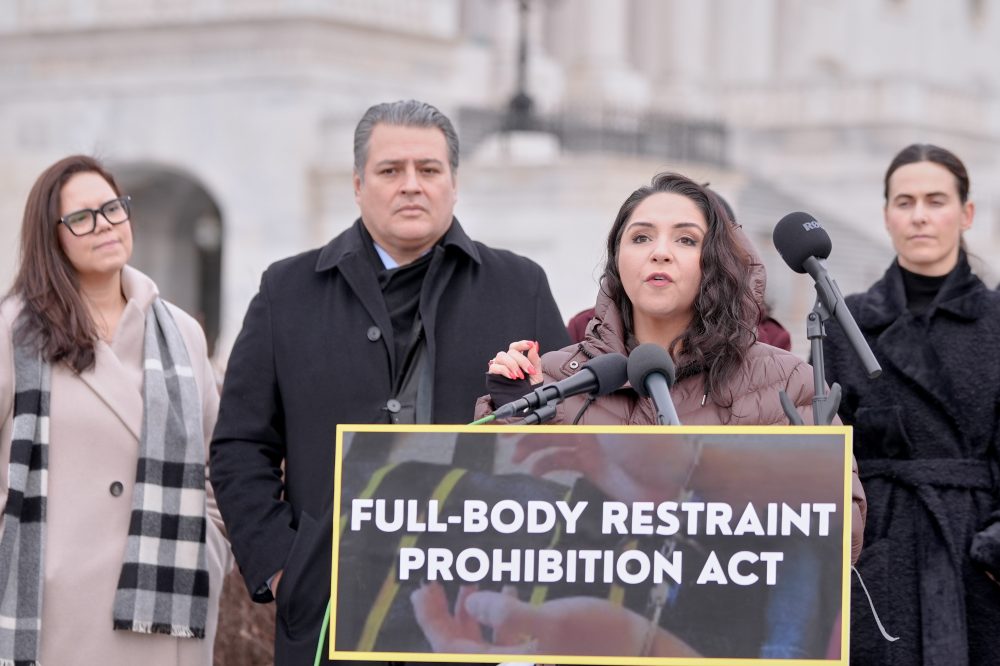
Congresswoman Delia Ramirez, a Democrat from Illinois, introduced the “Full-Body Restraint Prohibition Act” in the House Wednesday, which would block future acquisitions of the device known as the WRAP and establish new oversight measures.
Ramirez referenced an Associated Press investigation that uncovered multiple instances where U.S. Immigration and Customs Enforcement used the restraint system on individuals during deportation flights, sometimes for extended periods, in cases dating back to 2020.
“The WRAP fuels destruction in our communities and human suffering. This legislation is an additional step to end the pain and violence caused by DHS,” Ramirez said in a statement.
The restraint system, manufactured by California company Safe Restraints Inc., has become the focus of multiple federal court cases, with plaintiffs arguing its improper use constitutes punishment or torture. Civil rights advocates worry that ICE isn’t properly documenting WRAP usage as mandated by federal regulations governing use of force, creating challenges in determining how many people have been subjected to the restraints.
Beyond ICE’s deployment of the device, the Associated Press discovered twelve fatalities over the past ten years involving local police and jail officials using the WRAP, with medical examiners concluding that “restraint” contributed to the deaths.
The Department of Homeland Security has not provided detailed responses to Associated Press inquiries about WRAP usage and did not comment on the proposed legislation.
The investigation revealed that ICE continued using the device even after a 2023 internal report from DHS’s civil rights division raised concerns, partly based on fatality reports involving the WRAP’s use by local law enforcement. Ramirez also referenced Bloomberg Law reporting on the restraint system.
Federal procurement documents indicate DHS has paid Safe Restraints Inc. $268,523 from when purchases began in late 2015 during the Obama presidency through June 2025. Government records show the Trump administrations accounted for approximately 91% of that expenditure.
Company CEO Charles Hammond defended the device, stating the WRAP was created to offer a “safer, more humane, pain-free alternative to other restraint methods.”
“Eliminating The WRAP from these situations would not lead to safer outcomes; it would force the return to alternative restraints and tactics proven to cause pain, injury and even fatalities,” Hammond said.
Hammond explained that his company developed a specialized version for ICE, with modifications designed to accommodate use during flights and extended bus transportation.
However, the Associated Press found that ICE personnel deploy the WRAP under circumstances that fall well below the manufacturer’s recommended guidelines. Detained individuals who spoke with the Associated Press described officers applying the restraints after they were already shackled, claiming this occurred to intimidate or punish them for requesting legal counsel or expressing concerns about deportation to countries they had fled due to violence and persecution.
Hammond acknowledged to the Associated Press that if individuals were not acting violently and were only voicing protests, placing them in the WRAP might constitute inappropriate usage.
Following the October Associated Press investigation, eleven Democratic senators sent correspondence to senior immigration officials, referencing the reporting and stating that ICE’s deployment of full-body restraints during deportation flights raises “serious human rights concerns.”