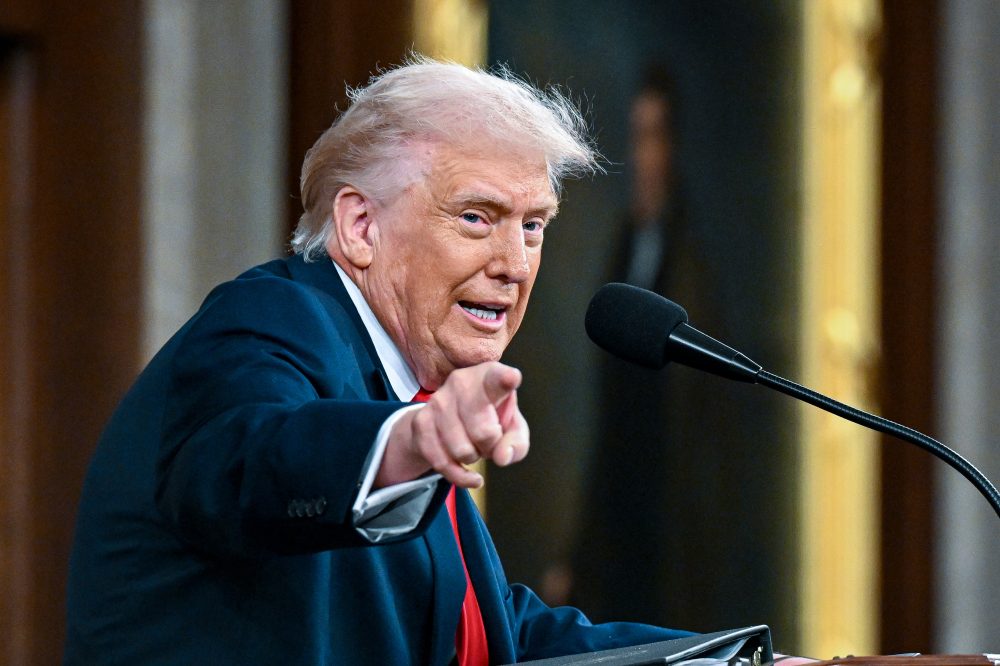

WASHINGTON — During Tuesday evening’s State of the Union address, President Donald Trump spotlighted his administration’s border security achievements, declaring that migrant arrivals at the southern border have dramatically decreased following his January 2025 inauguration.
However, the president largely avoided discussing the controversial aftermath of federal enforcement actions in cities including Minneapolis and Chicago, where local communities have protested against federal agents’ methods. The Minneapolis operation in January resulted in the fatal shootings of two American citizens, sparking significant public backlash and broader criticism of how immigration authorities are executing the Republican president’s directives.
“Today our border is secure,” Trump declared to Congress during his Tuesday evening remarks. “We now have the strongest and most secure border in American history by far. In the past nine months, zero illegal aliens have been admitted to the United States.”
Immigration policy has remained Trump’s cornerstone political issue and played a crucial role in securing his 2024 electoral victory. His initial year back in the Oval Office brought dramatic enforcement overhauls and billions in additional funding for agencies implementing his policies. These changes are fundamentally altering enforcement practices for Trump’s remaining presidency, affecting everything from detention numbers to asylum approval rates.
An examination of six critical immigration metrics reveals how his administration has performed.
Throughout Joe Biden’s presidency, Republican lawmakers consistently characterized migrant flows at the U.S.-Mexico border as a crisis they attributed to Democratic policies.
Illegal border crossing arrests peaked at nearly 250,000 in December 2023 before beginning to decline during Biden’s final months in office.
December 2024, Biden’s last complete month as president, saw approximately 46,000 arrests. By February 2025, that figure dropped below 8,000 and has remained at similar or lower levels since. January’s total reached 6,070.
U.S. Immigration and Customs Enforcement announced a transformed enforcement approach, eliminating previous restrictions on who could be detained and deported. This policy shift led to a dramatic increase in ICE apprehensions.
December 2024 saw ICE record 8,507 arrests. Throughout 2025, numbers climbed to 17,000 by February, approached 30,000 by June, and hit 32,771 by September, based on University of California, Berkeley’s Deportation Data Project research analyzed by The Associated Press. The most recent data release covered mid-October, preceding the Minneapolis operation.
Rising arrest numbers have correspondingly increased the immigrant population housed in ICE’s nationwide detention network.
The Department of Homeland Security received $45 billion to construct, purchase, or lease additional facilities for detained immigrants awaiting deportation.
ICE publishes detention population data biweekly. These figures change daily as individuals enter the system or are released through bond arrangements — now increasingly uncommon — or deportation.
December 2024 average daily detention populations stayed just below 40,000 individuals. Under Trump’s leadership, these numbers have risen sharply. February figures reached 70,000 people. With current ICE funding, the agency could potentially detain approximately 100,000 immigrants or more.
ICE has embarked on extensive spending following its $45 billion congressional allocation for enhanced immigration enforcement and border security. The agency is actively seeking additional detention space through rental or purchase agreements and collaborating with conservative states to establish facilities with distinctive names like “Alligator Alcatraz” and “Speedway Slammer.”
Approximately $30 billion will fund hiring 10,000 additional deportation officers. Another $46 billion supports completing Trump’s first-term border wall project. Additional funds support hiring more Customs and Border Protection personnel and strengthening immigration court systems.
Asylum seekers arriving at the U.S.-Mexico border have increased substantially in recent years, creating enormous immigration court backlogs.
These individuals are experiencing higher case rejection rates under the current Trump administration.
Transactional Records Access Clearinghouse data shows asylum application denial rates ranged from 40% to 60% before Trump’s initial presidency. Rejection rates increased annually during his first term before declining under Biden’s administration.
However, the data indicates asylum denial rates surged 22.5% during Trump’s second term’s first year.
The Trump administration consistently describes its mass deportation operations as targeting immigrants with criminal records or those posing public safety risks, labeling them “the worst of the worst.”
Yet Deportation Data Project information reveals the percentage of ICE arrests involving individuals with criminal histories has steadily decreased.
Prior to Trump’s inauguration, approximately 86% of ICE arrests involved people with criminal backgrounds — meaning they had been convicted or charged with U.S. crimes beyond illegal entry, which constitutes a civil violation.
This percentage has declined, with mid-October data showing about 55% had criminal backgrounds while 45% did not. Critics note that criminal arrests don’t necessarily indicate serious felonies like murder, often involving minor offenses such as shoplifting.
This trend partly reflects increased collateral arrests by immigration enforcement. When ICE targets specific individuals with criminal records, officers can arrest others encountered who are in the country illegally.
Traditionally, most ICE arrests involved transfers from state or local correctional facilities. While ICE continues this practice, the Trump administration has implemented additional arrest strategies. These include workplace raids and targeting individuals attending immigration court hearings or routine agency check-ins.